
What Causes Roof Leaks? The 9 Most Common Causes
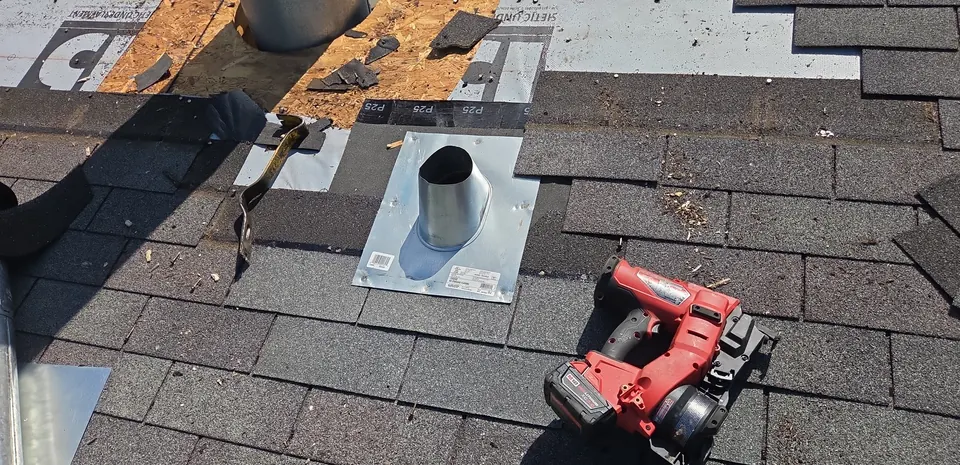
Most roof leaks are caused by a small number of things: worn or loose flashing around a chimney, wall or skylight, a cracked rubber pipe boot around a plumbing vent, shingles that wind has lifted, creased or torn off, hail damage, a worn valley, nails that have backed out, or a roof that is simply at the end of its life. Installation mistakes and debris that dams water on the roof cause the rest. In our experience, the leak usually starts where something passes through the roof or where two surfaces meet, not in the middle of a healthy slope of shingles. And sometimes the water is not from the roof at all: condensation, an air conditioner drain or a loose exhaust duct can stain a ceiling the same way.
Below is each cause in plain words: what it looks like, why it happens and what the fix usually is. If you are trying to track down where your own leak is coming in, our step-by-step guide on how to find a roof leak walks you from the ceiling stain to the attic to the roof.
The 9 most common causes of roof leaks
1. Worn, loose or missing flashing
Flashing is the metal that seals the joints where the roof meets something else: a chimney, a second-story wall, a skylight, a dormer. Shingles alone cannot seal those joints, so the flashing does it. Over time sealant dries and cracks, step flashing pulls loose, and counter flashing on a chimney separates from the mortar. On older roofs we also find flashing that was never installed right in the first place, such as old flashing reused during an earlier reroof or a joint sealed with caulk alone.
What you see: a stain on a ceiling or wall near the chimney, or under the spot where a lower roof meets a taller wall. The usual fix: new step, counter or headwall flashing, and on a wide chimney a cricket behind it to turn the water. Our guide to roof flashing shows each kind and how it fails.
2. Cracked pipe boots
Every plumbing vent that comes through the roof is sealed by a pipe boot, usually a metal or plastic base with a rubber collar that hugs the pipe. The rubber faces the sun every day, and in time it dries out, cracks and splits. Once it does, rain runs straight down the pipe into the attic.
What you see: a small, round stain on the ceiling near a bathroom or kitchen, or a wet spot on the attic floor right beside a vent pipe. The usual fix: a new pipe boot woven back in with the shingles around it. More in our guide to pipe boot leaks.
3. Wind damage: lifted, creased or missing shingles
Asphalt shingles are held down by nails and by a strip of sealant along the bottom edge that bonds each shingle to the one below. The Insurance Institute for Business and Home Safety (IBHS) describes it as a "temperature-activated adhesive strip applied during the manufacturing process" and calls the seal strength between shingles "the most important factor affecting high-wind performance for self-sealing asphalt shingles." When strong wind breaks that seal, the shingle can flap, crease across the top or tear off completely, and the layers underneath are left to handle the water alone.
What you see: shingles in the yard after a storm, a missing tab or a bare patch you can spot from the ground, or a leak in the middle of a slope with nothing coming through the roof above it. The usual fix: new shingles matched as closely as possible and sealed down.
4. Hail damage
Hail bruises shingles, knocks off the granules and can crack or tear the mat underneath. A bruise does not always leak the next day, but it is a weak spot. IBHS tested hail-damaged shingles for water leakage and found that "small dents resulted in negligible water leakage," while larger dents and more severe tears let in substantially more water. In other words, the worse the hit, the more likely it leaks.
What you see: dark spots where granules are missing, dents in gutters, downspouts and vents, and sometimes a leak weeks or months after the storm. The usual fix: depends on how much of the roof was hit, from a few shingles to a full replacement through your insurance claim. Our field guide to what hail damage looks like shows what to check from the ground.
5. Worn or damaged valleys
A valley is the channel where two slopes of roof meet. It carries water from both of them, so it wears faster than the rest of the roof. Valleys leak when the shingles in them are worn thin, cut wrong or cracked, or when leaves and pine needles pile up and hold water against them.
What you see: a stain on the ceiling under the line where two roof slopes come together. The usual fix: clearing the valley and replacing the worn shingles, or rebuilding the valley with new ice and water underlayment. See our guide to roof valleys.
6. Nail pops and exposed nails
Roofing nails are meant to be covered by the shingle above. On some roofs a nail backs out over time and pushes up the shingle over it, or a nail head is left bare at the ridge or a piece of flashing. Each one is a small hole for water to follow. Nails placed too high, too low or at an angle when the roof was installed can cause the same trouble. Our post on roofing nails explains where they should go.
What you see: a small bump in a shingle, a shiny nail head, or a slow drip that is hard to trace. The usual fix: removing and replacing the raised nail and the shingle over it, and sealing any exposed heads.
7. A roof at the end of its life
Every shingle roof wears out. Sun and heat dry out the asphalt, the granules wash into the gutters, shingles curl and crack, and the sealant strips lose their grip. In Arkansas we tell homeowners to expect 15 to 20 years from an asphalt shingle roof, because manufacturer ratings assume milder climates than our summer heat and storms. Near the end of that range, leaks tend to show up in more than one place at a time.
What you see: curled or cracked shingles across whole slopes, bald spots, lots of granules in the gutters, and new leaks after each repair. The usual fix: at some point, replacement is a better use of money than more patches. Our repair or replace guide helps you weigh it.
8. Debris and water that cannot drain
Leaves, pine needles and branches collect behind chimneys, in valleys and along the eaves. Wet debris holds water against the shingles and flashing far longer than rain would, and shingle roofs are built to shed water, not to sit in it.
What you see: piles of debris on the roof, gutters that overflow in heavy rain, and stains near the outside walls. The usual fix: clearing the roof and gutters and repairing any shingles or flashing that stayed wet too long. In the rare Arkansas winter with snow and a hard freeze, ice dams can do something similar; see our post on ice dams on Arkansas roofs.
9. Installation mistakes
Some leaks start the day the roof goes on: flashing reused instead of replaced, no drip edge at the eaves, underlayment skipped in the valleys, shingles nailed in the wrong spot, or a pipe boot set crooked. These are often the leaks that show up on a roof that is only a few years old.
What you see: a leak on a fairly new roof, often at a chimney, wall or vent. The usual fix: correcting the detail that was done wrong. On a full replacement we install new pipe flashings, step flashing, headwall flashing and drip edge on the full perimeter as part of the job, rather than reusing the old metal.
Not every ceiling stain is a roof leak
A stain that shows up with no rain, on cold mornings or when the air conditioner is running probably is not coming from the shingles. Attic condensation, a loose bathroom exhaust duct, a clogged air conditioner drain or a plumbing line can all wet a ceiling. Our leak-finding guide shows how to rule them out, and our attic ventilation page explains how a balanced system keeps moisture down.
Why a small leak is worth fixing now
A roof leak rarely fixes itself. Water soaks the decking, the insulation and the drywall, and the longer it goes, the more there is to repair. The EPA advises drying water-damaged areas within 24 to 48 hours to prevent mold. We fix the roof but do not do interior water damage or mold work, so if drywall or insulation is soaked, call a water damage professional too. If water is coming in right now, stay off the roof, catch the water and call 501.441.2900, answered live 24/7; we do emergency tarping to stop the water until the permanent repair is made.
How we find and fix the cause
When you call Patriot Roofing and Restoration about a leak, the repair visit is a $79.99 diagnostic, or no fee for Patriot Care Club members. It includes our 21-point roof inspection and attic analysis. We trace the water to its source, show you the photos on a tablet and sort what we find into Need To Do, Should Do and Could Do, each with its price from our published roof repair price book. Asphalt shingle repairs start at $379 for replacing up to 5 shingles on a standard-pitch, one-story roof. Nothing is touched until you approve it.
Once all the recommended repairs are done, the roof is covered by our 365-Day Patriot Leak Free Guarantee: if the roofing system leaks in the next 365 days, we repair it at no charge. If the leak started after hail or a windstorm, the inspection is free, because we do not charge for hail, wind and storm damage inspections.
Learn more about our roof repair service.
Frequently asked questions
What is the most common cause of a roof leak?
In our experience, flashing and pipe boots: the places where something comes through the roof or where the roof meets a wall. Wind and hail damage are the next most common, especially after a storm season.
Can a roof leak if no shingles are missing?
Yes. Cracked pipe boots, loose flashing, worn valleys, nail pops and hail bruises can all let water in while the roof still looks whole from the ground.
Why does my roof only leak in heavy rain?
Hard, wind-driven rain can push water sideways under a lifted shingle or past flashing that keeps a light rain out. Note which way the wind was blowing; the leak is often on that side of the house.
Can a new roof leak?
It can, usually because of an installation detail such as flashing, a pipe boot or nailing. That is why our roof replacements carry a Patriot Leak Free Guarantee of up to 15 years, depending on the package.
Does homeowners insurance cover a roof leak?
It depends on the cause and your policy. Sudden damage from a storm is often handled differently from wear and tear. Our post on whether insurance covers a roof leak in Arkansas explains the difference. This is general information, not insurance advice; coverage and deadlines vary by policy and carrier, so confirm with your agent.
Is a roof leak inspection free?
A leak or repair visit is a $79.99 diagnostic, or no fee for Patriot Care Club members, and it includes our 21-point inspection and attic analysis. Inspections for hail, wind and storm damage are free.
Find the cause, fix it once
We trace leaks to the real cause and fix that, not just the stain. Contact us to book a repair visit, or call 501.441.2900, answered live 24/7.
21-Point Roof Inspection
Your Roofing Specialist checks the roof and attic and gives you a 21-point report with photos of what we find.
Roof Repair Diagnostic Visit
Includes the 21-Point Roof Inspection Report and attic analysis. Patriot Care Club members pay no service fee.