
How to Find a Roof Leak: A Step-by-Step Guide From the Attic Up
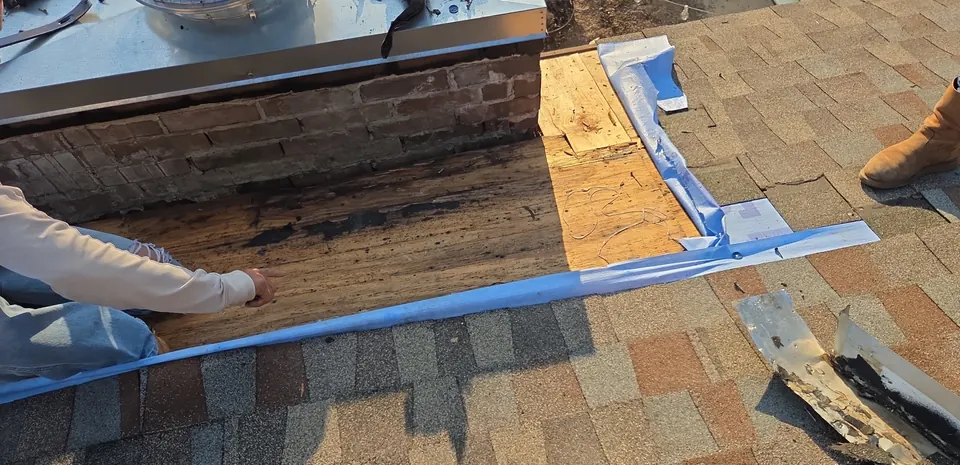
To find a roof leak, start inside and work up: find the wet spot on the ceiling, go into the attic above it with a flashlight, and follow the water stains on the underside of the roof deck and the rafters uphill to where they start. The source is usually higher on the roof than the stain on your ceiling, and it is most often at something that pokes through the roof, such as a plumbing vent, a chimney, a skylight or a wall, or in a valley. If you still cannot see it, a controlled hose test with a helper inside will usually show it. Before you blame the roof, rule out condensation, plumbing and the air conditioner, which can leave the same stains.
This guide walks you through each step in the order we do it on a repair visit, with what you can safely check yourself and when it is time to call a roofer. If water is coming in right now, skip ahead to what to do while it is leaking.
The short version: 5 steps to find a roof leak
- Mark the wet spot inside. Note where it is, how big it is and whether it only shows up when it rains.
- Go into the attic above it. Use a bright flashlight and look at the underside of the roof deck, the rafters and the insulation.
- Follow the water uphill. Water runs along wood and the deck before it drips, so trace the stains toward the ridge until they stop.
- Rule out the look-alikes. Condensation, a plumbing line, an air conditioner drain or a loose exhaust fan duct can all wet a ceiling.
- Check the usual entry points, then test with water. Look at what sits above your trail on the roof, and if it is still hidden, run a hose test.
Step 1: Read the stain on the ceiling
The ceiling stain tells you where the water ended up, not where it got in. Still, it gives you useful clues.
- When does it get wet? A spot that grows only during rain points to the roof. A spot that appears on cold mornings or when the air conditioner is running, with no rain, points somewhere else.
- Every rain, or only some? A leak that shows up only in hard, wind-driven rain from one direction often means water is being pushed sideways under a lifted shingle or past flashing on that side of the house.
- What is above it? Step outside and picture what sits on the roof above that room: a vent pipe, the chimney, a skylight, a valley, or a spot where the roof meets a wall.
Take a photo of the stain and draw a light pencil line around its edge. If it grows past the line next time it rains, you know the leak is still active.
Step 2: Go into the attic
The attic is where most leaks give themselves away. Go up during or soon after a rain if you can, because wet wood is much easier to spot than a dry stain.
- Stay on the framing. Step only on the ceiling joists or a walkway. The drywall between them will not hold you, and a foot through the ceiling turns a small repair into a bigger one.
- Bring a strong flashlight. A headlamp leaves both hands free for balance.
- Look up, not just down. Check the underside of the roof deck for dark stains, damp spots or mold, and look along the rafters for water trails. Wet, matted or discolored insulation marks where water has been landing.
- Check around anything that comes through the roof. Vent pipes, exhaust fan ducts, the chimney and skylight openings are where water most often gets in.
This Old House gives the same advice we give: "the leak likely originates higher up, so follow any signs of water uphill to pinpoint the source." Water that gets past a shingle or flashing can run down the deck or along a rafter for several feet before it drips onto the insulation, so the wet spot on your ceiling may be well downhill from the real opening.
If your attic has no access, is floored over or is too tight to move around in safely, stop here. A roofer can usually find the source from the roof and from what access there is.
Step 3: Rule out the look-alikes
Not every wet ceiling is a roof leak. This Old House notes that condensation, broken pipes and HVAC leaks can mimic roof leaks, and in our experience these are worth checking before anyone climbs a ladder.
- Condensation. Warm, moist air from the house can condense on the cold underside of the roof deck and on nails, then drip. It shows up as damp spots spread across the attic, often in cold weather and with no rain at all. The EPA notes that condensation can be a sign of high humidity. Poor attic airflow makes it worse; see our attic ventilation page.
- Bathroom and kitchen exhaust ducts. A fan duct that has come loose or ends in the attic instead of outside can dump warm, wet air right above a ceiling.
- Air conditioning. An attic air handler can leak from its drain pan or condensate line, and the stain often sits right below the unit.
- Plumbing. A supply line or drain in the attic or an upstairs wall can leak whether it is raining or not.
If the stain appears with no rain, the cause is most likely one of these, not the roof.
Step 4: Check the usual entry points
Once you know roughly where the water is coming from, look at what sits on the roof above that spot. You can see a lot from the ground with binoculars or a phone camera zoomed in.
| Where you see water inside | What to look at on the roof |
|---|---|
| Around a plumbing vent pipe in the attic, or a ceiling below a bathroom | The rubber pipe boot around the vent. Cracked rubber lets water run straight down the pipe. |
| Beside the chimney, or on a wall or ceiling near it | Step flashing and counter flashing along the sides of the chimney, and the area behind it on the uphill side. |
| Where a lower roof meets a second-story wall | Step flashing or headwall flashing along that wall, and the siding just above it. |
| Under the line where two roof slopes meet | The valley: worn, cracked or poorly cut shingles, or debris holding water. |
| Around a skylight | The skylight flashing kit and the seal on the skylight itself. |
| In the middle of a slope, with nothing coming through the roof above it | Missing, cracked or lifted shingles, often after a windstorm, or nails that have backed out. |
| Spread out in many spots, with no rain | Probably not the roof. Look at attic ventilation and exhaust ducts (Step 3). |
Most of the leaks we find start at flashing, not in the middle of the shingles. Our guide to roof flashing shows what each kind looks like and how it fails.
Step 5: The hose test, when the source is still hidden
When the attic and the roof do not give up the answer, a water test usually will. This Old House describes the method: one person soaks the roof with a garden hose while a helper stays inside watching for drips, and you "start on the lower part of the roof and work your way up," spending several minutes on each area before moving higher. Starting low matters. If you soak the whole roof at once, you cannot tell which spot let the water in.
A few cautions from the roofer's side:
- Run water down the roof the way rain falls. Spraying up under the shingles can force water in where rain never would and send you after the wrong spot.
- Be patient. Water may take a while to show up inside, especially if it has to soak through insulation first.
- Do not do it on a steep roof, a wet roof or a two-story roof unless you are trained and tied off. If it needs someone on the roof, that is a job for a roofer.
What to do while it is leaking
If water is coming in right now, protect the inside first and find the cause second.
- Stay off the roof. Wet shingles are slick, and storm damage can hide weak spots.
- Keep clear of water near electricity. If water is near a light fixture, outlet or ceiling fan, stay away from it and turn off that circuit at the breaker if you can do it safely.
- Catch the water. Use buckets and towels, and move furniture and electronics out of the way. If the ceiling is bulging with water, keep people out from under it.
- Take photos. Photograph the ceiling, the attic and anything damaged. If a storm caused it, your insurance company will want them.
- Dry things out quickly. The EPA says it is important to "dry water-damaged areas and items within 24-48 hours to prevent mold growth." We fix the roof; we do not do interior water damage or mold work, so if drywall or insulation is soaked, call a water damage professional as well.
Our phones at 501.441.2900 are answered live 24/7, and we do emergency tarping to stop the water until the permanent repair is made.
How we find a leak on a repair visit
When you call Patriot Roofing and Restoration about a leak, the repair visit is a $79.99 diagnostic, or no fee for Patriot Care Club members. It includes our 21-point roof inspection and attic analysis. We walk the roof, go into the attic, trace the water to its source and show you the photos on a tablet. Then you get our findings sorted into Need To Do, Should Do and Could Do, each with its price from our published roof repair price book. Nothing is touched until you approve it.
Once all the recommended repairs are done, the roof is covered by our 365-Day Patriot Leak Free Guarantee: if the roofing system leaks in the next 365 days, we repair it at no charge. If the leak started after hail or a windstorm, the inspection is free, because we do not charge for hail, wind and storm damage inspections.
Learn more about our roof repair service.
Frequently asked questions
Why is the stain on my ceiling not under the leak?
Water that gets under a shingle or past flashing often runs down the roof deck or along a rafter before it drips. That is why you follow the water trail uphill in the attic instead of looking straight above the stain.
Can you find a roof leak when it is not raining?
Often, yes. Old water stains, dark wood and matted insulation in the attic show where water has been, and a cracked pipe boot or loose flashing can be seen on a dry day. When the source is still hidden, a controlled hose test recreates the rain.
Why does my roof only leak in heavy rain?
Hard, wind-driven rain can push water sideways under a lifted shingle or past flashing that keeps a light rain out. Note which way the wind was blowing; the leak is often on that side of the house.
Is a roof leak inspection free?
A leak or repair visit is a $79.99 diagnostic, or no fee for Patriot Care Club members, and it includes our 21-point inspection and attic analysis. Inspections for hail, wind and storm damage are free.
Should I climb on the roof to look for the leak?
We do not recommend it. You can learn a lot from the attic and from the ground with binoculars. If the next step needs someone on the roof, call a roofer.
Can a roof leak cause mold?
It can. The EPA lists roof leaks among the places hidden mold can develop and says wet areas should be dried within 24 to 48 hours. Fixing the leak quickly and drying things out is the best protection.
Still cannot find it?
We trace leaks for a living. A diagnostic visit finds the source, shows you the photos and gives you a written price before any work starts. Contact us to book a repair visit, or call 501.441.2900, answered live 24/7.
21-Point Roof Inspection
Your Roofing Specialist checks the roof and attic and gives you a 21-point report with photos of what we find.
Roof Repair Diagnostic Visit
Includes the 21-Point Roof Inspection Report and attic analysis. Patriot Care Club members pay no service fee.