

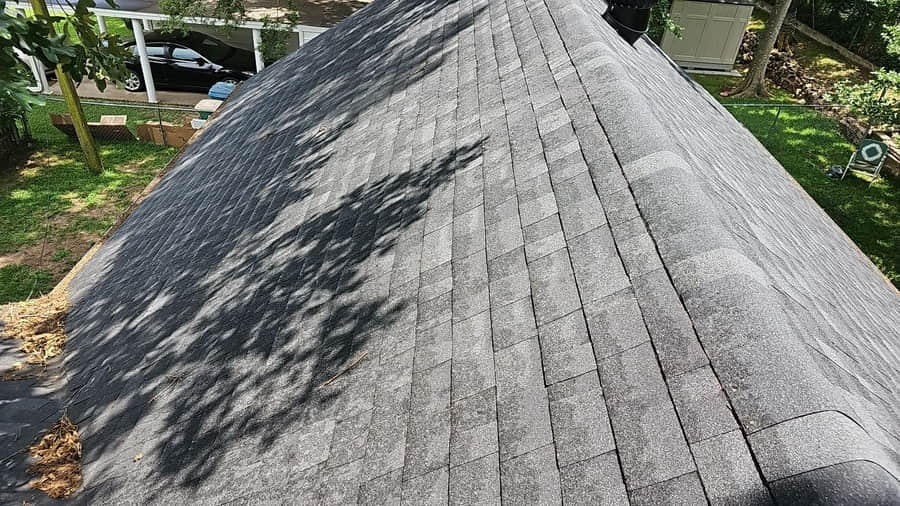
Why Arkansas’s Wild Temperature Swings Are Quietly Destroying Your Roof
How rapid temperature swings between Arkansas seasons stress roofing materials is one of the most overlooked causes of premature roof failure in the state — and if you own a home in Little Rock or anywhere in Arkansas, it’s already happening to your roof right now.
Here’s the short answer:
Arkansas’s roofs face thermal stress because:
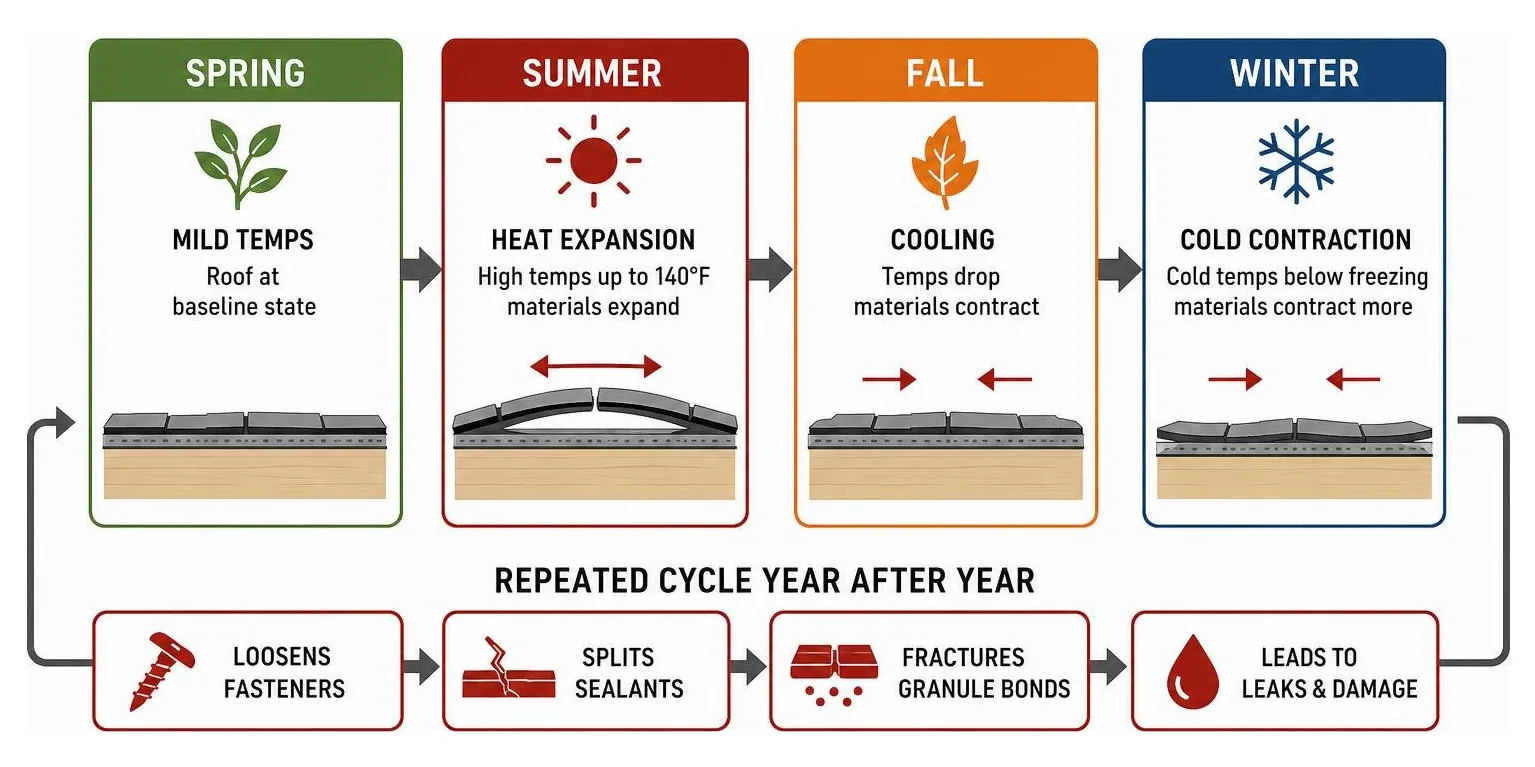
- Temperatures swing 60°F or more between seasons — and sometimes within a single day
- Roofing materials expand in heat and contract in cold, repeatedly, year after year
- This constant movement loosens fasteners, splits sealants, and fractures granule bonds in asphalt shingles
- Summer roof surface temperatures can hit 140°F, while winter ice storms drop conditions well below freezing
- The cycle repeats hundreds of times over a roof’s life, compounding damage with every swing
Arkansas sits at a uniquely punishing crossroads of Gulf moisture, continental air masses, and intense solar exposure. That means your roof doesn’t just face one stressor — it faces several at once, all of which make thermal cycling damage worse. Attic temperatures can reach 140–160°F on summer afternoons, while a fast-moving cold front can drop surface temperatures by 60°F in a matter of hours. No roofing material handles that kind of abuse without showing wear.
The result? Roofs in Arkansas routinely fail years earlier than manufacturer ratings suggest — and most homeowners don’t see it coming until there’s a leak.
Related reading:
- arkansas climate and your roof
- how arkansas weather shortens roof lifespan compared to milder climates
How Rapid Temperature Swings Between Arkansas Seasons Stress Roofing Materials
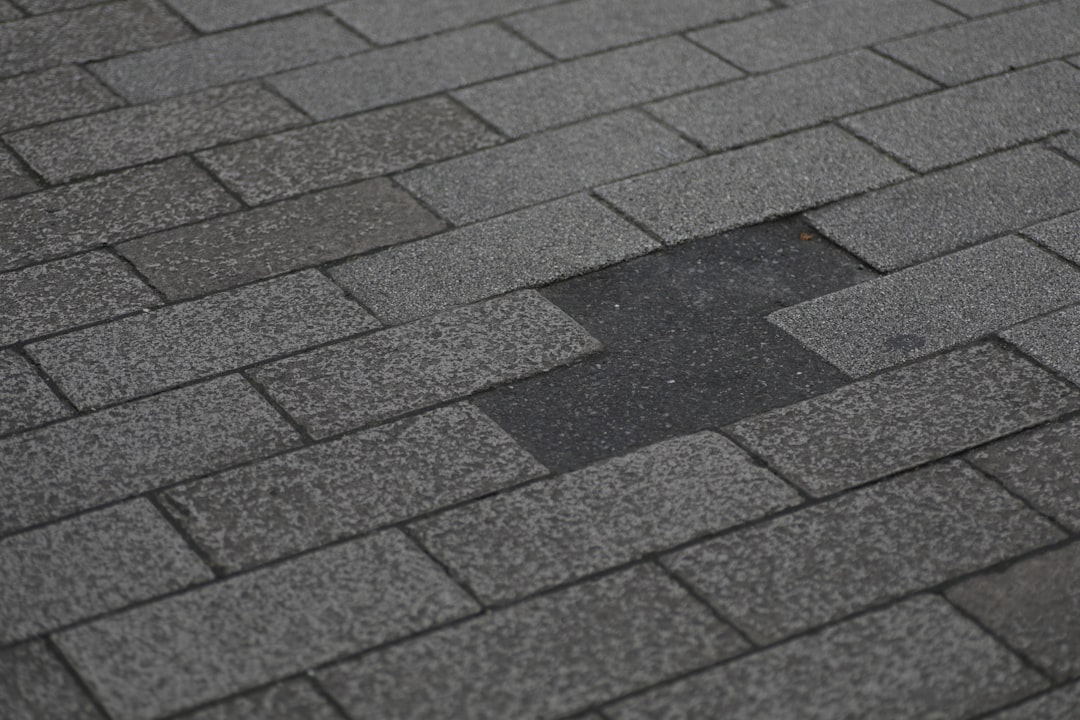
When we talk about the climate in Central Arkansas—from Little Rock and North Little Rock down to Benton, Bryant, and Hot Springs—we often focus on the dramatic weather events. We worry about spring tornadoes, summer hail, and winter ice storms. However, the quietest threat is actually the transition between these seasons.
The physical phenomenon of thermal cycling is a constant, daily grind. On a typical spring or autumn day in Cabot, Sherwood, or Jacksonville, the morning might start near freezing, only for the afternoon sun to push temperatures into the 80s. Because dark roofing surfaces absorb solar radiation, your roof’s surface temperature can jump from 40°F to over 130°F in a matter of hours.
To understand how this affects your home, we must look at how these dramatic shifts alter the structural integrity of your roof over time. For a deeper dive into these seasonal patterns, read our Step-by-Step Guide to Arkansas Climate and Your Roof.
The Physics of How Rapid Temperature Swings Between Arkansas Seasons Stress Roofing Materials
Every material on your roof has a specific rate at which it expands when heated and contracts when cooled. This is known as the coefficient of thermal expansion. The fundamental challenge is that a roof is not made of a single material. It is a complex assembly of wood framing, OSB decking, metal flashing, rubberized sealants, and asphalt shingles or metal panels.
When a rapid 60°F+ temperature swing occurs:
- Differential Movement: The metal flashing around your chimney expands and contracts at a much faster rate than the wooden roof deck it is nailed to.
- Shear Stress: This difference in movement rates creates immense shear stress at the joints, seams, and attachment points.
- Fastener Backing: As the roof decking swells and shrinks, it exerts pressure on the nails holding your shingles or metal panels in place. Over time, this constant “breathing” motion coaxes the fasteners upward—a process known as fastener backing or “nail pops.”
- Sealant Splitting: The pliable caulking and sealants used around pipe boots, valleys, and dormers are stretched to their physical limits. Repeated stretching and compressing eventually cause these sealants to split, crack, and pull away from the surfaces they are meant to protect.
Material Vulnerabilities: How Rapid Temperature Swings Between Arkansas Seasons Stress Roofing Materials Affect Shingles, Metal, and Membranes
Different materials react uniquely to Arkansas’s thermal rollercoaster. Below is a comparison of how the most common residential and commercial roofing materials handle this relentless cycle.
| Roofing Material | Primary Thermal Stress Vulnerability | Long-term Damage Outcome | Resilience Rating |
|---|---|---|---|
| Standard Asphalt Shingles | Loss of flexibility, asphalt binder volatilization, and cracking | Granule loss, curling, and tearing under wind pressure | Low to Moderate |
| Standing Seam Metal | Expansion and contraction along long panel runs | Fastener stress (mitigated by moving clips) | High |
| Exposed Fastener Metal | Metal expanding against fixed screws | Elongated screw holes, backed-out fasteners, and leaks | Moderate |
| TPO Membranes (Single-Ply) | Dimensional instability and seam stress | Seam tearing and membrane shrinkage | Moderate to High |
| EPDM Rubber | High elasticity but susceptible to shrinkage | Pulling away from parapet walls and flashings | Moderate |
Asphalt Shingles
Standard 3-tab and architectural shingles are highly vulnerable to thermal shock. As they age, the volatile oils that keep the asphalt flexible evaporate. When a cold front sweeps through Conway or Maumelle, these brittle shingles contract rapidly. Because they lack elasticity, they crack instead of stretching, leaving the fiberglass mat beneath exposed to water.
Standing Seam Metal
Metal is highly sensitive to temperature, but standing seam systems are engineered to handle it. The panels are attached to the roof deck using concealed clips that allow the metal to slide back and forth as it expands and contracts. This makes standing seam incredibly resilient.
Conversely, exposed-fastener metal roofs do not have this luxury. The screws hold the metal rigidly in place. As the metal expands, it forces the screw holes to elongate, eventually creating direct pathways for water intrusion.
TPO & EPDM Membranes
Commonly used on low-slope or flat areas in commercial and residential properties across West Little Rock and Hot Springs Village, these single-ply membranes must maintain their elasticity. While EPDM (synthetic rubber) handles expansion well, it can shrink over time due to thermal aging, pulling away from the roof edges. TPO can suffer from seam fatigue if the rapid temperature swings stress the welded joints repeatedly.
The Compound Effect of UV Exposure and Thermal Cycling
Thermal cycling does not work in a vacuum. In Arkansas, it partners with a second silent destroyer: ultraviolet (UV) radiation.
We enjoy an average of 217 sunny days per year in regions like Alexander, Austin, and Benton. During our long summers, the UV index routinely climbs above 9. This intense radiation acts as a chemical catalyst, breaking down the complex molecular chains within asphalt shingles and single-ply membranes. To learn more about this compounding degradation, see our AZ Guide to How Arkansas Weather Shortens Roof Lifespan.
Granule Loss and Sealant Failure
The primary defense an asphalt shingle has against UV light is its outer layer of ceramic-coated mineral granules. These granules shield the underlying asphalt from direct sunlight. However, thermal cycling actively undermines this defense system.
As the asphalt layer beneath the granules expands in the 140°F summer afternoon heat and contracts in the cool evening breeze, the physical bond holding the granules to the asphalt mat fractures.
Once the granules loosen, they wash down your gutters during our heavy spring and autumn rains. This leaves bald patches of raw asphalt completely exposed to the sun. The exposed asphalt quickly oxidizes, loses its remaining oils, and becomes hard, brittle, and prone to widespread cracking.
Simultaneously, the sealant beads applied around critical roof penetrations—such as plumbing vents and chimney flashings—dry out. The loss of elasticity, combined with the physical pulling force of thermal expansion, creates tiny gaps that act as funnels for rainwater during the next major downpour.
Attic Ventilation and Ice Damming in Arkansas Highlands
While central and southern Arkansas experience milder winters, northern and elevated areas like Conway, Hot Springs Village, and the surrounding hills face a real winter threat: ice damming.
Ice dams are a direct result of poor attic ventilation interacting with rapid temperature changes. When snow or ice accumulates on your roof, the temperature of the roof surface determines how that snow melts.
If your attic is poorly ventilated, heat from your living spaces escapes into the attic, warming the upper sections of the roof deck to above 32°F. The snow on the upper roof melts and runs down toward the eaves. However, the eaves extend past the heated walls of the home and remain at freezing temperatures. When the meltwater reaches the cold eaves, it refreezes, creating a barrier of ice.
As this cycle repeats, a pool of liquid water gets trapped behind the ice dam. This standing water easily backs up under the shingles, bypassing the natural shedding design of the roof and leaking directly into your ceilings and walls.
The Role of Attic Ventilation Standards (IRC R806)
To combat this, the International Residential Code (IRC Section R806) establishes strict ventilation standards. The general rule is the 1:150 ratio, which requires 1 square foot of net free ventilating area for every 150 square feet of attic floor space. This can be reduced to 1:300 if a balanced system of intake (soffit) and exhaust (ridge) vents is installed, and a vapor barrier is present.
Proper ventilation ensures that:
- Cold outdoor air enters through the soffits and exits through the ridge vents.
- The roof deck temperature remains uniform and close to the outdoor air temperature.
- Heat buildup is swept away, preventing the uneven melting that causes ice dams.
- In summer, attic temperatures are kept closer to ambient levels, preventing the “double baking” effect that cooks shingles from the inside out.
Additionally, installing a self-adhering ice and water shield membrane along the eaves and in the valleys provides a critical secondary waterproof barrier that prevents backed-up water from reaching your home’s interior.
Wind Design Standards and Thermal Fatigue in Tornado Corridors
Our service areas—including Little Rock, Sherwood, Bryant, and Mayflower—sit within active wind and storm corridors. Because of this, roofs must be engineered to withstand severe wind uplift.
Under the ASCE 7-22 wind design standards, buildings in our region must be constructed to resist design wind speeds of 115 mph or higher. However, a roof’s ability to resist wind is directly degraded by thermal fatigue.
When a shingle or metal panel is brand new, its fasteners are secure and its sealant strips are fully bonded. Over years of thermal cycling, the constant expansion and contraction weakens these mechanical connections:
- Fasteners loosen slightly as the wood decking expands and contracts.
- The asphalt adhesive strips (the sealant lines that bond shingles to one another) degrade due to thermal movement and UV exposure.
- When a severe thunderstorm or tornado-adjacent high-wind event strikes, the weakened shingles or metal panels can no longer resist the uplift forces.
A roof that has suffered from severe thermal fatigue can experience shingle blow-offs at wind speeds far below the manufacturer’s rated wind resistance. Regular inspections are critical to identifying these weakened areas before storm season arrives. For guidance on what to look for, read our guide on How to Inspect Your Roof in a Storm-Prone Climate.
Lifespan Realities and Insurance Implications
When you purchase roofing materials, the packaging often boasts of 30-year, 50-year, or even “lifetime” warranties. In the mild, consistent climates of some coastal regions, those numbers might hold up. In Central Arkansas, the reality is quite different.
The combination of intense summer heat, high humidity (averaging 65-70% year-round), spring hail, and rapid thermal cycling significantly shortens the operational lifespan of roofing systems.
Realistic Lifespans in Central Arkansas
- Standard 3-Tab Shingles: Rated for 25 years | Actual Arkansas Lifespan: 15–18 years
- Architectural Shingles: Rated for 30–50 years | Actual Arkansas Lifespan: 20–25 years
- Impact-Resistant (Class 4) Shingles: Rated for 50 years | Actual Arkansas Lifespan: 22–28 years
- Standing Seam Metal: Rated for 40–60 years | Actual Arkansas Lifespan: 40–60 years
To understand how these lifespans apply to your specific home, check out our detailed analysis: How Long Do Most Roofs Last in Arkansas Weather Conditions.
Insurance Underwriting and UL 2218 Class 4 Ratings
Insurance companies are highly aware of these lifespan realities. In Arkansas, carriers are increasingly reluctant to write policies for roofs that are more than 15 years old without substantial premium increases or high deductibles.
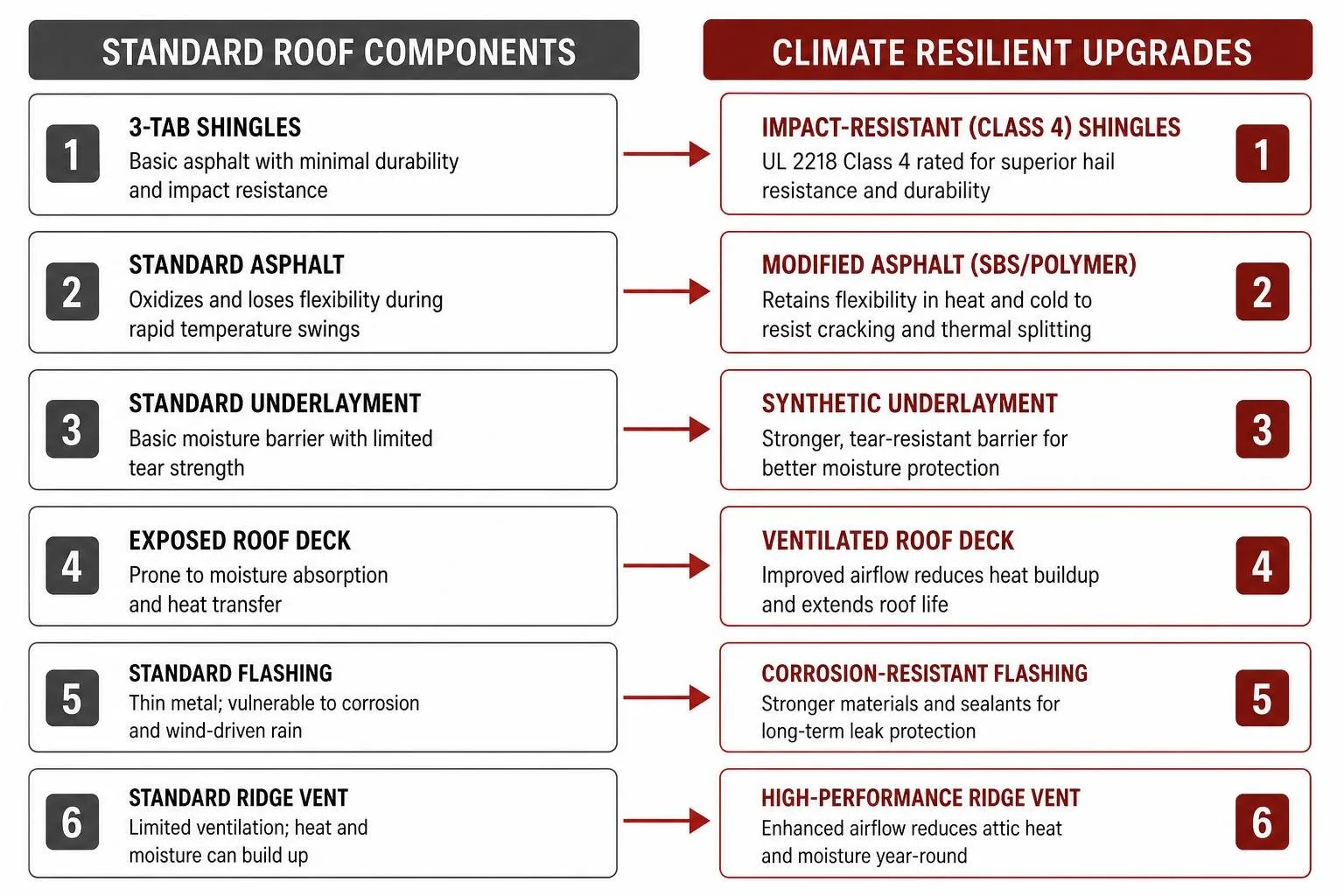
To mitigate this risk, many homeowners are upgrading to UL 2218 Class 4 impact-resistant shingles. These shingles undergo rigorous testing where a 2-inch steel ball is dropped from a height of 20 feet twice in the same spot without cracking the shingle’s backing.
Because Class 4 shingles feature modified asphalt chemistry (often SBS or polymer-modified) that retains its elasticity during rapid temperature drops, they resist both hail damage and thermal splitting. Installing impact-rated materials may qualify you for a discount on your annual homeowners insurance premium in Arkansas. Discounts vary by insurer, so confirm with your agent.
Proactive Maintenance and Climate-Resilient Upgrades
You cannot control the Arkansas weather, but you can control how your roof responds to it. Proactive maintenance is the key to extending your roof’s lifespan and avoiding premature replacement.
If you are noticing signs of aging, you may face the decision of whether to repair localized damage or invest in a full upgrade. For a detailed decision framework, review The Definitive Guide to Roof Repair vs Replacement.
To build a roof that stands up to our climate, consider these resilient upgrades:
- Algae-Resistant Shingles: Our high humidity encourages the growth of Gloeocapsa magma, the blue-green algae that causes black streaks on roofs. These streaks don’t just look bad; they absorb heat, raising attic temperatures and worsening thermal cycling. Upgrading to shingles with copper-infused granules prevents this growth.
- Synthetic Underlayment: Swap traditional felt paper for high-performance synthetic underlayment. Synthetic materials do not tear, shrink, or absorb moisture, providing a much more stable foundation during rapid temperature shifts.
- Concealed-Fastener Metal Systems: If you want a roof that truly neutralizes thermal expansion, standing seam metal is the gold standard. By allowing the metal panels to glide freely on clips, it eliminates the fastener fatigue common in other systems.
Frequently Asked Questions about Thermal Roof Stress
How do daily temperature swings of 60°F or more damage my roof?
When temperatures shift rapidly, your roofing materials experience thermal shock. They expand and contract quickly, creating shear stress between different components (like metal flashing and asphalt shingles). This movement coaxes nails to back out, cracks protective sealants, and fractures the bonds holding protective granules to your shingles.
Can proper attic ventilation reduce thermal stress on shingles?
Yes, absolutely. A balanced attic ventilation system (following the IRC R806 standard) keeps attic temperatures close to the outdoor ambient temperature. In the summer, this prevents your attic from turning into a 160°F oven that “double bakes” your shingles from underneath. In the winter, it keeps the roof deck uniformly cool, preventing the uneven melting that leads to destructive ice dams.
Why does my roof age faster in Arkansas than in other states?
Arkansas roofs face a compound threat. We have high UV exposure (217 sunny days a year) that dries out and oxidizes roofing materials, paired with high humidity that fosters algae growth, and dramatic seasonal and daily temperature swings. This combination causes materials to become brittle and fail much faster than they would in milder, more consistent climates.
Conclusion
Understanding how rapid temperature swings between Arkansas seasons stress roofing materials is the first step in protecting your home. From the blistering summer afternoons in Little Rock and North Little Rock to the freezing winter nights in Conway and Hot Springs, your roof is constantly in motion.
At Patriot Roofing & Restoration, we specialize in building roofs engineered for the demanding Arkansas climate. As an Atlas PRO+ contractor at the Gold level, we combine premium, climate-resilient materials with our signature quality-first installation process. We back our work with the four written guarantees to give you total peace of mind through every season.
If you want a roof that handles thermal expansion without breaking a sweat, consider upgrading to a premium metal system. Explore our Metal Roofing Arkansas services to see how a standing seam metal roof can protect your home for decades to come.
Whether you are in Benton, Bryant, Cabot, Hot Springs Village, Maumelle, or Sherwood, we are here to help. Contact us today to schedule a comprehensive roof inspection and ensure your home is ready for whatever weather Arkansas throws at it next!