
Is Your Roof Worth Repairing — or Is It Time to Replace It?
Knowing how to decide if a roof repair is enough or if you need full replacement is one of the most important — and most stressful — decisions a homeowner can face. The wrong call can cost you thousands of dollars, either by over-investing in a roof that’s already failing or by patching problems that keep coming back.
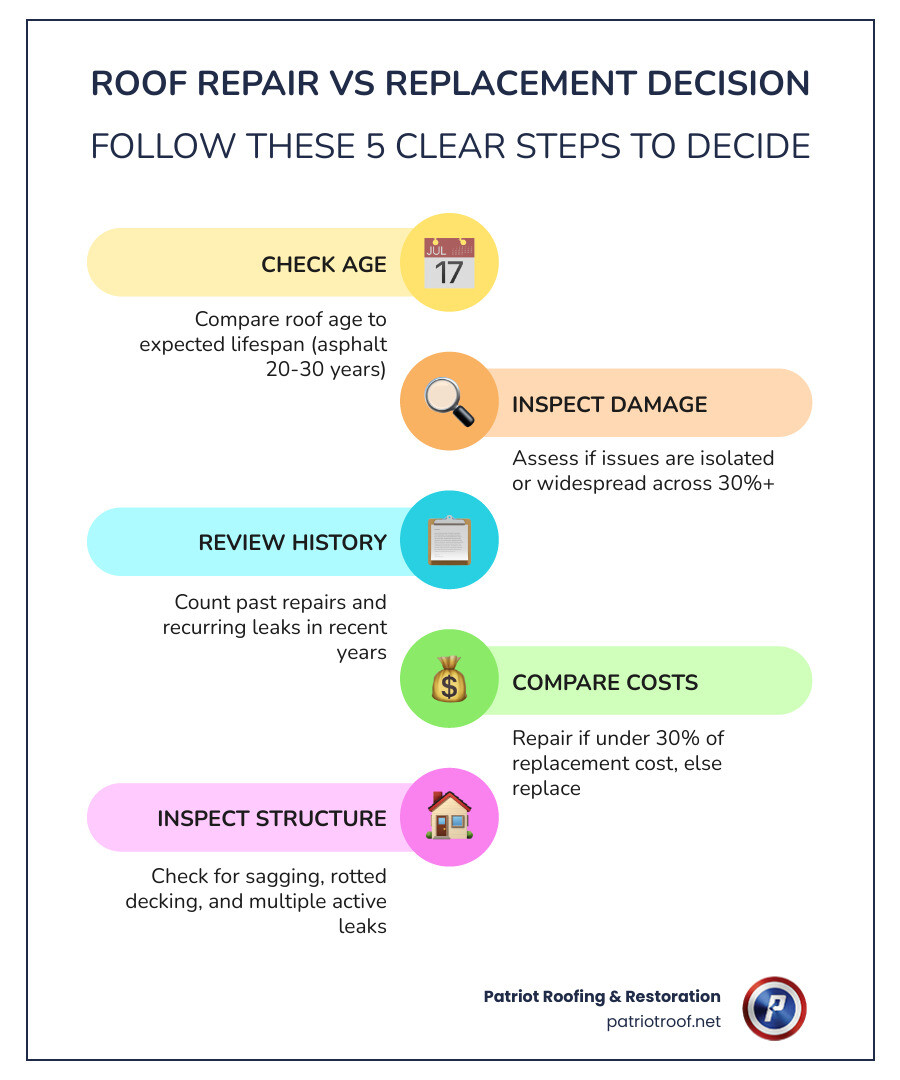
Here’s a quick answer to help you decide:
Choose repair if:
- Your roof is under 15 years old
- Damage is isolated to one small area
- Repair costs are less than 30% of full replacement cost
- You have no recurring leaks or structural issues
Choose replacement if:
- Your roof is past 80% of its expected lifespan
- Damage covers more than 30% of the surface
- Repair costs exceed 30% of replacement cost, and almost certainly if they exceed 50%
- You have sagging, rotted decking, or leaks in multiple areas
- You’ve needed several repairs in the past few years
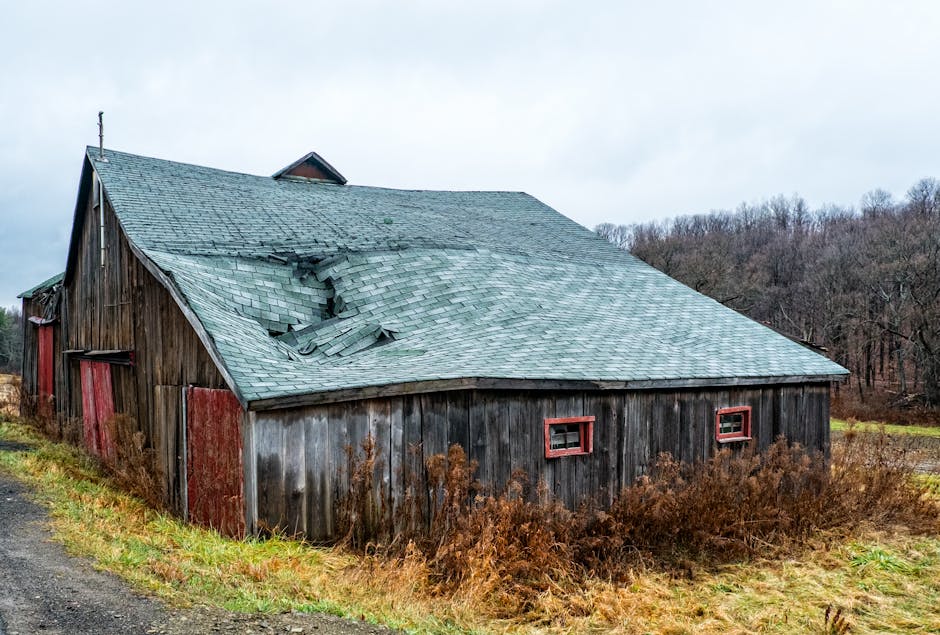
The core challenge is that most roof problems aren’t obvious from the ground. A single water stain on your ceiling could mean a simple flashing fix — or it could be the first sign of a roof that’s failing across the board. As one homeowner discovered after getting conflicting contractor advice: the actual leak source was far from where the damage appeared, with water traveling under the felt and rusting nails along the way.
That’s why the decision isn’t just about what you can see. It’s about your roof’s age, the extent of the damage, your repair history, and what it all costs compared to starting fresh.
In this guide, we’ll walk you through every factor — clearly and without pressure — so you can make the right call for your home and your budget.
How to Decide If a Roof Repair Is Enough or If You Need Full Replacement
When you discover a leak or notice missing shingles, your first instinct might be to call for a quick patch. But looking at a roof issue as an isolated event can lead to a cycle of endless, expensive repairs. To make an educated choice, you must determine whether you are dealing with a localized problem or a systemic failure.
A localized problem is isolated, simple, and has a clear root cause. Think of a tree branch falling and cracking three shingles, or the rubber boot around a plumbing vent pipe dry-rotting and cracking. These issues do not mean your entire roof is failing; they are simply localized weak spots.
On the other hand, a systemic failure occurs when the roof has reached the end of its functional life. In this scenario, the materials are breaking down across the entire surface. If you patch a leak in the front valley today, a new leak may spring in the back valley next month because the underlayment has become brittle and porous.
To systematically evaluate your roof, ask yourself these core questions:
- How old is the roof, and where does it stand relative to its expected lifespan?
- Is the damage confined to one distinct area, or is it visible across multiple slopes?
- How many times have you had to patch this roof in the last three to five years?
- Are there deeper signs of structural compromise, such as sagging rooflines or soft spots in the decking?
Understanding these distinctions will help you determine the most cost-effective path forward. For a deeper dive into these signs, check out our resources in the Category When to Replace a Roof.
Age and Lifespan: How to Decide If a Roof Repair Is Enough or If You Need Full Replacement
The physical age of your roofing system is the most reliable baseline for your decision. No matter how well a roof was originally installed, time and weather eventually win. In Arkansas, our intense summer heat, high humidity, and severe spring storms accelerate the aging process.
Different materials have vastly different life expectancies:
- Asphalt Shingles (3-Tab): Typically last 15 to 20 years. They are the most common and affordable option but wear out the fastest under extreme weather.
- Architectural Asphalt Shingles: Designed to be thicker and more durable, these generally last 25 to 30 years.
- Metal Roofing: Highly durable and energy-efficient, metal roofs average 40 to 70 years.
- Clay or Concrete Tile: Extremely resilient, tile roofs can last 50 to 100 years.
- Slate Tile: The gold standard of longevity, often lasting 75 to 150 years.
- Flat Roofs (TPO, EPDM, Built-Up): Typically last 15 to 30 years depending on maintenance and drainage efficiency.
If your roof is past 80% of its expected lifespan, investing in moderate to major repairs is rarely a smart financial decision. For example, if you have a 17-year-old 3-tab shingle roof that is leaking, patching it is a short-term band-aid. The surrounding shingles are likely too brittle to handle the repair process itself, meaning the act of fixing one area could easily damage another. You can learn more about how long different systems last by reading our guide on How Long Do Most Roofs Last.
Cost Analysis: How to Decide If a Roof Repair Is Enough or If You Need Full Replacement
When evaluating the financial side of this decision, professional roofers rely on two industry-standard guidelines: the 30% Rule and the 50% Rule.
- The 30% Rule: If the cost of the proposed repairs exceeds 30% of the total cost of a full roof replacement, you should strongly consider a full replacement. At this threshold, the long-term value of a brand-new roof with a fresh warranty far outweighs the short-term savings of a patch.
- The 50% Rule: If the repair estimate exceeds 50% of a replacement estimate, a full replacement is almost always the recommended choice. Spending half the price of a new roof on a system that will still have aged, out-of-warranty components is an inefficient use of home maintenance funds.
Additionally, consider the “stacking cost” of repeated repairs. Homeowners who opt for repeated patchwork often end up spending more over a five-year period than they would have on an immediate replacement. This is because multiple service calls, diagnostic fees, and minor repairs add up quickly, all while hidden slow leaks continue to cause quiet water damage and mold growth in the attic. To explore the financial breakdown of these options locally, read about the Cost Roof Replacement Little Rock.
Key Indicators for Roof Repair vs. Full Replacement
To help you visualize the best path forward, we have compiled a comparison of the key indicators that point toward either a repair or a full replacement:
| Indicator / Symptom | Choose Roof Repair | Choose Full Roof Replacement |
|---|---|---|
| Roof Age | Well under 80% of its expected lifespan. | Reaching or exceeding 80% of its lifespan. |
| Damage Extent | Localized (less than 25-30% of the roof surface). | Widespread (exceeding 30% of the roof surface). |
| Leak Frequency | First leak, or isolated to a single known penetration. | Multiple active leaks in different rooms or valleys. |
| Shingle Condition | Mostly intact; perhaps a few blown off during a storm. | Widespread curling, buckling, bald spots, or cracking. |
| Granule Loss | Minor shedding typical of a newer roof. | Heavy accumulation in gutters; bare shingle backing visible. |
| Roofline & Structure | Straight, firm, and structurally sound. | Visible sagging, soft spots underfoot, or rotted decking. |
| Repair History | Rare or first-time repair. | Multiple professional repairs in the last 3-5 years. |
If you are experiencing any of the symptoms listed in the table above, it is vital to get a professional evaluation to prevent further structural damage. You can book an inspection and learn more about localized fixes through our Roof Repair Little Rock services.
When Roof Repair is the Best Option
Roof repair is highly effective when the damage is isolated, the roof is relatively young, and the structural integrity of the underlying decking is completely intact.
The most common scenarios where a repair is the smartest, most economical choice include:
- Pipe Boot Failures: The rubber boots surrounding your plumbing vents typically dry out and crack within 7 to 10 years, which is much faster than the lifespan of the shingles. Replacing these boots is a straightforward, inexpensive repair.
- Minor Wind Damage: If a localized windstorm tears away a handful of shingles from a single slope but the rest of the roof is in excellent condition, a simple shingle replacement is perfectly sufficient.
- Flashing Issues: If water is intruding strictly around a chimney, skylight, or wall transition, the issue is usually failed caulk or rusted metal flashing. Re-flashing these areas resolves the leak without requiring a new roof.
- Nail Pops: Occasionally, backing nails work their way upward, pushing through the shingle above them and creating a small hole. Sealing and securing these nail pops is a standard maintenance task.
By staying proactive with minor repairs, you can successfully maximize the lifespan of your current system. Discover how to protect your investment with regular maintenance tips in our Category Roof Maintenance.
When Full Roof Replacement is Inevitable
There comes a point where patching a roof is like putting a band-aid on a sinking ship. If the underlying materials have broken down systemically, a replacement is the only way to protect your home’s interior, framing, and foundation.
Watch out for these definitive signs that a full replacement is required:
- Widespread Curling and Buckling: As asphalt shingles age, they lose their volatile oils, causing them to shrink, curl at the edges, or buckle in the middle. This means they can no longer shed water or resist wind.
- Heavy Granule Loss: Shingle granules protect the underlying asphalt from damaging UV rays. If your gutters are filled with sand-like granules and your shingles look “bald” or shiny, the protective layer is gone.
- Structural Sagging: If your roofline dips or sags, you are dealing with a structural issue. This is often caused by long-term, undetected water damage that has rotted the plywood decking or weakened the rafters.
- The “Brittle Test” Failure: A professional roofer can perform a brittle test by gently lifting a shingle tab and bending it to a 90-degree angle. If the shingle cracks or breaks instead of flexing, the material is too brittle to undergo any repairs.
If your roof exhibits these systemic warnings, continuing to patch it will only delay the inevitable while risking catastrophic interior damage. Explore your options for a permanent solution on our Roof Replacement Little Rock page.
Storm Damage, Insurance, and Future Plans
In central Arkansas, severe weather is one of the primary drivers behind roof damage. High winds can tear shingles clean off their fasteners, while hail can bruise the asphalt mat, causing rapid granule loss and exposing the roof to leaks. When storm damage occurs, the decision-making process shifts because homeowners insurance and long-term real estate plans enter the equation.
If your roof has suffered sudden, catastrophic damage from an “Act of God” (like a severe windstorm, tornado, or hailstorm), you may not have to bear the full financial burden of a replacement. However, if the damage is simply the result of years of neglect and normal wear-and-tear, insurance will not cover the cost. Knowing how to navigate this process can save you thousands. If your home was recently hit by a storm, find immediate local assistance through our Storm Damage Repair Little Rock services.
Navigating Insurance Claims After Storms
Navigating a homeowners insurance claim can feel overwhelming, but understanding a few key terms and rules can simplify the process:
- ACV (Actual Cash Value) vs. RCV (Replacement Cost Value): If you have an RCV policy, your insurance company will pay to replace your damaged roof with a brand-new one of similar quality, minus your deductible. If you have an ACV policy, the insurer will depreciate the payout based on the age of your roof. For example, if your 15-year-old roof is damaged, an ACV policy will only pay out a fraction of what a new roof costs, leaving you to cover the remaining balance.
- The Role of Deductibles: Your deductible is your out-of-pocket responsibility. It is typically a flat dollar amount or a percentage of your home’s total insured value. Be wary of any contractor who claims they can “waive” your deductible, as this is insurance fraud and illegal under Arkansas law.
- Shingle Matching Clauses: Arkansas insurance regulations often require insurers to provide a reasonably uniform appearance when making repairs. Because shingle manufacturers discontinue colors every three to five years, and because UV rays fade existing shingles, matching old shingles with new ones is often impossible. If a matching shingle cannot be found, the insurance company may be required to pay for a full replacement of the affected slopes—or even the entire roof—to maintain a uniform look.
To ensure your claim is approved, it is critical to have a professional, manufacturer-certified inspector document the damage with clear photos, moisture readings, and detailed reports. Learn about the exact steps to take following a storm in our guide: Steps Take After Storm Damage Roof Little Rock.
Long-Term Plans and Resale Value
Your future housing plans should heavily influence how to decide if a roof repair is enough or if you need full replacement.
If you plan to live in your home for the next 10, 15, or 20 years, a full replacement is a wise investment. It gives you complete peace of mind, improves your home’s energy efficiency, and protects your family from the elements.
However, if you plan to sell your home in the near future, the decision requires a different calculation:
- The Return on Investment (ROI): According to Remodeling Magazine’s Cost vs. Value Report, a new roof typically recoups 60% to 70% of its cost in increased home value at resale.
- Curb Appeal and Buyer Confidence: A roof is one of the first things a potential buyer and their home inspector will look at. An old, stained, or visibly patched roof is a major red flag that can stall negotiations or force you to lower your asking price. Many buyers will walk away from a deal if they know they will have to replace the roof immediately after moving in.
- The Pre-Listing Repair option: If your roof is relatively young but has a minor leak, performing a clean, professional repair before listing the home can satisfy inspector requirements without requiring you to pay for a full replacement.
To read more about how a new roof impacts your property’s marketability and long-term security, browse the resources in our Category Roof Replacement Reasons.
Frequently Asked Questions about Roof Repair and Replacement
Choosing the right path for your roof is a big decision. Here are answers to some of the most common questions we hear from homeowners across central Arkansas. For more detailed discussions, explore our Category Roof Replacement articles.
Can I install a new roof over my existing shingles?
This process is known as an “overlay” or “re-roof.” While it is legally permissible in some jurisdictions to have up to two layers of asphalt shingles, we strongly advise against it.
An overlay prevents our crew from inspecting the underlying wooden decking for rot, mold, or structural damage. If we nail new shingles over soft, rotted plywood, those nails will not hold, and the new roof will fail prematurely. Furthermore, a double layer of shingles traps extreme heat during hot Arkansas summers, which bakes the shingles from both sides and significantly shortens their lifespan. Finally, most major shingle manufacturers will void their warranties if their products are installed as an overlay.
How long does a full roof replacement typically take?
For a standard single-family residential home, a professional crew can complete a full tear-off and replacement in just 1 to 3 days.
The exact timeline depends on several factors, including the square footage of your roof, the pitch (steepness), the number of valleys and penetrations (like chimneys and skylights), and the weather. If we discover extensive wood rot in the decking after tearing off the old shingles, replacing those plywood sheets can add a few hours to the process.
Does a new roof lower my homeowners insurance premium?
Yes, in many cases it does. Insurance companies prefer insuring homes with brand-new, structurally sound roofs because they are far less likely to leak or suffer catastrophic wind damage.
If you choose a replacement using impact-resistant shingles (such as certain architectural lines), you may qualify for substantial premium discounts. Additionally, upgrading your roof’s ventilation and wind-mitigation features makes your home more resilient, which insurers reward with lower rates. Be sure to contact your insurance agent after your roof replacement is complete to provide them with the professional documentation and invoice.
Conclusion
Deciding whether to repair or replace your roof doesn’t have to be a guessing game. By evaluating your roof’s age, assessing the scale of the damage, applying the 30% and 50% cost rules, and considering your future housing plans, you can make a confident, financially sound decision.
At Patriot Roofing & Restoration, we are dedicated to providing homeowners across central Arkansas with honest, high-quality, and transparent solutions. Whether you live in Little Rock, North Little Rock, West Little Rock, Benton, Bryant, Conway, Cabot, Hot Springs, Hot Springs Village, Jacksonville, Maumelle, Mayflower, Sherwood, Austin, Alexander, or Scott, our local team is here to help.
We stand behind our work with a quality-first approach, backed by our four written guarantees. As an Atlas PRO+ Gold contractor, we utilize the highest-grade materials to ensure your home remains safe, dry, and energy-efficient for decades to come.
Don’t let a small leak turn into a major headache. Contact us today to schedule your free, professional roof inspection. We will provide you with a detailed, honest assessment of your roof’s condition — even if that means telling you that you don’t need a new roof just yet. Let us help you protect what matters most. For more educational guides on maintaining your home’s exterior, visit our Category When to Replace a Roof.
This article is general information about roofing and storm damage in Arkansas, not insurance advice. Coverage, deductibles and claim deadlines vary by policy and by carrier. Confirm your own coverage with your insurance agent before you make a decision.