

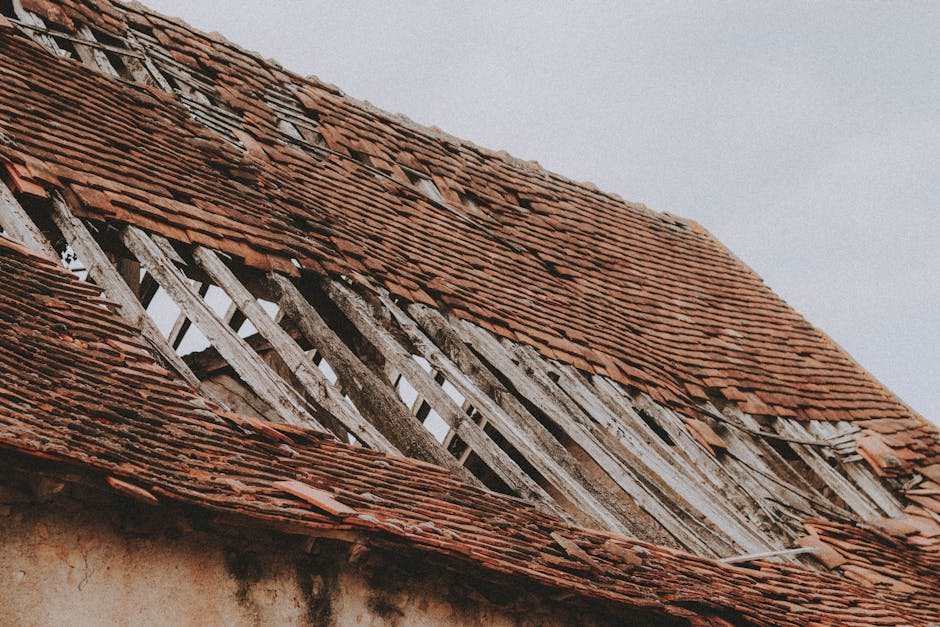
Why the Difference Between Cosmetic Hail Damage and Functional Hail Damage on a Roof Can Make or Break Your Insurance Claim
Understanding the difference between cosmetic hail damage and functional hail damage on a roof is one of the most important things a homeowner can know after a storm. The classification your insurer uses — cosmetic or functional — directly determines whether your claim gets paid, partially paid, or denied entirely.
Here’s the quick answer:
| Cosmetic Hail Damage | Functional Hail Damage | |
|---|---|---|
| Definition | Affects appearance only | Impairs the roof’s ability to protect your home |
| Water shedding | Not affected | Reduced or compromised |
| Service life | Not shortened | Measurably shortened |
| Structural integrity | Intact | Weakened or breached |
| Common examples | Dented gutters, minor granule scuffs, surface dimples on metal | Cracked shingles, fractured mat, punctured membranes, broken seals |
| Typical insurance coverage | Often excluded or partially paid | Generally covered under standard policies |
For most homeowners in Little Rock, the stakes are real. A roof that looks damaged and a roof that is damaged are two very different things — and insurance companies know this distinction well. In fact, many carriers have added cosmetic damage exclusion endorsements to their policies since around 2015, especially in hail-prone states. That means even visible hail impacts may not trigger a payout if they can’t be proven to affect your roof’s performance or lifespan.
The good news? Knowing the difference — and documenting it correctly — puts you in a much stronger position when dealing with your insurer.
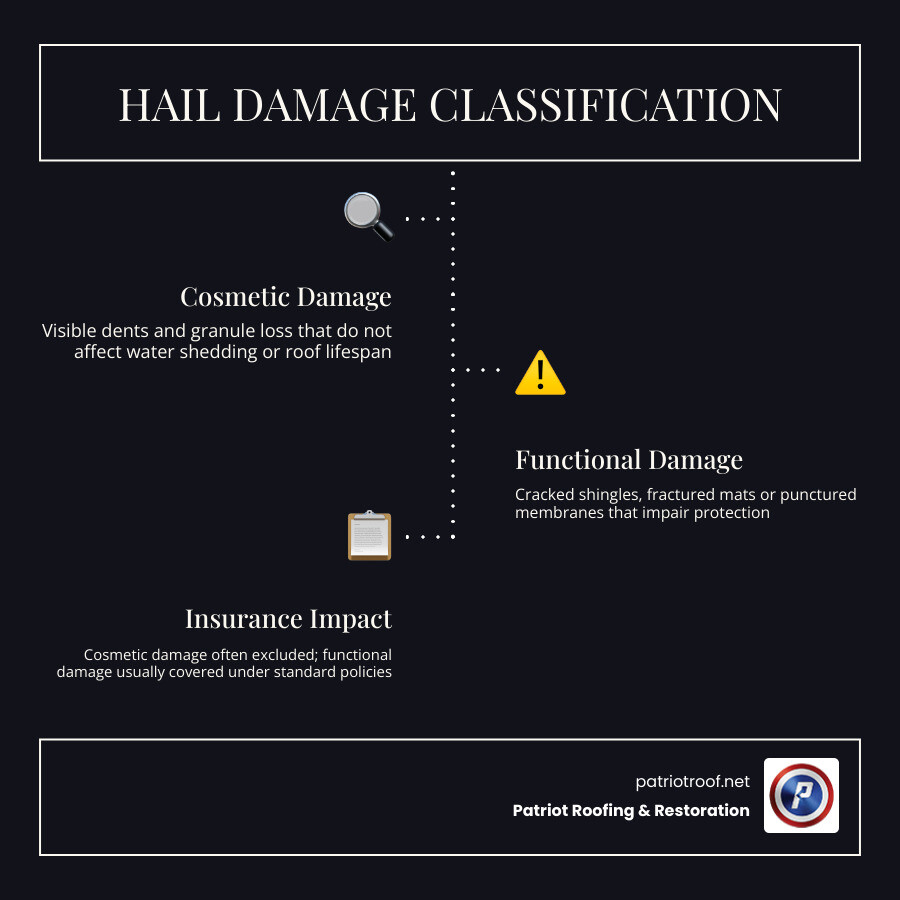
Understanding the Difference Between Cosmetic Hail Damage and Functional Hail Damage on a Roof
When a major storm rolls through Central Arkansas — whether you are in Conway, Hot Springs, Benton, or right here in Little Rock — the sound of ice balls hitting your roof can be incredibly stressful. Once the storm passes, you are left looking up at your shingles wondering if you need a brand-new roof or if you just have some minor battle scars.
To navigate the insurance process successfully, you have to understand the technical definitions used by roofers, engineers, and insurance adjusters alike. The core difference between cosmetic hail damage and functional hail damage on a roof hinges on two main elements: water-shedding ability and expected service life.
If a hailstone hits your roof and leaves a mark but doesn’t affect how the roof sheds water or how long it will last, it is classified as cosmetic. If the impact compromises the roof’s primary job of keeping water out, or shortens its lifespan, it is functional.
Defining Functional Roof Damage
Functional roof damage is any physical impact that diminishes the roof’s ability to shed water and/or reduces its expected long-term service life. According to Haag Education, a leading authority in forensic engineering and roof damage assessment, functional damage must impair the integrity of the roofing material.
On a standard asphalt shingle roof, functional damage typically presents as a “bruise.” This occurs when a hailstone hits the shingle with enough force to fracture the underlying fiberglass mat. When this mat is fractured, the structural integrity of the shingle is lost. Over time, water will seep through this fracture, leading to leaks, wood rot in your decking, and potential mold growth.
Functional damage is not always visible from the ground, and it may not cause an immediate leak. However, because it compromises the long-term performance of the roof, it is almost always covered under standard homeowner insurance policies.
Defining Cosmetic Roof Damage
Cosmetic roof damage refers to physical alterations that change the appearance of the roofing material but have no bearing on its performance, safety, or water-shedding capabilities.
Common examples of cosmetic damage include:
- Minor surface scuffs or shallow dents on metal vents, valley flashing, or downspouts.
- Slight granule loss on asphalt shingles that does not expose the underlying asphalt or fiberglass mat.
- Small dents on a metal roof panel that do not rupture the seams, break the protective coating, or compromise the fasteners.
While cosmetic damage does not threaten the structural integrity of your home, it can still affect your property’s resale value. A home with a highly visible, dented metal roof is harder to sell than one with a pristine roof, even if both roofs are technically watertight. However, because the roof still “functions” as designed, insurance companies frequently try to deny these claims using cosmetic exclusions.
Key Indicators of the Difference Between Cosmetic Hail Damage and Functional Hail Damage on a Roof
To tell these two types of damage apart, inspectors look for specific physical markers.
[Hail Impact]
   |
   +--> Does it fracture the fiberglass mat or crack the material? --> YES --> Functional Damage
   | (Immediate or Future Leak Risk)
   |
   +--> Is it just a surface mark, dent, or minor granule loss? ----> YES --> Cosmetic Damage
 (Aesthetic Issue Only)
- Granule Loss vs. Mat Exposure: Shingles naturally shed granules over time. Minor, localized granule loss from a small hail strike is often deemed cosmetic. However, if the hail dislodges a large concentration of granules and exposes the dark asphalt mat beneath, this is functional. Without granules, the sun’s UV rays will rapidly degrade the exposed asphalt, leading to premature failure of the shingle.
- Mat Fractures: If you press down on a hail-impact spot and it feels soft or spongy (like a bruised apple), the fiberglass mat underneath is likely fractured. This is a clear indicator of functional damage.
- Water Infiltration: Any puncture, split, or tear in the roofing material that allows water to migrate beneath the primary roofing layer is functional damage.
- UV Degradation: If a hail strike exposes the underlying reinforcement layer of a shingle or membrane, UV light will break down the material within months, making it a functional issue.
Material-Specific Responses to Hail Impacts
Different roofing materials react to hail in entirely different ways. What might be purely cosmetic on a metal roof could be highly functional on an asphalt shingle roof, and vice versa.
Asphalt Shingles and Granule Loss
Asphalt shingles are the most common roofing material in Central Arkansas. When hail hits an asphalt shingle, the damage is determined by the size of the hail, its velocity, and the age of the shingle.
As a general rule, hail size approaching 1 inch or more in diameter is when functional impact damage becomes more prevalent on asphalt shingles. Smaller hail can cause cosmetic granule loss, but larger stones are heavy enough to fracture the fiberglass mat.
When the protective granules are knocked away, the underlying asphalt is exposed to the elements. UV radiation from the sun dries out the asphalt, causing it to harden, crack, and fail. If you want to protect your home from future storms, you might want to read our Guide to Impact Resistant Shingles or explore the Benefits of Impact Resistant Shingles to see how Class 4 rated materials can withstand heavy impacts.
Metal Roofing and Cosmetic Denting
Metal roofing is incredibly durable, but it is highly susceptible to showing cosmetic dents.
If a hailstorm hits a metal roof, it often leaves circular dimples. In most cases, these dents are purely cosmetic. As long as the factory-applied Galvalume or paint coating is not fractured, and the structural locking seams or fasteners remain undisturbed, the roof will continue to shed water perfectly for decades.
However, high-end materials like copper roofs present a unique challenge. Copper is a softer metal that dents easily but lasts for over a century. Over its long lifespan, a copper roof is expected to develop some impact dents. Because replacing an entire copper roof is incredibly expensive, insurance companies may pay only half or less of the replacement cost for cosmetic damage on long-lasting materials like copper roofs, especially if the dents are on a second-story roof that is barely visible from the ground.
Tile and Membrane Vulnerabilities
Other materials show hail damage in distinct ways:
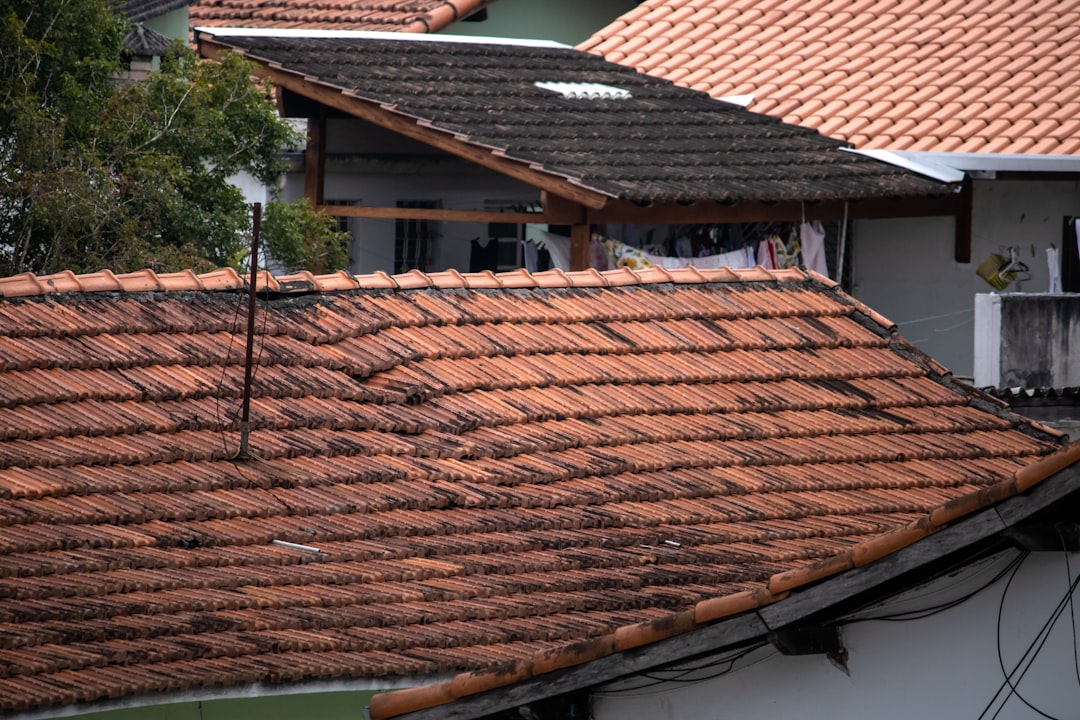
- Clay and Concrete Tiles: These materials do not “bruise.” Instead, hail causes functional damage by cracking or chipping the tiles, which can allow water to bypass the tile layer and rot the underlayment.
- PVC and TPO Membranes: Common on commercial flat roofs in areas like Little Rock and North Little Rock, these single-ply membranes can sustain hidden damage. A severe hail strike can fracture the membrane’s internal reinforcement grid. For example, a severe storm can fracture a PVC membrane at a rate of 10 fractures per roofing square, requiring complete replacement.
- Modified Bitumen: This multi-layer asphalt membrane can suffer from “spalling,” where hail knocks away the mineral granules, exposing the underlying asphalt to rapid UV degradation.
How Insurance Policies Treat Cosmetic vs. Functional Damage
Navigating an insurance claim after a storm can feel like learning a completely new language. Standard policies are designed to cover “direct physical loss” to the property, but how carriers interpret that phrase has changed dramatically over the last decade.
Why the Difference Between Cosmetic Hail Damage and Functional Hail Damage on a Roof Matters for Insurance Claims
The classification of your roof’s damage is the single most important factor in whether your insurance claim is approved. If an adjuster inspects your roof and decides the marks are cosmetic, they may deny the claim or offer a minimal payout for “appearance loss.”
This is where major coverage disputes arise. Homeowners see a roof covered in marks and expect a full replacement. The insurance company sees a roof that is still watertight and refuses to pay. Understanding these categories is essential, which is why we break down these scenarios in our Storm Damage Category section to help homeowners understand their rights.
The Rise of Cosmetic Damage Exclusions
Around 2015, insurance carriers began widely introducing cosmetic damage exclusion endorsements to their policies, particularly in states prone to severe weather.
These endorsements allow the insurance company to exclude coverage for cosmetic damage to metal roofs, siding, and other exterior finishes. In exchange for accepting this exclusion, homeowners are often given a small premium credit on their wind and hail coverage.
While this saves you a few dollars a month on your premium, it can be a devastating financial blow if a storm leaves your metal roof looking like the surface of the moon, and your insurer refuses to pay for a replacement because the roof doesn’t leak.
Legal Precedents and Court Interpretations
Because the line between “cosmetic” and “functional” is so blurry, this issue has been heavily litigated in courts across the country.
In many states, courts have ruled that cosmetic changes do constitute “direct physical loss” because they alter the physical structure and aesthetic value of the property. For example, if a policy does not contain a specific, explicit cosmetic exclusion endorsement, courts often rule that the insurance company must pay to restore the home to its pre-damage, uniform appearance.
However, if your policy does contain a signed cosmetic exclusion, courts will generally uphold it, leaving you responsible for the cost of repairing aesthetic-only damage.
Professional Inspection Methods and Criteria
Because insurance adjusters and roofing contractors often disagree on whether damage is functional or cosmetic, professional inspectors use scientific, standardized methods to evaluate roofs.
Advanced Diagnostic Tools
Modern roof inspections go far beyond simply climbing a ladder and looking around. Professional estimators and forensic engineers use advanced tools to collect undeniable evidence:
- Aerial Drones: High-resolution drone photography allows inspectors to map the entire roof and identify impact patterns safely and accurately.
- Moisture Meters: These tools can detect trapped moisture beneath the shingles or membrane, proving that water infiltration has already begun.
- Microscopic and SEM-EDS Analysis: In disputed commercial cases, samples of metal roofing or membranes may be harvested and sent to a lab. Scanning Electron Microscopy (SEM) can verify whether a protective coating has been microscopically breached, which would lead to future corrosion.
The Role of Certified Inspectors
To ensure an accurate assessment, it is vital to work with certified professionals. Since 2009, nearly 3,700 industry professionals have earned the HCI-C (Haag Certified Inspector – Commercial) designation for commercial roof damage assessment.
These certified inspectors provide unbiased, highly technical reports that document the exact physical effects of a storm. When you schedule a free storm or replacement inspection with us, we look for these exact engineering markers to ensure your insurance company receives an accurate, honest assessment of your roof’s condition.
Post-Storm Action Plan for Homeowners
If a hailstorm has recently hit your neighborhood in Little Rock, Sherwood, Cabot, or Maumelle, taking the right steps quickly is critical to protecting your home and your insurance rights. We recommend reviewing our detailed guide on Steps to Take After Storm Damage to Roof in Little Rock for a complete walkthrough.
Documenting Damage and Filing Claims
- Safety First: Never climb onto a wet or damaged roof yourself.
- Ground Assessment: Walk around your property and look for obvious signs of damage, such as dented gutters, damaged window screens, or piles of shingle granules at the bottom of your downspouts.
- Take Photos: Document any hail accumulation on the ground (ideally next to a ruler or a coin for scale) and any visible damage to your siding, mailbox, or vehicles.
- Call a Professional: Have a certified local roofer perform a thorough inspection to document the difference between cosmetic and functional damage before you call your insurance company.
Deciding Between Roof Repair and Full Replacement
If your roof has sustained functional damage, you will need to decide whether to repair the damaged areas or replace the entire system.
This decision usually comes down to the extent of the damage:
- The 25% Rule: In many jurisdictions, if more than 25% of the roof area has sustained functional damage, building codes require a full roof replacement rather than localized repairs.
- Roof Age: If your roof is already near the end of its expected service life, repairing a few bruised areas is a temporary band-aid. A full replacement is often the more cost-effective long-term choice.
If you are facing this decision, our teams specializing in Roof Repair Little Rock and Roof Replacement Little Rock can help you weigh your options and choose the best path forward.
Frequently Asked Questions About Roof Hail Damage
Does insurance cover cosmetic hail damage?
It depends entirely on your specific policy. If your policy has a standard “direct physical loss” clause without any exclusions, cosmetic damage is typically covered. However, if your policy includes a cosmetic damage exclusion endorsement, your carrier will only pay for damage that is proven to be functional (affecting water-shedding or lifespan).
Can small hail cause functional roof damage?
Yes, under the right conditions. While hail under 1 inch is less likely to fracture a new, pliable asphalt shingle, it can easily cause functional damage to an older, brittle roof. High winds can also increase the impact velocity of small hail, causing it to bruise shingles or crack clay tiles.
How long do I have to file a hail damage claim?
Most insurance policies require you to file a claim within one year of the storm event, though some policies allow up to two years. It is always best to schedule a professional inspection immediately after a storm to ensure you document the damage within your policy’s deadlines.
Conclusion
When a storm hits Central Arkansas, the physical and financial health of your home depends on identifying the difference between cosmetic hail damage and functional hail damage on a roof. Missing a subtle, functional bruise today can lead to structural rot, ruined drywall, and mold issues down the road.
At Patriot Roofing & Restoration, we take a quality-first approach to storm recovery. Serving Little Rock, Conway, Hot Springs, Benton, Bryant, and the surrounding areas, we back our work with our four written guarantees.
If you suspect your roof has taken a hit, don’t wait for a leak to show up on your ceiling. Contact us today for reliable, expert Storm Damage Repair Little Rock services, and let us help you protect your most valuable investment.
This article is general information about roofing and storm damage in Arkansas, not insurance advice. Coverage, deductibles and claim deadlines vary by policy and by carrier. Confirm your own coverage with your insurance agent before you make a decision.