

Why Arkansas Climate and Your Roof Are a Critical Combination
Arkansas climate and your roof share a relationship that every homeowner in the state needs to understand — because few places in the U.S. push roofing materials harder than Arkansas does.
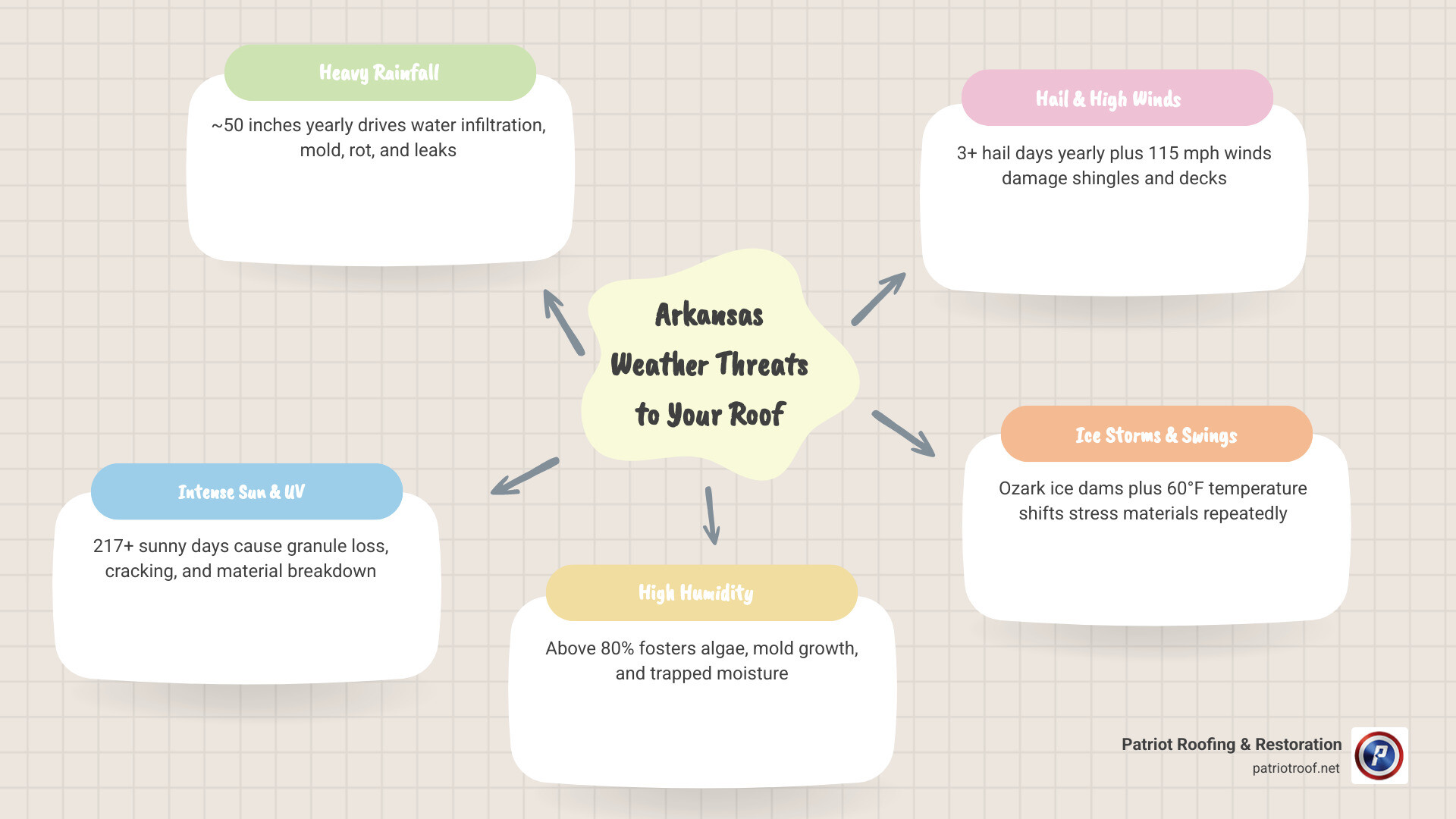
Here’s a quick summary of how Arkansas weather affects your roof:
| Weather Threat | Impact on Your Roof |
|---|---|
| ~50 inches of annual rainfall | Water infiltration, mold, rot, leaks |
| 217+ sunny days per year | UV degradation, granule loss, material cracking |
| Summer humidity above 80% | Moisture buildup, algae and mold growth |
| Hail (Little Rock averages 3 hail days/year) | Granule loss, shingle cracking, structural impact |
| Winds of 115 mph+ (ASCE 7-22 design speeds) | Shingle uplift, deck damage, flashing failures |
| Ice storms (especially northern Arkansas) | Ice damming, hidden structural damage under eaves |
| Seasonal temperature swings of 60°F+ | Repeated thermal expansion and contraction of materials |
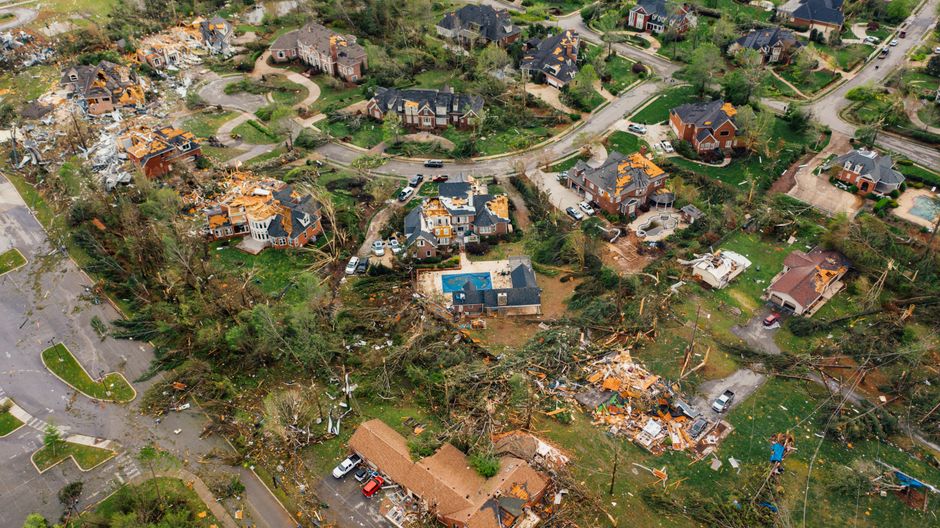
Arkansas sits in one of the most climatically demanding regions for roofing performance in the entire continental U.S. The state doesn’t just throw one or two threats at your roof — it throws all of them, often within the same year. Spring tornadoes and hailstorms. Summers that push past 90°F with humidity that makes it feel worse. Winters that bring ice storms capable of causing serious structural damage that isn’t always visible from the ground.
What makes this especially important for Little Rock homeowners is that these threats don’t work in isolation. The compound effect of heat, moisture, wind, and UV exposure degrades roofing materials faster than any single factor would on its own. That shortens real-world roof lifespans compared to what manufacturers advertise for milder climates.
This guide walks you through exactly how each weather force affects your roof, which materials hold up best, what Arkansas building codes require, and how to protect your home — and your wallet — for the long term.
Understanding the Arkansas Climate and Your Roof
When we talk about the arkansas climate and your roof, we are looking at a system under constant environmental stress. Arkansas receives an average of 50.8 inches of rainfall each year. Combined with approximately 217 sunny days per year and relative humidity that frequently exceeds 80% during summer months, our roofs face a relentless wet-dry, hot-cold cycle.
In Central Arkansas communities like Little Rock, Maumelle, and Conway, summers typically reach 90°F or higher, while winters regularly dip below freezing. This temperature volatility triggers four destructive processes: thermal cycling, wind uplift, moisture infiltration, and UV degradation.
Without proactive care, this combination of heavy precipitation and intense sun can cause early material failure. If you want to stay ahead of the summer heat, you can find helpful advice on how to prepare your roof in our guide on Tips Help Prepare Roof Summer Weather Maumelle.
The Four Mechanical Pathways of Weather Damage
To truly understand how our weather ages a roof, we have to look at the physical mechanics behind the damage. The wear and tear is caused by four distinct pathways:
- Thermal Expansion (Thermal Cycling): When the sun beats down on a dark roof in Bryant or Cabot, surface temperatures can exceed 150°F. When a sudden afternoon thunderstorm rolls in, the temperature drops rapidly. This rapid expansion and contraction causes shingles to warp, split, and lose their protective granules. It also places immense stress on metal fasteners and flashing.
- Wind Shear (Wind Uplift): High winds create pressure differences above and below your roof. This wind uplift can break the adhesive seal on asphalt shingles, peel back flashing, and even lift roof decking if the system is not secured to meet local wind standards.
- Ice Dams: During winter weather in Central Arkansas, snow and ice can accumulate on the roof. Heat escaping from an under-insulated attic melts the snow from underneath. This water flows down to the cold eaves and refreezes, forming an ice dam. Water then backs up behind this dam, forcing its way under shingles and leaking into your home’s structural framing. To keep your home safe during the colder months, read our Preparing Roof for Winter Maintenance Checklist Little Rock.
- UV Radiation: The sun’s ultraviolet rays break down the asphalt binders in standard shingles. Over time, this chemical degradation makes the shingles brittle, leading to cracks, curling, and loss of impact resistance.
Evaluating Roofing Materials for Arkansas Weather
Selecting the right material is the most important decision you will make for your home’s long-term protection. Different materials respond uniquely to Arkansas’s mixed-humid climate.
| Roofing Material | Pros | Cons | Arkansas Suitability |
|---|---|---|---|
| Asphalt Shingles | Cost-effective, highly versatile, easily repaired | Shorter lifespan, susceptible to wind uplift and UV brittle-aging | High (if architectural or impact-rated) |
| Metal Roofing | Lifespan of 40–70 years, excellent wind resistance, sheds ice and water | Higher upfront investment, can dent during severe hailstorms | Outstanding |
| Stone-Coated Steel | Combines the strength of steel with traditional aesthetics, highly impact-resistant | Premium upfront cost | Outstanding |
| Synthetic Composites | Exceptional impact and wind resistance (up to 110+ mph), long warranties | Premium upfront cost | Outstanding |
| Cedar Shake | Natural insulation, beautiful rustic appearance | High risk of mold, rot, and moss in humid conditions; requires high maintenance | Moderate (requires specialized treatment) |
| Slate | Lifespan of 75–100+ years, fireproof, highly durable | Extremely heavy, requires structural reinforcement, high cost | High (for structurally qualified homes) |
| Clay Tile | Beautiful aesthetic, fireproof, highly durable | Heavy, fragile under large hail, high cost | Moderate (best with reinforced framing) |
If you are trying to decide whether it is time to upgrade your home’s exterior, take a look at our article on New Year New Roof Reasons Maumelle Residents Replacing Roofs 2024 to see why many local residents are opting for modern, weather-resistant systems.
Material Lifespans Under the Arkansas Climate and Your Roof
The harsh climate in Central Arkansas means that standard manufacturer lifespan estimates do not always match reality. Here is what you can realistically expect from different materials in our region:
- Standard 3-Tab Shingles: These budget-friendly options typically last 15 to 20 years before heat and humidity take their toll.
- Architectural Shingles: Thicker and more wind-resistant, these usually provide 24 to 32 years of reliable service in Central Arkansas.
- Impact-Resistant (Class 4) Shingles: Engineered to withstand hail, these systems routinely last 30 to 40 years.
- Metal Roofing (Standing Seam): With hidden fasteners that protect against thermal expansion leaks, standing seam metal systems easily last 40 to 60 years.
- Synthetic Composites: These durable systems often come with 50-year warranties and hold up exceptionally well against UV and hail.
To learn more about how long different systems last and what factors influence their wear, read our comprehensive guide: How Long Do Most Roofs Last?.
Choosing Between Short-Term Affordability and Long-Term Durability
When planning your roof replacement, it is important to balance your immediate budget with your long-term plans for the property.
If you plan to sell your home within the next few years, architectural asphalt shingles offer a strong return on investment. They look great, meet local building codes, and provide excellent curb appeal without a massive upfront cash outlay.
However, if you are planning to stay in your home for decades, investing in a premium system like standing seam metal, stone-coated steel, or synthetic composite is often the smarter financial move. These materials resist wind, shed water easily, and drastically reduce the risk of storm damage, saving you money on deductibles and repairs over the life of the system.
Regional Weather Threats, Building Codes, and Ventilation Standards
Central Arkansas faces a wide variety of severe weather threats. Our proximity to storm corridors means we regularly experience straight-line winds, spring tornadoes, and heavy hail. In fact, Little Rock averages 3.0 hail days per year, which is significantly higher than many other U.S. cities.
To protect homes from these forces, the Arkansas Fire Prevention Code (which adopts the International Residential Code, or IRC) enforces strict structural standards.
Under ASCE 7-22, design wind speeds for residential structures in our most exposed zones are established at 115 mph or higher. This means your roof must be fastened using specific nail patterns and wind-resistant underlayment to prevent wind uplift failures.
Additionally, proper attic ventilation is required by code. IRC Section R806 mandates a minimum of a 1:150 net-free attic ventilation ratio (which can sometimes be reduced to 1:300 under specific balanced intake and exhaust conditions). Proper ventilation is critical because it:
- Expels trapped summer heat, keeping your roof cooler and lowering cooling bills.
- Prevents moisture buildup in the winter, which protects your roof deck from rot and mold.
Choosing the right materials can make a massive difference in how your home fares during these storms. To understand how advanced materials protect your home, read about the Benefits Impact Resistant Shingles.
Impact Resistance and Wind Uplift Standards
If you live in a hail-prone area like Sherwood, Jacksonville, or Hot Springs, you should look for products with high impact ratings.
Roofing materials are rated for impact resistance using testing standards like UL 2218 or FM 4473. Class 4 is the highest rating available. During testing, a Class 4 shingle must withstand the impact of a 2-inch steel ball dropped from a height of 20 feet without cracking or splitting.
Installing Class 4 impact-resistant shingles can protect your home from severe hailstorms and may qualify you for insurance premium discounts of 10% to 28% with many major carriers. You can learn more about these specialized products in our Guide Impact Resistant Shingles.
Energy-Efficient Roofing Solutions and Cost Savings
Summers in Central Arkansas can place a heavy burden on your air conditioning system. Fortunately, your roof can help you fight rising energy costs. Energy-efficient roofing options are designed to reflect solar heat rather than absorb it.
- Cool Roofs and Reflective Shingles: These shingles are coated with specialized granules that reflect a higher percentage of the sun’s rays. By keeping the roof surface cooler, they can meaningfully reduce peak cooling demand.
- Metal Coatings: Metal roofs with high Solar Reflectance Index (SRI) coatings (such as factory-applied Kynar finishes) excel at shedding heat. They reflect solar energy and quickly cool down once the sun goes down.
- Radiant Barriers: Installing radiant barrier sheathing in your attic can reduce heat transfer into your living space, lowering your summer cooling costs by 5% to 10%.
In addition to monthly energy savings, installing energy-efficient systems can help you qualify for local utility rebates through providers like Entergy Arkansas. When replacing your roof, it is also the perfect time to ensure your attic insulation meets the IECC 2021 standard of R-49 for wood-framed attics in our climate zone, providing double-digit energy savings year-round.
Post-Storm Action Plan and Insurance Claims in Arkansas
When a severe storm rolls through Little Rock, Benton, or Bryant, knowing what to do immediately after the clouds clear can save you thousands of dollars.
Standard Arkansas homeowners insurance policies cover sudden and accidental damage caused by wind, hail, and ice storms. However, you must act quickly and document the damage thoroughly to ensure a smooth claims process. That Arkansas has a 5-year statute of limitations on written contracts, including insurance policies, but filing your claim promptly is always best.
If you suspect your home has been hit, follow this step-by-step post-storm action plan:
- Prioritize Safety: Never walk on a wet or damaged roof. Perform a ground-level inspection first.
- Document Everything: Take timestamped photos and videos of any visible damage, including dented gutters, torn shingles, fallen tree limbs, and dented mailboxes or vehicles.
- Check for Interior Leaks: Inspect your ceilings, attic, and walls for water stains or active drips.
- Prevent Further Damage: If there is an active leak, place buckets under the drip and contact a professional to place temporary tarps. Keep all receipts for emergency supplies, as these are typically reimbursable.
- Get a Professional Inspection: Before filing a claim, have a reputable local contractor inspect the roof to provide a detailed, professional assessment of the damage.
- File the Claim: Contact your insurance company with your policy number, storm date, and your contractor’s inspection report.
- Meet the Adjuster: Have your contractor present during the insurance adjuster’s inspection to ensure all damage is documented and included in the claim scope.
For a detailed walkthrough of this process, see our guide on Steps Take After Storm Damage Roof Little Rock and learn more about our local repair services at Storm Damage Repair Little Rock.
Proactive Maintenance for the Arkansas Climate and Your Roof
The best way to avoid emergency repairs is through proactive, routine maintenance. We recommend scheduling a professional roof inspection twice a year — once in the spring after the worst winter weather has passed, and once in the fall before the winter freeze.
Between professional visits, you can extend your roof’s lifespan by practicing these simple maintenance habits:
- Gutter Cleaning: Clogged gutters cause water to back up under your shingles, leading to fascia rot and leaks. Clean your gutters at least twice a year to keep water flowing safely away from your home. Learn more about gutter care in our guide on the Importance Gutters Maintenance Gutter Cleaning Maumelle.
- Debris Removal: Keep your roof clear of leaves, pine needles, and fallen branches, which trap moisture and encourage mold and algae growth.
- Ventilation Checks: Ensure your attic vents are clear of insulation, bird nests, or dust so your roof system can breathe properly.
Frequently Asked Questions about Arkansas Climate and Your Roof
How does high humidity affect my roof in Arkansas?
High summer humidity creates a breeding ground for mold, mildew, and blue-green algae (which causes those unsightly dark streaks on shingles). More importantly, constant high humidity prevents moisture from drying out quickly, which can lead to wood rot in your roof deck, rafters, and fascia boards if your attic is not properly ventilated.
What is the minimum wind speed rating required for Arkansas roofs?
Per ASCE 7-22 design standards adopted under local building codes, residential roofs in Central Arkansas must be engineered to withstand wind speeds of 115 mph or higher. This requires proper fastening patterns (typically six nails per shingle instead of four) and heavy-duty starter shingles along the roof edges.
Does homeowners insurance cover roof damage from ice storms?
Yes. Standard homeowners insurance policies in Arkansas typically cover structural damage and leaks caused by ice storms, snow accumulation, and ice damming. However, they do not cover wear and tear or neglect. Thoroughly documenting the storm event with photos and getting a professional roof inspection right away is key to securing coverage.
Conclusion
The arkansas climate and your roof are locked in a continuous battle against the elements. From high humidity and heavy rainfall to intense summer heat and sudden hailstorms, your roof has a tough job to do. Protecting your home requires a combination of high-quality materials, code-compliant installation, and proactive seasonal maintenance.
At Patriot Roofing & Restoration, we are proud to serve homeowners across Little Rock, North Little Rock, Maumelle, Benton, Bryant, Conway, Cabot, and the surrounding areas. As an Atlas PRO+ contractor at the Gold level, we bring a quality-first approach to every project, backed by our four written guarantees.
Don’t wait for the next major storm to find out if your roof is up to the challenge. Schedule a consultation with Patriot Roofing & Restoration today for a professional inspection, and let us help you protect what matters most.
This article is general information about roofing and storm damage in Arkansas, not insurance advice. Coverage, deductibles and claim deadlines vary by policy and by carrier. Confirm your own coverage with your insurance agent before you make a decision.