
Shingle Granules in Your Gutters: Normal or a Problem?
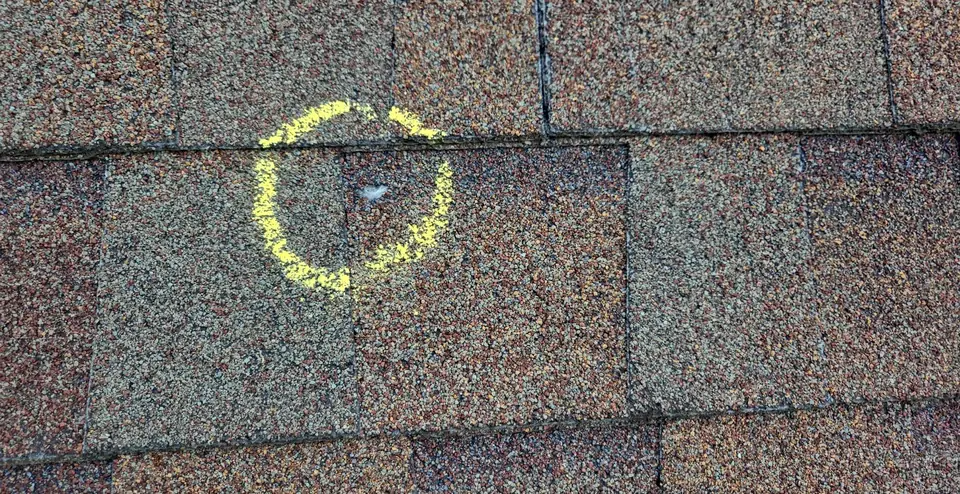
Finding shingle granules in your gutters is normal on a new roof and a warning sign on an older one. Shingle makers add more granules than the shingle can hold, and the loose extras wash off in the first months after install. If your roof is several years old, or you see dark bare spots on the shingles, granules piling up at the downspouts, or new granules after a hailstorm, the shingles are wearing out or have been damaged, and the roof should be looked at. Patriot Roofing and Restoration does free storm inspections across Central Arkansas when hail or wind may be the cause.
What shingle granules do
The granules are the crushed, coated mineral layer on the top of an asphalt shingle. CertainTeed explains that they block ultraviolet light from reaching the asphalt in the shingle and give the shingle its color, since the color of a shingle is a blend of granule colors. That first job is the important one. Asphalt that sits in direct sun dries out, cracks and stops shedding water, so a shingle that has lost its granules ages much faster than one that still has them.
Some shingles carry extra protection in the granule surface. The Atlas lines Patriot installs have 3M Scotchgard Protector applied at the factory to fight the black algae streaks that are so common on older roofs in a humid state like Arkansas.
Granules in the gutters of a new roof: normal
Several shingle makers say the same thing about this. IKO explains that extra granules are used so the asphalt is completely covered, and that some of them are only loosely held on the shingle and come packed in the bundle. IKO calls these "hitchhiker" granules and says losing them is completely normal and does not shorten the weatherproofing life of the shingles. TAMKO says loose granules are usually noticed collecting in the gutters after the shingles are installed, and that this kind of shedding is common and not a cause for concern. Malarkey says the shedding of hitchhiker granules is not a manufacturing defect, does not affect the performance or life of the shingles, and can take from six months to two years depending on the climate.
So if your roof is new and you see a little gritty sand in the gutters or at the bottom of a downspout, that is expected. It should taper off over time.
When granule loss is a problem
All three makers draw the same line: granule loss becomes a concern when it leaves bare spots where the black asphalt shows through. TAMKO says excessive loss that exposes the asphalt layer needs immediate attention. These are the signs to watch for:
- Bare or dark patches on the shingles, where the surface looks smooth and black instead of sandy.
- Granules piling up in the gutters or splashing out of the downspouts on a roof that is several years old.
- A sudden pile of granules after a hailstorm. Hail knocks granules off where the stones hit, often leaving round, dark marks. Our post on what hail damage looks like on a roof shows what an inspector looks for.
- Curling, cracking or brittle shingles along with the granule loss. That combination usually means the roof is near the end of its life.
- Uneven color across a slope, especially on the side that gets the most sun.
What causes shingles to lose granules
Age and sun
Over the years, sun, heat and rain loosen the granules little by little. Asphalt shingles in Arkansas last about 15 to 20 years, shorter than many manufacturer ratings that assume a milder climate, and heavy granule loss is one of the clearest signs a roof is getting there. Our post on signs you need a new roof covers the others.
Hail
When a hailstorm comes through, a hailstone can knock granules off in a round spot and bruise the mat under them, and that is damage an insurance company may cover under your policy. Not every mark matters to an insurer; cosmetic vs functional hail damage explains the difference adjusters draw.
Foot traffic and scraping
Walking on a roof, especially on a hot day, can scuff granules off. So can branches that rub the shingles in the wind. Trimming limbs back from the roof helps.
Water flowing in one path
Where a downspout from an upper roof empties onto a lower roof, or water runs heavily down a valley, the steady flow can wash granules away faster than on the rest of the roof.
A problem with the shingle itself
Now and then, bare spots show up early on a roof that has seen no unusual weather. That is a question for the manufacturer's warranty, and the maker will want photos and the install date. Keep your paperwork.
Is it hail or normal wear?
From the ground it can be hard to tell. Wear tends to be spread across a whole slope, worst on the sunniest side, with the shingles also looking dry, curled or cracked. Hail tends to leave random round hits, often with matching dents on gutters, vents and other soft metals, and it shows up all at once after a storm. If the granules appeared right after a storm, have the roof inspected soon. Insurers set reporting deadlines, and a roofer's photos taken close to the storm date help show when the damage happened.
Please stay off the roof to check it yourself. Loose granules make shingles slippery, and a roof with hail damage can have soft spots you cannot see.
Can you fix granule loss?
No product puts granules back on a worn shingle in a way that restores it. What can be done depends on how much damage there is:
- A few damaged shingles can usually be replaced as a repair. Patriot prices repairs from a published roof repair price book, and once all recommended repairs are done they are backed by our 365-Day Patriot Leak Free Guarantee.
- Granule loss across whole slopes on an older roof usually means the roof is ready for replacement. Patching bare shingles on a worn roof tends to buy little time.
- Hail damage is handled through an inspection and, if there is damage, an insurance claim. We work with your insurance company and meet the adjuster; your policy decides what is covered.
If you want to keep an eye on it year to year, the Patriot Care Club includes an annual 21-Point Roof Checkup with photos for $14.95 a month, so you have a dated photo record of your roof's condition.
How Patriot checks for granule loss
A roof inspection from Patriot Roofing and Restoration ends with our 21-point inspection report with photos. Storm and full replacement inspections are free. A visit for a leak or a repair that is not storm related starts with a $79.99 diagnostic visit that includes the 21-point inspection, and Care Club members pay no service fee. We will show you where the granules are coming from, whether it is wear or storm damage, and whether a repair or a new roof makes more sense.
Frequently asked questions
Is it normal to find granules in the gutters after a new roof?
Yes. Shingle makers including IKO, TAMKO and Malarkey say loose extra granules shed after installation and that this is normal. Malarkey says it can take six months to two years to stop.
How much granule loss is too much?
The line the manufacturers draw is exposed asphalt. If you can see dark, smooth bare spots on the shingles, or granules keep piling up on a roof that is several years old, have it inspected.
Does granule loss mean my roof leaks?
Not right away. It means the shingles are losing their protection from the sun, so they will crack and wear faster. Leaks tend to follow if it is left alone.
Will insurance pay for granule loss?
Insurance generally covers sudden damage such as hail, not wear from age. Your policy decides. This is general information, not insurance advice; coverage and deadlines vary by policy and carrier, so confirm with your agent.
Do gutter guards stop shingle granules?
Fine micro-mesh guards are designed to keep shingle grit out of the gutter. Our Armor gutter guard, the Evelyn Leaf Solution stainless micro-mesh, blocks pine needles, pollen and shingle grit. See gutter guards.
Seeing granules in your gutters?
Call Patriot Roofing and Restoration at 501.441.2900 or contact us online to book an inspection anywhere in Central Arkansas. If a storm just came through, ask for a free storm inspection.
21-Point Roof Inspection
Your Roofing Specialist checks the roof and attic and gives you a 21-point report with photos of what we find.
Roof Repair Diagnostic Visit
Includes the 21-Point Roof Inspection Report and attic analysis. Patriot Care Club members pay no service fee.