
Why Is My Attic Wet in Winter? Attic Condensation in Arkansas
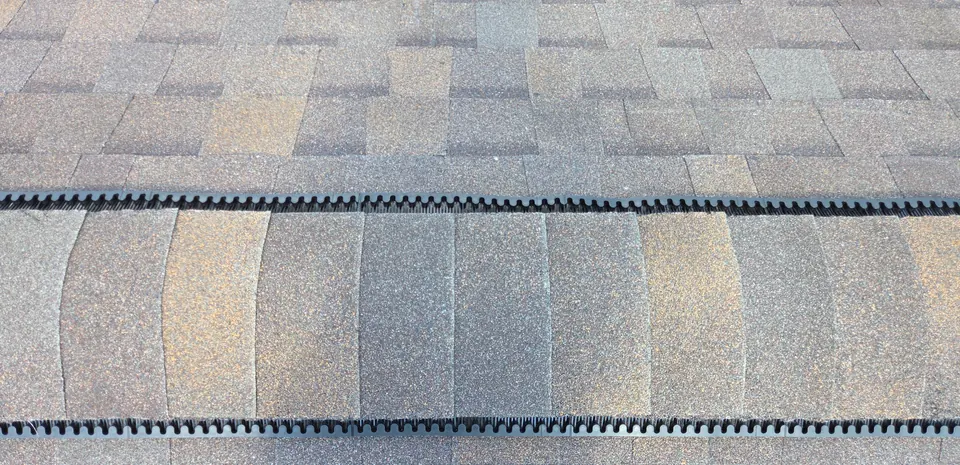
Water in the attic on a cold, dry morning is usually condensation, not a roof leak. Warm, damp air from the living space gets into the attic, meets a roof deck chilled below the dew point overnight, and turns to frost or droplets on the wood and nail tips; when the sun warms the roof, it melts and drips onto the insulation and ceiling, which looks just like a leak. The fix is to keep that moist air out of the attic and let a balanced vent system carry the rest away, not to patch the shingles.
Google suggests searches like "roof sweating in winter" and "can a roof leak without rain" for a reason: it surprises a lot of homeowners the first cold week of the year. Here is how to tell condensation from a real leak, where the moisture comes from, what you can check yourself this week, and when it is a roofing problem.
Condensation or a roof leak? How to tell
| What you see | Condensation usually | A roof leak usually |
|---|---|---|
| When water shows up | Cold, clear mornings, often with no rain for days; drips as the sun warms the roof | During or soon after rain |
| Where it is in the attic | Spread across large areas of the underside of the deck, with frost or droplets on many nail tips | One spot or a single wet trail you can follow uphill to a vent, pipe, chimney or valley |
| Nails and wood | Rusty nail tips across the deck, dark staining or mildew over a wide area | A stain line and soft wood in one place |
| Insulation | Damp in many small spots, often worst near bathroom fans and the attic hatch | Matted or wet under one opening |
If the water lines up with rain and one spot, it is more likely a leak, and our guide on how to find a roof leak walks through tracing it. Some homes have both, so if you are not sure, have the attic looked at.
Why it happens on Central Arkansas winter mornings
Our winters are mild, but nights still get cold. The National Weather Service normals for Little Rock (1991 to 2020) put the average January low at about 31°F and the February low at about 34°F. On clear nights a roof loses heat to the sky, so the deck in a vented attic can get colder than the air outside.
The Department of Energy's Building America Solution Center explains the rest: "the roof deck in a ventilated attic will be cold, often below the dewpoint," and condensation forms when "warm moist air from the house or ducts in the attic escapes into the attic." It also notes that the natural buoyancy of warm, humid indoor air is enough to push it through holes in the ceiling. A tight, well-vented roof can still get wet if the house below it is feeding the attic moisture.
Where the moisture comes from
- Air leaks from the living space. Gaps around the attic hatch or pull-down stairs, recessed lights, and holes for wiring, plumbing and ductwork let warm air rise straight into the attic. The Solution Center's advice is to identify those sources of air leakage and seal them.
- Bathroom and kitchen fans that end in the attic. A fan duct that has fallen off, or that was simply pointed at a soffit or the ridge vent, blows shower steam onto the cold deck. The International Residential Code (section M1501.1) says "the air removed by every mechanical exhaust system shall be discharged to the outdoors," and it does not allow exhaust into an attic, soffit, ridge vent or crawl space.
- High indoor humidity. Showers, cooking, a humidifier turned up high, or a lot of people in the house over the holidays all add moisture. The EPA recommends keeping indoor humidity below 60 percent, ideally between 30 and 50 percent.
- Ducts in the attic. Leaky heating ducts in the attic can blow warm, moist house air into it, which the Solution Center also lists as a source.
What to check yourself this week
- Look in the attic on a cold morning with a flashlight, from the framing only. Note where the frost or damp is worst.
- Follow each bathroom fan duct from the fan to where it ends. It should connect to a vent cap on the roof or a wall, not stop in the attic or blow at a soffit.
- Run bathroom fans during showers and for a while after. The EPA lists running the bathroom fan or opening a window when showering as a basic moisture step.
- Check indoor humidity with an inexpensive hygrometer. If it is above 50 percent on a cold day, turn the humidifier down or off.
- Check the attic hatch for weatherstripping that seals when it is closed.
- Look at the soffit vents from inside the attic. Insulation pushed against them blocks the intake air the whole system depends on; our post on soffit vents shows what good intake looks like.
What not to do
- Do not close or cover attic vents. Closing vents to "keep the cold out" traps the moisture. The Solution Center says ventilation helps dry the condensation that does occur.
- Do not patch the roof or tarp it. The shingles are not letting this water in, so caulk and tar on the roof will not stop it.
- Do not add a powered attic fan without checking the intake. An exhaust fan without enough intake can pull conditioned air up through the same ceiling gaps that cause the problem. We also do not put two kinds of exhaust on one roof, such as a fan beside a ridge vent, because they work against each other. Our post on whether solar attic fans are worth it covers when a fan helps.
When it is the roof's job
Sealing ceiling leaks, insulation and indoor humidity are inside the house. The roof's part is the vent system: air in low at the soffits or eaves, and out high at the ridge. The Solution Center says intake vents should sit low in the roof, typically in the soffits, and that the vent area should ideally be split equally between intake and exhaust. The building code ties the total to the attic floor: 1 square foot of net free vent area for every 150 square feet of attic, or 1 for every 300 when the vents are split between high and low. Our post on ridge vents and attic ventilation in Arkansas goes deeper.
The roof needs work when the attic has no real intake, the soffits are solid or blocked, the exhaust is undersized, or two exhaust types are fighting each other. Years of condensation can also leave the decking soft and dark. When that wood is found during a replacement, the first 2 sheets of decking are included and more is $100 a sheet installed, shown to you before it is replaced; see what happens when rotted decking is found at tear-off.
How Patriot Roofing and Restoration checks it
Every 21-point roof inspection includes an attic analysis: the decking from below, ventilation balance, moisture and signs of past leaks, with photos. If you call about water in the attic, the repair visit is a $79.99 diagnostic, or $19.95 for Patriot Care Club members, and we tell you whether you are looking at condensation, a leak or both. If it is a roof leak, the repair is priced from our published book, and once all recommended repairs are done it is backed by our 365-Day Patriot Leak Free Guarantee.
If the vents are the problem, ventilation work on an existing roof is priced in writing after we see the attic. It may be added intake, a new ridge vent, turbines or an Attic Breeze solar attic fan. With a new roof, ventilation is part of every package. We don't do water damage or mold restoration, insulation or HVAC work, so sealing ceiling air leaks or fixing a bath fan duct inside the house is a job for an insulation, HVAC or electrical pro.
Learn more about our attic ventilation service and our roof inspection. We serve homeowners from Maumelle and Little Rock to Conway and Benton.
Attic condensation in winter: quick answers
Should I close my attic vents in winter?
No. Attic vents are what carry the moisture out in winter. The Department of Energy's Building America Solution Center says ventilation helps dry the condensation that does form, so closing or covering vents makes a wet attic worse. Stop the moist air at its source instead: seal leaks from the house and vent bathroom fans outdoors.
Is a little frost in the attic normal?
A thin, short-lived frost on the coldest mornings can happen in a vented attic, because the roof deck gets colder than the outdoor air on clear nights. Frost that builds up, drips onto the insulation, stains the ceiling or comes back every cold morning is not normal and means too much moisture is getting into the attic.
Can attic condensation rot my roof?
Yes, if it goes on winter after winter. Wood that stays damp can grow mold and rot, and rusty nail tips and dark, stained decking are common signs. The EPA says the key to mold control is moisture control, so the fix is to stop the moisture, not to cover it up.
Will a new roof fix attic condensation?
Only the part caused by poor ventilation. Every Patriot roof package includes ventilation, but a new roof does not seal air leaks in your ceiling or reroute a bathroom fan that dumps into the attic. Those have to be fixed too, or the attic can stay wet under a brand new roof.
Wet attic this winter?
Find out whether it is condensation or a leak before you spend money on either. Call Patriot Roofing and Restoration at 501.441.2900, answered live 24/7, or contact us online to book a visit anywhere in Central Arkansas.
Sources: U.S. Department of Energy Building America Solution Center, Condensation Control: Attics and Roofs, Cold Weather (updated Dec 6, 2022); EPA, A Brief Guide to Mold, Moisture and Your Home (updated Feb 18, 2026); International Code Council, International Residential Code section M1501.1; National Weather Service Little Rock, Little Rock climate data. All checked November 18, 2026.
21-Point Roof Inspection
Your Roofing Specialist checks the roof and attic and gives you a 21-point report with photos of what we find.
Roof Repair Diagnostic Visit
Includes the 21-Point Roof Inspection Report and attic analysis. Patriot Care Club members pay a $19.95 diagnostic fee.