
Vertical vs Horizontal Siding: Look, Install and Cost Compared
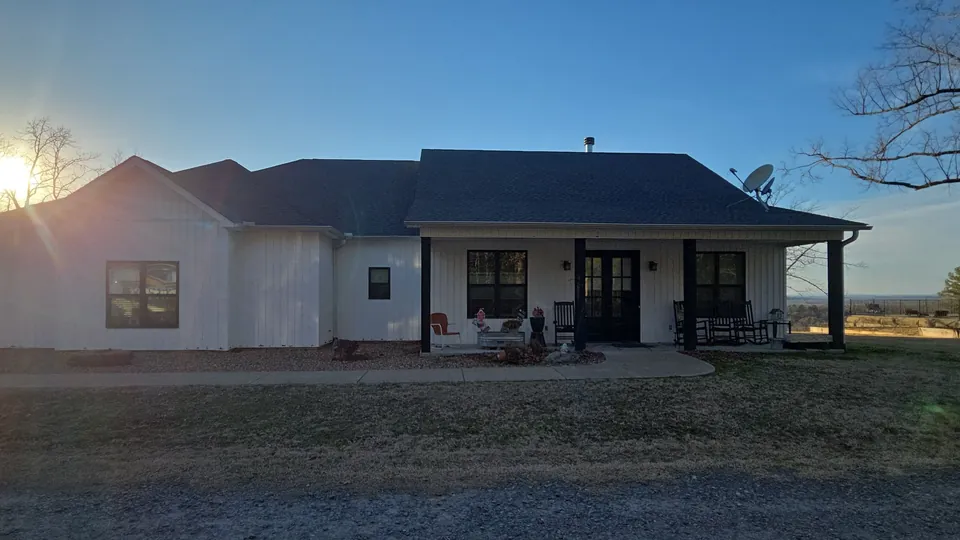
Horizontal siding runs side to side in overlapping rows, the way most houses are sided. Vertical siding runs up and down, most often as board and batten: wide boards with narrow strips over the seams. Neither is better on every house. Horizontal lap siding is the everyday choice for a whole house and is the simpler install. Vertical siding gives a taller, farmhouse or modern look and is often used on gables, bump-outs and accent walls, but it takes extra steps to install well, so it usually costs more in labor. Many of the best-looking homes use both.
We are Patriot Roofing and Restoration in Maumelle. We install and repair all types of siding across Central Arkansas, horizontal and vertical, under our Arkansas Residential Home Improvement License, 0421461126. The product and installation facts below come from CertainTeed, James Hardie and LP Building Solutions' own websites, checked November 22, 2026, and are credited to the maker that published them.
Vertical vs horizontal siding at a glance
| Horizontal (lap) siding | Vertical siding (board and batten) | |
|---|---|---|
| Look | Classic, calm rows; makes a wall read wider and lower | Strong up-and-down lines; makes a wall read taller; farmhouse and modern styles |
| Where it is used | Whole house, the most common choice | Whole house, or as an accent on gables, bump-outs, porches and over garage doors |
| Materials | Vinyl, fiber cement, engineered wood, wood, metal | Vinyl, fiber cement panels with battens, engineered wood panels, wood, steel |
| Install | Starts from a starter strip at the bottom and works up | No starter strip on vinyl; needs solid nailing along the panel edges, J-channel top and bottom, and flashed breaks between rows |
| Labor | Usually the simpler, faster install | More steps and more trim, so usually more labor for the same wall |
| Repairs | Damaged rows can be replaced in sections | Damaged boards can be replaced, but the pattern has to line up and battens come off with them |
What vertical siding is
Most vertical siding today is board and batten. James Hardie describes it as wide vertical boards joined by thin vertical strips, the battens, that cover the seams, and says that today the wide panels do the work as the main siding while the battens are mostly decorative. LP Building Solutions notes the style started on barns and outbuildings, which is why some people still call it barn siding, and that the battens were first there to keep weather out of the joints.
Each maker builds it a little differently:
- Vinyl: CertainTeed makes Board and Batten vinyl panels in 7 inch and 8 inch profiles, with the board and the batten formed into one interlocking panel. CertainTeed lists a Class 1(A) fire rating and says the panels never need painting and clean with a hose and mild detergent.
- Fiber cement: James Hardie uses Hardie Panel vertical siding as the base with Hardie Trim batten boards, 3/4 inch thick, on top. Hardie lists a 30-year non-prorated limited, transferable substrate warranty on Hardie Panel.
- Engineered wood: LP SmartSide panel siding gives the board and batten look in 16 factory-finished colors and 3 textures, per LP, with a 5/50-year prorated limited warranty.
Horizontal lap siding comes in the same three materials and more. Our posts on fiber cement vs vinyl siding and LP SmartSide vs James Hardie compare the materials themselves. This post is about the direction the siding runs.
How the look changes the house
Lines lead the eye. Horizontal rows carry the eye along the wall, so a ranch house looks long and settled, which is why lap siding suits ranch homes and traditional two-story homes. Vertical lines carry the eye up, so a wall looks taller. That is why board and batten shows up on farmhouse-style homes and on tall gables.
CertainTeed says its vertical profiles are often mixed with other siding profiles as an accent in gables and bump-outs, and its gallery shows board and batten over garage doors and in gables. James Hardie's guide says board and batten suits farmhouses and modern homes, that wider batten spacing fits a modern farmhouse, and that some designers pair it with lap siding so the house does not look too farmhouse. LP adds that it can cover a whole house, a single accent wall or just a second story, and that it pairs with brick veneer or a metal roof.
A good rule of thumb: pick one direction for the main walls, and use the other only where you want the eye to stop, such as a gable, a porch or the front of a garage.
How vertical siding is installed differently
The biggest real difference between the two is not the look; it is the install. CertainTeed's installation guidance for vertical vinyl siding lays out the extra steps:
- A solid wall behind it. CertainTeed says vinyl siding should never go over open furring strips or studs, and that vertical siding may need extra work so there are solid nailing points along each vertical edge.
- No starter strip. Horizontal siding starts from a starter strip at the bottom. CertainTeed says not to use one on vertical siding; the panels sit in J-channel at the top and bottom of the wall instead.
- Drainage at the bottom. CertainTeed calls for drainage holes about every 2 feet in the bottom J-channel, with an optional drip flashing.
- Room to move. Vinyl grows and shrinks with temperature. On a vertical wall, CertainTeed says most of the movement goes downward, so about a third of the expansion gap is left at the top and two thirds at the bottom.
- Flashed breaks between rows. Where one row of vertical panels sits above another, CertainTeed calls for back-to-back J-channel, J-channel with a drip cap, or a double-channel piece with flashing, so water running down the upper row does not get behind the lower one.
- A balanced layout. CertainTeed has installers lay out the wall so the cut panels at each end match, and on a gable it starts from the center and works out.
Every one of those steps is extra trim, extra cutting or extra time compared with running lap siding across the same wall. That is why vertical siding usually costs more to install than horizontal siding of the same material, even when the panels themselves cost about the same. Fiber cement and engineered wood panels have their own installation rules, and the maker's instructions for the exact product decide how they go on.
Water, Arkansas weather and upkeep
Both directions keep a wall dry when they are installed to the maker's instructions, and both fail when they are not. With lap siding, each row overlaps the one below it, so rain runs off. With vertical siding, the joints run with the rain, so the trim does more of the work: the J-channel, the drainage holes, the flashing at each break and the battens over the seams. In our hot, humid summers and heavy spring storms those details are the first things to check when a vertical wall has a water problem.
Hail and wind do not care which way the boards run; the material matters more. Our guide to hail damage on siding shows what a hit looks like on vinyl, fiber cement and engineered wood. For upkeep, vinyl in either direction just needs washing, and painted fiber cement or engineered wood will need fresh paint in time. Battens add edges where dirt and pollen can collect, so a board and batten wall can take a little longer to clean.
Which direction fits your house?
- Choose horizontal for most whole-house jobs, for traditional and ranch homes, and when you want the simplest install for your budget.
- Choose vertical for a farmhouse or modern look, or for a whole house when you want the board and batten style and accept the extra trim work.
- Mix them for curb appeal: lap siding on the main walls with board and batten on gables, a porch or a bump-out.
- Match what is there when you are repairing a few walls. A repair usually keeps the existing direction and profile.
- Check your HOA before you choose. Some neighborhoods set the siding style or color.
How we quote and install siding
Your Specialist measures every wall, walks you through the material, the direction and the colors, and gives you a written price. We take the old siding off rather than covering it, so the wall can be checked, and any soft sheathing or rot is shown to you and priced in writing before it is repaired. New siding, soffit and fascia carry a 5-year Patriot Built Right Guarantee, and siding repairs carry a 365-Day Patriot Built Right Guarantee. That is our workmanship guarantee, separate from the maker's product warranty. If your roof or gutters are also due, they can be done on the same schedule. See our siding services or siding replacement page for more.
Frequently asked questions
Is vertical siding more expensive than horizontal siding?
Usually, yes, because of labor. Vertical siding needs solid nailing along the panel edges, J-channel at the top and bottom, and flashed breaks between rows, so the same wall takes more trim and time. The material can cost about the same. Your written quote shows the real difference for your house.
Does vertical siding leak more than horizontal siding?
Not when it is installed to the maker's instructions. The joints run with the rain, so vertical siding depends more on its trim, drainage holes and flashing.
Can you mix vertical and horizontal siding on one house?
Yes. CertainTeed and James Hardie both show board and batten used as an accent on gables, bump-outs and over garage doors with lap siding on the main walls. Where the two meet, the joint needs proper trim and flashing.
Is board and batten the same as vertical siding?
Board and batten is the most common kind of vertical siding: wide boards with narrow battens over the seams. Vertical siding can also be plain panels or grooved panels without battens.
Does Patriot install vertical siding?
Yes. We install and repair all types of siding, horizontal and vertical, including vinyl, fiber cement and engineered wood. Your Specialist will show you what fits your house and put the price in writing.
Deciding which way your siding should run?
We will measure the house, show you both looks and put the price in writing. Contact us or call 501.441.2900 to set up a visit.
21-Point Roof Inspection
Your Roofing Specialist checks the roof and attic and gives you a 21-point report with photos of what we find.
Roof Repair Diagnostic Visit
Includes the 21-Point Roof Inspection Report and attic analysis. Patriot Care Club members pay no service fee.