
Roof Ventilation Types: Every Roof Vent Explained
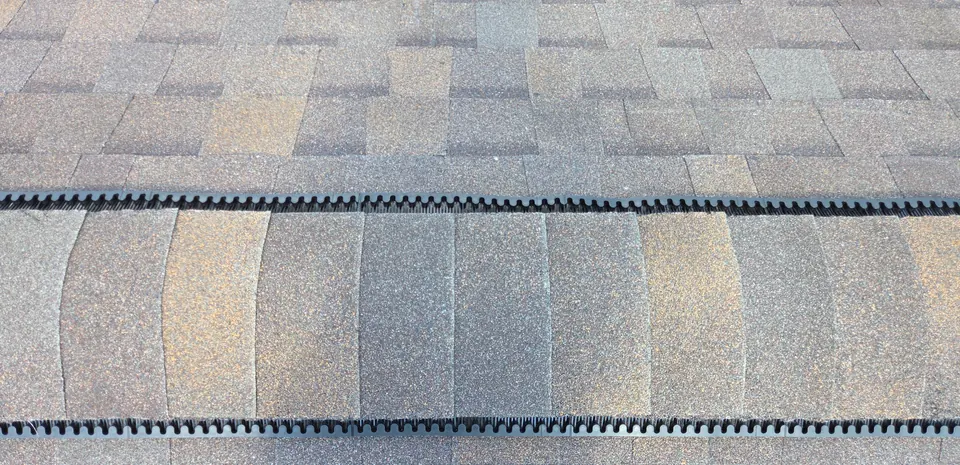
There are two kinds of roof vents: intake vents, low on the roof, that let outside air in, and exhaust vents, high on the roof, that let hot, damp air out. The common intake types are soffit vents and roof-edge (eave) vents. The common exhaust types are ridge vents, static box vents, turbines (whirlybirds), gable vents, and powered or solar attic fans. A good system pairs enough intake with one type of exhaust, sized to the attic. Which exhaust type is right depends mostly on the shape of the roof.
We are Patriot Roofing and Restoration in Maumelle, and we check ventilation on every roof we inspect across Central Arkansas. Here is each vent type and the rules that hold the system together. Product figures come from the vent makers' own pages, Lomanco and Atlas, checked November 20, 2026.
How roof ventilation works
Warm air rises. When the attic heats up, air leaves through the exhaust vents near the peak, and cooler outside air is drawn in through intake vents at the eaves to replace it. Wind across the roof helps by lowering the pressure over the ridge and pulling more air out. That steady flow does two jobs: in summer it carries heat out of the attic, and in winter it carries moisture out before it can condense on the cold roof deck.
Vent size is measured in net free area (NFA), the open space air can actually pass through. Lomanco, a vent maker, says available intake "should meet or slightly exceed" exhaust.
Intake vents
- Soffit vents. Openings in the panels under the overhang: continuous strip vents, vented vinyl or metal soffit, individual louvered vents or small round plug vents. They are the most common intake on Central Arkansas homes. Our post on soffit vents covers the types and how many a house needs.
- Roof-edge intake vents. For homes with little or no overhang, intake can be installed on the roof deck near the eave. Atlas rates its HighPoint Intake eave vent at 9 square inches of NFA per foot, and Lomanco makes a deck-mounted intake it calls the DeckAir.
Exhaust vents, type by type
Ridge vents
A ridge vent runs along the peak. The crew cuts a slot in the deck at the ridge, lays the vent over it and covers it with ridge cap shingles, so from the street it looks like a normal ridge line. Lomanco says a ridge vent needs an exterior baffle to work: wind passing over the baffle lowers the pressure at the ridge and draws air out of the attic. Lomanco lists several of its shingle-over ridge vents at 18 square inches of NFA per foot, and Atlas lists 18 square inches per foot for several of its TruRidge and HighPoint ridge vents.
Good for: roofs with a long ridge, where it exhausts evenly along the whole peak with no moving parts. Not ideal for: hip roofs with little ridge length, where there is not enough ridge to cut in the vent area the attic needs. Our post on ridge vents and attic ventilation in Arkansas heat goes deeper on this type.
Static box vents (roof louvers)
Low, square or slant-back vents set into the roof near the peak, with no moving parts. Each one covers a cut-out in the deck. Lomanco rates its 750 slant-back vent at 50 square inches of NFA, and Atlas rates its HighPoint AL 50 and GL 50 slant-back vents at 50 square inches as well. Lomanco compares a ventilator to a chimney: the higher the stack, the better the draw, so box vents belong as close to the ridge as practical.
Good for: simple, low-maintenance exhaust where the ridge cannot take a ridge vent. Not ideal for: large attics, which can need a long row of them, and Lomanco notes that most static vents do not provide enough ventilation on a hip roof.
Turbine vents (whirlybirds)
A turbine is a round vent with curved fins that spins in the wind and pulls air out of the attic as it turns. Lomanco says every turbine it makes is tested to spin at a 3 mph wind, that a turbine works best when its top sits above the roof peak, and, plainly: "if a turbine is not turning it is not working!!" A turbine that squeaks, wobbles or has stopped turning needs attention.
Good for: hip roofs and roofs with little ridge, where Lomanco recommends turbines, power vents or solar vents. Not ideal for: still, humid days, when there is little wind to spin them. Whirlybird ventilation comes with our Economy roof package.
Gable vents
Louvered vents in the triangular gable walls at each end of the attic. They are common on older homes. Lomanco lists ridge vents with gable vents as one of the combinations not to mix, because one can act as intake for the other.
Powered attic fans
An electric fan mounted on the roof or in a gable that pushes air out of the attic. Lomanco says most power vents run on a thermostat and only come on when the attic reaches about 100 degrees, and it recommends adding a humidistat, because the attic needs ventilation all year, not only on hot afternoons. Like any exhaust, a fan needs enough intake below it.
Solar attic fans
A solar attic fan does the same job on sunshine alone, with no wiring and nothing added to the power bill. We install Attic Breeze Gen 3 solar attic fans, sized at one fan for every 1,700 square feet of attic floor, each on its own flashed base. When we add solar fans, they are the exhaust: we do not also install a ridge vent or turbines on that attic. Our post are solar attic fans worth it in Arkansas? looks at what the research says, and the solar attic fan cost calculator shows the installed price per fan.
The one-exhaust-type rule
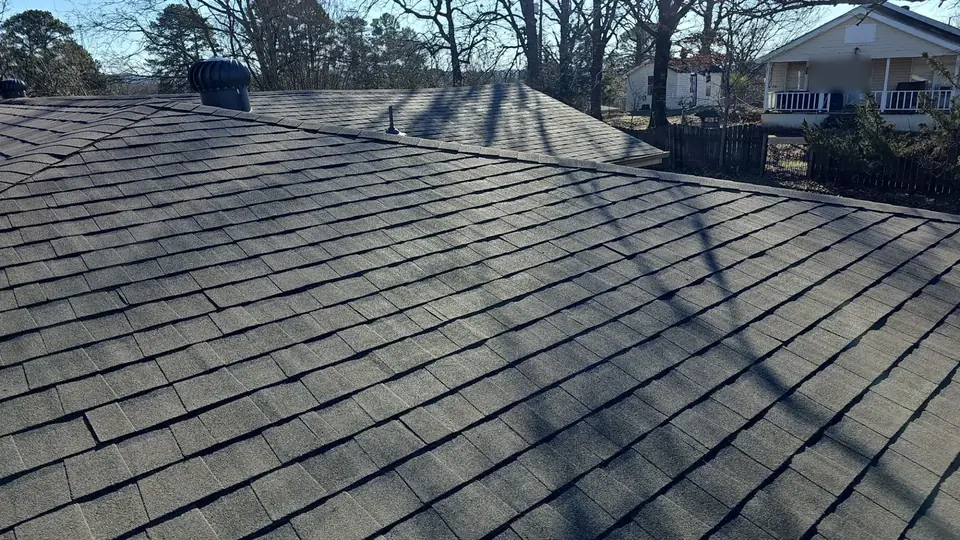
This is the rule homeowners most often break without knowing it. Lomanco answers the question of mixing exhaust types with a capital "NO!" and says: "You want one TYPE of exhaust vent within a common attic area." When two exhaust types share an attic, one can pull air in through the other, a short circuit that leaves the rest of the attic with no airflow. Lomanco's examples include power vents with roof vents and ridge vents with gable vents, and it also says to install all the exhaust at the same height. Atlas says the same, and adds that on its roofing systems "a valid system warranty will cover only one type of exhaust vent per attic area."
So a ridge vent added to a roof that still has box vents or a powered fan can work worse, not better.
Which vent type fits which roof
- Gable roof with a long ridge: a continuous ridge vent with matching soffit intake is usually the cleanest answer.
- Hip roof or short ridges: turbines, a powered fan or solar fans, which Lomanco recommends for hip roofs, with enough intake below.
- Little or no overhang: roof-edge intake vents in place of soffit vents.
- Older home with gable vents and box vents together: pick one exhaust type and close the others off, once the intake is checked.
- Metal roof: ventilation built for metal. Our Armor metal roof package comes with balanced, metal-compatible ventilation and a metal ridge system.
Why it matters in Central Arkansas
Our summers are hot and humid. A poorly vented attic holds heat against the roof deck and shingles, and in winter, damp air from the house can condense on the cold deck. Warning signs: an attic far hotter than outdoors, damp or matted insulation, rusty nail tips through the deck, or a turbine that has stopped turning.
What Patriot installs
- With a new roof: ventilation is part of every roof replacement package. Shield Plus and Shield come with balanced ridge and intake ventilation, Armor with balanced, metal-compatible ventilation, and Economy with whirlybird turbines. See what else is included on our roof replacement page.
- On the roof you have now: added intake, a new ridge vent, turbines or Attic Breeze solar attic fans, priced in writing after we look at the attic. Our attic ventilation page explains how we balance the two ends.
- In every inspection: ventilation is part of our 21-point roof inspection with attic analysis. The ventilation check is free with a storm or replacement inspection. A repair diagnostic visit is $79.99 and includes the 21-point inspection, and Patriot Care Club members pay no service fee.
Frequently asked questions
What is the best type of roof vent?
There is no single best type. A continuous ridge vent with good soffit intake gives even airflow on a roof with a long ridge, which is why it comes with our Shield Plus and Shield packages. On a hip roof, turbines or a fan often work better. Balanced intake and a single exhaust type matter more than the brand or style.
Can I have a ridge vent and turbines on the same roof?
Not on the same attic. Lomanco and Atlas both say to use one type of exhaust per attic area, because two types can short-circuit each other. We do not mix exhaust types that fight each other.
Are whirlybird turbines bad?
No. They are a working exhaust vent and come with our Economy package. They need wind to spin and good intake below, and one that has stopped turning should be repaired or replaced.
How many roof vents do I need?
It depends on the attic floor area and the NFA of each vent. The International Residential Code, as Lomanco and Atlas quote it, calls for 1 square foot of vent area per 150 square feet of attic, or per 300 when the vents are split between high and low as the code describes, with intake at least matching exhaust. We measure the attic before recommending a number.
Not sure what your attic has?
If your attic runs hot, your vents do not match, or a turbine has quit turning, we are glad to take a look. Contact us for a free storm or replacement inspection with a 21-point report and photos, or to book a repair visit.
21-Point Roof Inspection
Your Roofing Specialist checks the roof and attic and gives you a 21-point report with photos of what we find.
Roof Repair Diagnostic Visit
Includes the 21-Point Roof Inspection Report and attic analysis. Patriot Care Club members pay no service fee.