
What Is a Roof Ridge? Parts, Problems and Repairs
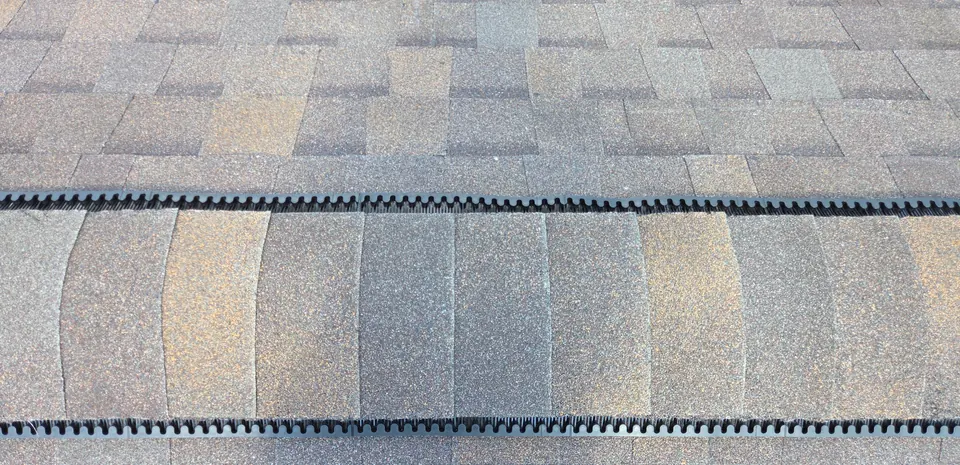
A roof ridge is the horizontal line at the very top of a roof, where two sloped roof planes meet. It is the highest point of the roof. On a typical gable or hip roof you can see it from the street as the straight peak running along the top, finished with a row of ridge cap shingles (or a metal ridge on a metal roof). The word also covers what sits under that line: the ridge board or ridge beam in the framing, and on many homes a ridge vent that lets hot attic air out.
Here is what each part of the ridge does, how the ridge differs from a hip, what can go wrong up there, and how we build it on a new roof.
The ridge from the outside: ridge line and ridge cap
From the yard, the ridge is the long top edge of the roof. Roofers call that whole run the ridge line, and they measure it in linear feet when they order material. The seam where the two slopes meet cannot be covered with flat field shingles alone, so it gets its own cover: ridge cap shingles that fold over the peak and lap down onto both sides. On a metal roof, a formed metal ridge piece does the same job.
We wrote a separate guide on ridge cap shingles, covering why made-for-purpose cap beats cut-up field shingles and the signs that cap needs attention. This post stays on the ridge itself.
The ridge from the inside: ridge board or ridge beam
Go into the attic and look straight up at the peak. On a roof framed with rafters, the rafters from each side meet at a long piece of lumber running the length of the ridge. That piece is either a ridge board or a ridge beam, and they are not the same thing.
- Ridge board: Weyerhaeuser's technical support page describes it as a non-structural member that the opposing rafters rest against and connect to. It does not hold the roof up on its own; the rafters and the ceiling joists or rafter ties do that work together. It cites the International Residential Code (IRC R802.3): ridge boards must be at least 1 inch nominal thickness and at least as deep as the cut end of the rafters, and it notes a ridge board is used on roofs from 3/12 up to 12/12 pitch.
- Ridge beam: the same page describes a ridge beam as a structural member that supports the ends of the rafters and carries that load down to posts or gable end walls. It notes the code calls for one on roofs below 3/12 pitch, or where the ceiling joists cannot resist the outward thrust of the rafters, as with many vaulted ceilings.
Many newer homes in Central Arkansas have roof trusses instead of rafters. A truss roof has no separate ridge board: each truss is a pre-built triangle, and the peaks of the trusses line up to form the ridge.
Why should a homeowner care? Because a ridge line that dips or sags in the middle is a framing question, not a shingle question. New shingles will follow whatever the framing does. If we see a sagging ridge during an inspection, we photograph it from the roof and the attic and tell you plainly that it needs a framing look before or during a replacement.
Ridge vs hip vs valley: the lines on a roof
- Ridge: the level peak where two slopes meet at the top.
- Hip: a sloped outside corner where two roof planes meet and run down toward the eave. A hip roof has hips on its corners and often a short ridge on top. Hips are capped the same way as the ridge, which is why the cap is sold as "hip and ridge."
- Valley: the inside corner where two slopes meet and water collects and runs down. Valleys get ice and water shield, not cap shingles.
- Rake and eave: the sloped side edges and the lower edges of the roof.
Our posts on the gable roof and hip roof vs gable roof show how these lines come together on the two most common roof shapes. For a quick definition of any roof part, see our roofing glossary.
Why the ridge takes a beating
The ridge is the highest and most exposed line on the roof. Wind rises over the roof and pulls hardest at the edges and the peak, and hail lands squarely on the cap. The cap shingles are also bent over the peak, so they flex more than field shingles. And because water runs away from the ridge in both directions, an opening at the top lets water start down both sides of the roof deck at once.
The ridge is also where most homes let attic air out. A ridge vent runs under the cap along the peak, so a cap problem can turn into a vent problem. Our post on ridge vents and attic ventilation explains why that vent only works with enough intake at the soffits.
Common ridge problems to watch for
- Cap shingles missing, lifted or creased after a wind storm.
- Cracks across the cap where it bends over the peak.
- Nails backing out along the top of the roof.
- A ridge vent that is torn, crushed or showing gaps at the ends.
- A ridge line that dips, bows or sags in the middle when you look at it from the street.
- Water stains or rusty nail tips on the underside of the roof deck near the peak in the attic.
You do not need to climb up to check most of these. Stand back in the yard, look along the ridge line with binoculars or a phone zoom, and look in the attic with a flashlight after a hard rain. If something looks off, let a roofer get on the roof.
How Patriot builds the ridge on a new roof
Hip and ridge cap is part of every Patriot roof replacement, along with the ventilation for your package. By package:
- Armor (26-gauge PBR steel panels): a metal ridge system with balanced, metal-compatible ventilation.
- Guardian and Defender: impact-rated hip and ridge with balanced ridge and intake ventilation.
- Shield: standard ridge, with whirlybird turbine ventilation.
On our Atlas shingle roofs, the hip and ridge is Atlas's own. Atlas lists its Pro-Cut Hip and Ridge as 12 by 12 inch pieces with a 5-5/8 inch exposure, 66 pieces and 31 linear feet per package. When we plan a roof, we use a more conservative 25 linear feet per bundle, so the crew does not run short at the top of the roof. Atlas hip and ridge also matters for the warranty: the Atlas Signature Select system warranty requires Atlas hip and ridge along with a qualifying Atlas shingle, underlayment and accessories, registered within 60 days.
See everything that comes with a new roof on our roof replacement page, or get a quick estimate with the roof cost calculator. The calculator is an estimate only; your Patriot Roofing specialist gives you a complete written estimate after a full inspection.
Ridge repair or a new roof?
A few blown-off cap shingles on an otherwise sound roof are a repair. Our roof repair price book lists the prices up front. A repair visit is $79.99 and includes our 21-point roof inspection (Patriot Care Club members pay no service fee), and once all recommended repairs are done they are backed by our 365-Day Patriot Leak Free Guarantee.
If the cap is worn along the whole ridge, the field shingles are near the end of their life, or hail has bruised the roof, replacement is usually the better answer. After a hail or wind storm, start with a free storm or replacement inspection.
Frequently asked questions
What is the peak of a roof called?
The ridge. The line along the top is the ridge line, and the shingles that cover it are ridge cap shingles.
Is the ridge board structural?
A ridge board is not; it is a nailing surface the rafters lean against. A ridge beam is structural and carries the rafter load to posts or walls. Which one a home has depends on its framing and pitch.
What is the difference between a ridge and a hip?
A ridge is level and runs along the top of the roof. A hip is sloped and runs from the top down to a corner at the eave. Both are covered with hip and ridge cap.
Does every roof have a ridge vent?
No. Some roofs vent through turbines, box vents, gable vents or solar attic fans instead. Our Armor, Guardian and Defender packages come with balanced ridge and intake ventilation, and Shield comes with turbines.
Can a sagging ridge be fixed with a new roof?
Not by shingles alone. A sag comes from the framing underneath, so it needs to be looked at from the attic. We will show you photos of what we find.
Want someone to look at your ridge?
Book a visit. After a storm, ask for a free storm or replacement inspection; you get our 21-Point Roof Inspection Report with photos of your ridge, hips and attic, so you can see your own roof and decide for yourself.
21-Point Roof Inspection
Your Roofing Specialist checks the roof and attic and gives you a 21-point report with photos of what we find.
Roof Repair Diagnostic Visit
Includes the 21-Point Roof Inspection Report and attic analysis. Patriot Care Club members pay no service fee.