
Gable Roof: Types, Parts, Pros and Cons for Arkansas Homes
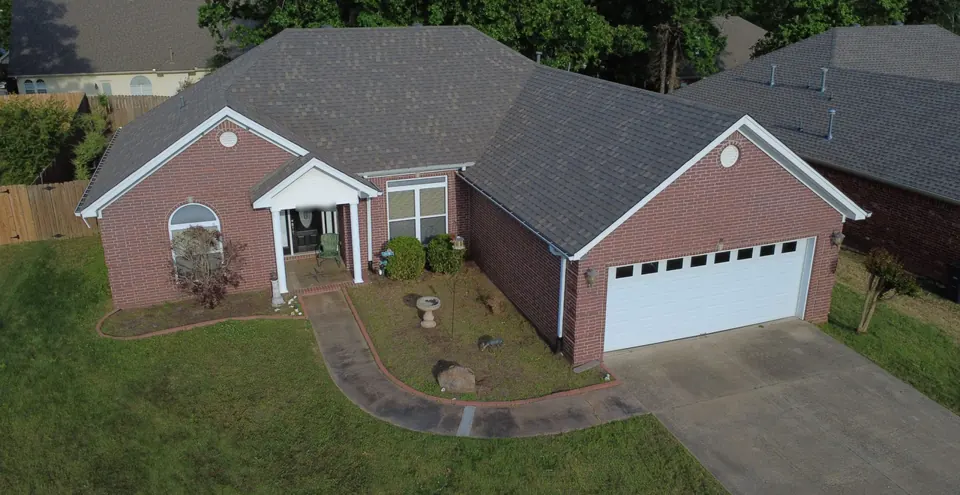
A gable roof is a roof with two sloped sides that meet at a peak, called the ridge, with a triangle-shaped wall at each end. That triangle is the gable. It is the shape most people draw when they draw a house, and it is one of the most common roof shapes in Central Arkansas, often mixed with hips on the same home. Gable roofs are simple, shed rain well and leave good attic space; their weak spots are the gable end walls and the overhangs at the sloped edges, which take the brunt of high wind.
The parts of a gable roof
Knowing a few names makes it easier to read an estimate or an inspection report.
- Ridge: the level peak where the two slopes meet. It is covered with ridge cap shingles, and on most of our roofs a ridge vent sits under them.
- Gable end: the triangle of wall between the two slopes at each end of the house. It can be brick, siding or a mix.
- Rakes: the sloped edges of the roof that run up the gable ends from the eave to the ridge.
- Eaves: the level bottom edges, where the gutters hang.
- Overhang: the part of the roof that sticks out past the wall, at the eaves and along the rakes.
If you want the full picture of how steep the slopes are, see our guide to roof pitch.
Types of gable roofs
"Gable roof" covers several shapes you will see around Maumelle, Little Rock and the rest of Central Arkansas:
- Side gable: the ridge runs parallel to the street, so the gable ends face the neighbors. Common on ranch homes.
- Front gable: the gable end faces the street. You see it on narrower homes and over entries and garages.
- Cross gable: two or more gable sections meet at an angle, usually in an L or T shape. Where they meet, the roof forms a valley.
- Clipped gable: the top point of the gable is cut off with a short sloped section, a small hip at the peak.
- Dutch gable: a small gable sits on top of a hip roof. It mixes the two shapes.
- Gambrel: each side has two slopes, a steep lower one and a shallow upper one, like a barn.
Many homes here are not one shape at all. A hip main roof with gables over the garage and porch is very common. If you are trying to figure out which one you have, our post on hip roof vs gable roof shows how to tell them apart and how they compare.
Why people like gable roofs
- Simple to build and to roof: two flat planes and one ridge mean fewer cuts, fewer seams and less flashing than a roof full of hips and valleys.
- Sheds water well: rain runs straight down two slopes to the gutters.
- Attic space: the tall triangle inside leaves more room for storage, insulation and air movement than a hip roof of the same pitch.
- Ventilation options: a long, continuous ridge gives plenty of room for a ridge vent.
The weak spots: gable ends and rake overhangs
The same tall, flat end wall that gives a gable roof its attic space also catches wind. The U.S. Department of Energy's Building America Solution Center says gable end walls that are not braced or anchored well are vulnerable to collapse in high winds, and that a damaged gable end can let rainwater into the house. Its guide recommends bracing gable ends to resist wind pressure in both directions, because wind pushes on one side of a house and pulls on the other. Source: Lateral Bracing of Gable End Walls, Building America Solution Center, checked November 2, 2026.
The overhangs along the rakes are the other weak spot. The same source says gable roof overhangs are subject to significant uplift pressure in high winds and are among the most vulnerable parts of a house. It notes that ladder-framed overhangs are usually kept to about 8 to 12 inches, and that longer overhangs need outriggers. Source: Framing Gable Roof Overhangs, Building America Solution Center, checked November 2, 2026.
Bracing a gable wall or reframing an overhang is framing work, not roofing. What a roofer controls is the roof covering at those edges, and that is where wind damage on a gable roof usually shows up first: shingles lifting or tearing off along the rake, starting at the corners.
What we do at the rakes on a roof replacement
Because the rakes are exposed to wind, the details there matter. Every Patriot Roofing and Restoration roof replacement includes:
- Starter shingles along the rakes as well as the eaves, so the edge shingles are sealed down on the sides, not only at the bottom. See what starter shingles do.
- Drip edge around the full perimeter, eaves and rakes, so water is directed off the edge and the decking edge is covered. See what drip edge is.
- A full tear-off down to the decking, with the decking checked before anything goes back on.
- Ventilation: a ridge vent with intake vents on most packages, so the attic breathes along that long gable ridge (turbines on the Shield package, a metal-compatible system on Armor).
The full list of what comes with a new roof is on our roof replacement page.
Gable vents and ridge vents
Many older gable-roof homes have louvered vents high in the gable walls. They work, but mixing exhaust types can backfire. A gable vent next to a ridge vent can short-circuit the air flow, so the attic pulls air from the nearest opening instead of from the soffits, and part of the attic never gets fresh air. On a replacement we look at the whole system and set it up as balanced intake and exhaust. Our post on ridge vents and attic ventilation explains how that works, and our attic ventilation page covers the options.
What a gable roof means for your price
A plain side-gable roof is one of the simpler shapes to roof, so it usually takes less waste and less cutting than a roof with many hips, valleys and dormers. A cross-gable roof adds valleys, and every valley adds ice and water shield, cutting and labor. Pitch, height and the package you choose matter as much as the shape. You can get a quick estimate for your home with our roof cost calculator, and see the general ranges on our pricing page. The calculator is an estimate only; your Patriot Roofing specialist gives you a complete written estimate after a full inspection.
Signs your gable roof needs a look
- Shingles lifted, creased or missing along the rakes, especially at the top and bottom corners.
- Drip edge or rake trim bent, loose or pulled away.
- Stains or soft spots on the overhang boards under the rakes, or on the ceiling near an exterior wall.
- Daylight or water stains around a gable vent in the attic.
- Wavy or sagging lines along the ridge.
After a hail or wind storm, a free storm or replacement inspection is the right first step. For a leak or a repair, our repair visit is $79.99 and includes our 21-Point Roof Inspection, and once all recommended repairs are done, they are backed by our 365-Day Patriot Leak Free Guarantee. See roof repair for details.
Frequently asked questions
What is the difference between a gable and a hip roof?
A gable roof has two slopes and a triangle wall at each end. A hip roof slopes down on all four sides, with no tall end walls. Many homes use both.
Is a gable roof good in high wind?
It can be. The Building America Solution Center says hip roofs see smaller wind pressures, and that gable end walls and rake overhangs need proper bracing and framing to hold up in high winds. Sealed rake edges with starter shingles and drip edge help the roof covering itself stay put.
What is the triangle part of a gable roof called?
The gable, or gable end. The sloped roof edges above it are the rakes.
Can you put a ridge vent on a gable roof?
Yes. A gable roof's long ridge is a good fit for a ridge vent, paired with intake vents at the soffits. Any old gable vents should be checked so the two do not work against each other.
Can Patriot change my gable roof to a hip roof?
That is a framing change, not a roof replacement. We replace roofs on the shape you have, and we can tell you what we see at the gable ends during the inspection.
Want to know how your gable roof is holding up?
Book a free storm or replacement inspection. You get our 21-Point Roof Inspection Report with photos of your rakes, ridge and gable ends, so you can see your own roof and decide for yourself.
21-Point Roof Inspection
Your Roofing Specialist checks the roof and attic and gives you a 21-point report with photos of what we find.
Roof Repair Diagnostic Visit
Includes the 21-Point Roof Inspection Report and attic analysis. Patriot Care Club members pay no service fee.