
Black Streaks on Your Roof: Algae, Moss and What to Do
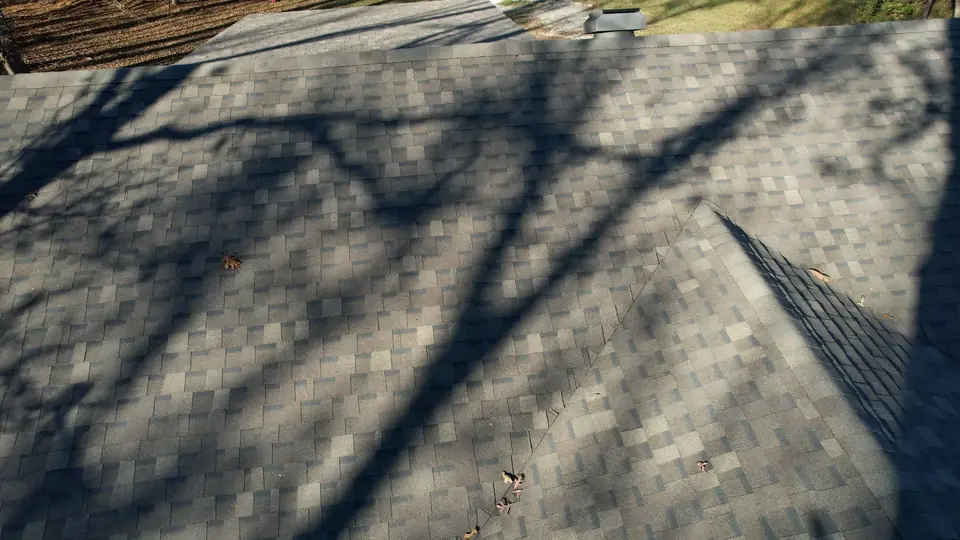
Black streaks on a roof are almost always algae, not dirt, mold or burn marks. The Asphalt Roofing Manufacturers Association (ARMA) says the most common culprit is a blue-green algae called Gloeocapsa magma, which floats through the air and settles on roofs in warm, humid weather. The streaks are mostly a looks problem: ARMA does not treat algae as damage to the shingle, and Atlas describes it as a curb appeal issue. Moss is different. Green, fuzzy clumps can lift shingle edges and hold water against the roof, so moss is worth dealing with sooner.
Below is how to tell what you are looking at, what the shingle makers say about cleaning it, what not to do, and when the streaks are a reason to have the roof looked at.
What causes black streaks on a roof?
The algae land on the roof as airborne spores and grow wherever the surface stays damp. As the colony grows, it darkens and runs downhill with rainwater, which is why it shows up as long vertical streaks rather than a single spot. ARMA says algae discoloration is most widespread in warm, humid regions, and Atlas says the algae are "easily spread by the wind and thriving wherever moisture can be found." That is why one streaked roof on a street is often followed by the house next door.
In our experience, the black algae streaking is common on older roofs across Central Arkansas, and it matters more in a humid climate like ours than it would in a dry state. It usually starts on the slopes that stay damp longest after a rain: north-facing slopes and any part of the roof shaded by trees.
Algae, moss or something else?
| What you see | Most likely | How urgent |
|---|---|---|
| Dark gray or black streaks running down the slope, often in long stripes | Algae | Cosmetic. Clean it or live with it; plan for algae-resistant shingles at the next replacement |
| Green, raised, spongy clumps, often along shingle edges and in shady spots | Moss | Deal with it. ARMA says moss can lift or curl shingle edges and, in bad cases, lead to deck damage and leaks |
| Bare, dark, smooth patches where the surface looks worn away | Granule loss, not algae | Have it checked. See shingle granules in your gutters |
| Stains under a branch or around a chimney or vent | Tree droppings, rust or runoff | Usually cosmetic, but check the flashing if it is around a chimney or vent |
ARMA makes the same distinction: algae tends to look uniform or streaked across a slope, while moss and tree droppings usually cause localized spots.
Does algae damage your roof?
Not in the way hail or wind does. Neither ARMA nor Atlas says the algae itself breaks down the shingle, and Atlas treats it mainly as a curb appeal and home value issue. What can hurt the roof is the wrong cleaning method. ARMA warns that scrubbing loosens and removes granules, and granules are what protect the asphalt from the sun.
That said, a streaked roof is often an older roof. If the streaks share the slope with curling, cracking or bare spots, the streaks are not the main story. Older shingles in Arkansas realistically last 15 to 20 years, and a heavily streaked roof near that age is worth an honest look before you spend money cleaning it.
Why moss is a bigger deal than algae
ARMA is direct about this: "Unlike algae, moss can be detrimental to asphalt shingle performance." Moss needs a moist place to live, so it grows on the shady, damp slopes, and overhanging branches make it worse by adding shade and dropping debris that holds water. As it builds up, ARMA says it can lift or curl the leading edges of the shingles, which raises the risk of blow-off in a windstorm, and in severe cases push water sideways under the shingles, damaging the roof deck and causing leaks.
If you see moss and also see shingle edges that are raised or no longer lying flat, read lifted shingles: why they happen and how they are fixed. A lifted shingle is a repair item, not a cleaning item.
How the shingle makers say to clean algae and moss
If you want the streaks gone, ARMA publishes a cleaning method for asphalt shingles:
- Use a 50:50 mix of laundry-strength liquid chlorine bleach and water, applied with a sprayer.
- Let it sit 15 to 20 minutes, without letting the roof dry out, then rinse with low-pressure water.
- Protect plants and landscaping from the bleach solution, and wear proper protective equipment.
- For moss, ARMA says it loosens over time and can be removed with a leaf blower; heavy moss may take more than one treatment.
Two cautions. First, a wet, bleached roof is slick, and a fall from a roof is far more dangerous than any stain. If the roof is steep or two stories, this is not a weekend job. Second, cleaning is not permanent. Atlas notes that "algae always grows back," so washing becomes a recurring cost unless the shingles themselves resist algae.
What not to do
- Do not pressure wash. ARMA says never to use a pressure washer on an asphalt shingle roof because it causes granule loss and very likely premature failure. Atlas says pressure washing, "even at the lightest settings, is not the best option."
- Do not scrub. Friction from brushes strips granules, which ARMA warns about.
- Do not nail zinc or copper strips onto an existing roof. ARMA says it is not recommended, because it means exposed nails that can leak or breaking the shingle seal, which invites wind damage. Those strips are something to consider only when a roof is being replaced.
- Do not walk a mossy or wet roof. Moss and algae are slippery even when the roof looks dry.
How to keep streaks from coming back
ARMA's maintenance advice is simple: trim tree branches back so more sunlight reaches the roof, clear leaves and debris off the roof regularly, and keep the gutters clean so water and debris do not sit at the roof edge. Those steps slow algae and moss down. They do not stop airborne spores from landing.
The lasting fix is a shingle built to resist algae. Atlas says its shingles with 3M Scotchgard Protector have a minimum 10 percent blend of evenly distributed 3M copper granules, and that copper is proven to resist algae. Atlas lists Scotchgard Protector on its StormMaster Shake, Pinnacle Impact, Pinnacle Sun and Pinnacle Pristine lines. Atlas's standard limited shingle warranty lists algae coverage as lifetime on StormMaster Shake and the Pinnacle lines, subject to the warranty's terms. For what the Atlas warranties do and do not cover, see Atlas roof warranty explained.
This is one of the two reasons we chose Atlas as our primary shingle line: 3M Scotchgard Protector is factory applied to the Atlas lines we install, which fights the black algae streaks common on humid Arkansas roofs.
When black streaks are a reason to call a roofer
- There is moss on the roof, especially with raised or curling shingle edges.
- The streaks share the roof with bare spots, cracking or granules piling up in the gutters.
- The roof is 15 years old or more and you are deciding whether to clean it or replace it.
- You see stains on a ceiling or in the attic under the shaded side of the roof.
A Patriot roof inspection checks shingles, flashing, ventilation and the attic, and you get photos of everything we find. A repair or diagnostic visit is $79.99, or no fee for Patriot Care Club members, whose annual 21-Point Roof Checkup is a good way to catch moss before it lifts a shingle. If you are thinking about a full replacement, the replacement inspection is free, and we will tell you plainly if the roof has years left. Any repair we do is backed by the 365-Day Patriot Leak Free Guarantee.
Black streaks on roof: quick answers
Are black streaks on my roof mold?
Usually not. ARMA identifies the most common cause as an algae, Gloeocapsa magma. It is often called mold or mildew, but it is algae.
Do black streaks mean I need a new roof?
Not by themselves. Algae is mainly cosmetic. If the roof is also old, curling or losing granules, have it inspected before deciding.
Can I pressure wash black streaks off my roof?
No. ARMA says pressure washing an asphalt shingle roof causes granule loss and very likely premature failure. Use the low-pressure bleach method instead, or leave it alone.
Why are the streaks only on one side of my roof?
Algae and moss grow where the roof stays damp longest, which is usually the north-facing slope and any area shaded by trees.
Will the streaks come back after cleaning?
Usually, yes. Atlas notes that algae grows back after washing. Algae-resistant shingles, such as the Atlas lines with 3M Scotchgard Protector, are the long-term answer at the next replacement.
Worried about the streaks or moss on your roof?
Call Patriot Roofing and Restoration at 501.441.2900 or contact us online to book an inspection anywhere in Central Arkansas.
21-Point Roof Inspection
Your Roofing Specialist checks the roof and attic and gives you a 21-point report with photos of what we find.
Roof Repair Diagnostic Visit
Includes the 21-Point Roof Inspection Report and attic analysis. Patriot Care Club members pay no service fee.