
Can You Fix a Roof Leak From the Inside? What Works and What Backfires
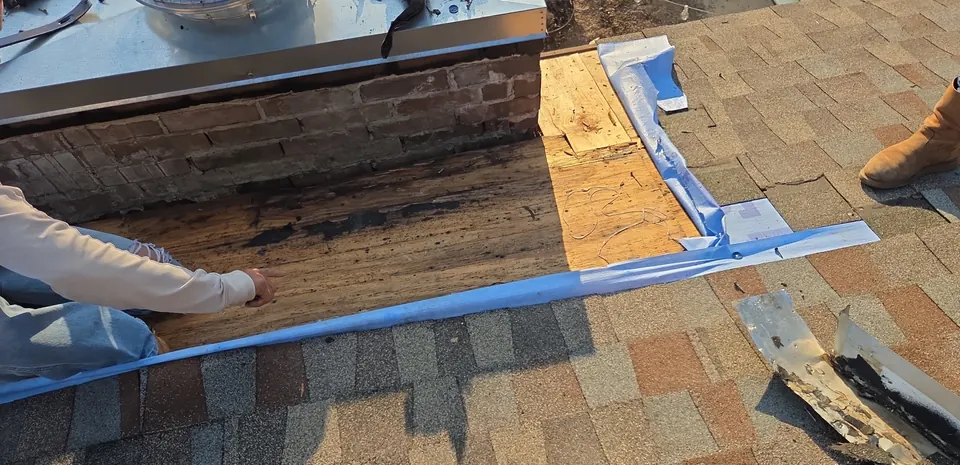
No, you cannot permanently fix a roof leak from the inside. A roof keeps water out at its top surface, where the shingles, flashing and underlayment shed rain off the house, so the only lasting repair is made on the outside, at the spot where water is getting in. What you can do from the inside is limit the damage until the roof is fixed: catch the water, protect the ceiling and wiring, and find out where the leak is so the repair goes quickly. Patches applied to the underside of the roof deck, such as caulk, roofing tar, spray foam or a board screwed over the wet spot, do not stop rain from getting under the shingles, and they can trap water against the wood.
Here is why, what to do inside today, and the few leaks that really can be fixed from inside because they are not roof leaks at all.
Why a roof leak has to be fixed from the outside
An asphalt shingle roof is built in layers from the top down: shingles and flashing on the surface, underlayment under them, then the wooden roof deck. Each layer overlaps the one below it so water runs downhill and off the edge. A leak means one of those top layers has an opening: a cracked pipe boot, a lifted or missing shingle, loose flashing at a wall or chimney, or a worn valley.
From the attic you are looking at the back of the deck, the last layer the water reaches. Anything you put there sits under the problem, not on it. Rain keeps entering through the same opening, runs across the top of the deck and finds the next nail hole or seam.
There is a second problem. Wood that gets wet from above and is sealed from below cannot dry out. A coat of tar, foam or caulk on the underside of the deck holds the moisture in the plywood, which is how a small leak turns into soft, rotted decking that has to be cut out and replaced.
What you can safely do from the inside
These steps do not fix the leak, but they protect the house and make the real repair faster:
- Catch the water. Put a bucket or trash can under the drip with a towel in the bottom to stop splashing, and move furniture, rugs and electronics out of the way.
- Keep water away from electricity. If water is near a light fixture, ceiling fan or outlet, keep people away from it and turn that circuit off at the breaker if you can do it safely. That is an emergency; call for help right away.
- Watch for a bulging ceiling. A ceiling that is sagging or bubbling is holding water on top of it. Keep people out from under it, put a bucket below it, and call a roofer or a water damage professional. A soaked ceiling can come down without warning.
- Look in the attic if you can do it safely. Step only on the framing, never on the drywall between it. Look for wet wood, dark stains on the deck, dripping nails and matted insulation above the stain, and set a pan on the framing under any drip.
- Mark and photograph everything. Take photos of the ceiling stain and anything you find in the attic, and note how far the wet spot is from an outside wall or a vent pipe. Those notes help a roofer find the opening outside, and the photos help with any insurance claim.
If the stain on the ceiling is a long way from where you think the water should be, that is normal. Our guide on how to find a roof leak walks through tracing it from the ceiling to the attic to the roof.
Inside "fixes" that usually backfire
In our experience these are the most common things homeowners try from inside, and why they rarely work:
| What people try | What happens |
|---|---|
| Caulk or roofing tar on the underside of the deck | Rain still gets under the shingles. The patch traps moisture in the wood and covers the stain a roofer would use to trace the leak. |
| Spray foam over the wet spot | The water runs around it, and the foam hides rot and holds moisture against the deck. |
| A board or sheet of plywood screwed up under the leak | The screws add new holes through the deck, and water collects on top of the board instead of the ceiling. |
| A tarp or plastic sheet hung in the attic | It can steer water away from the ceiling for a few days, which is fine as a stopgap, but it does nothing to the opening and it keeps the area underneath from drying. |
A tarp on the outside of the roof is a different story. An emergency tarp covers the opening itself and is the right temporary step when water is pouring in. Our post on emergency roof tarping explains when a roof needs one and how a proper tarp job is done.
Why waiting on an inside patch costs more
The EPA says "the key to mold control is moisture control," and it lists roof leaks among the causes of mold hidden in a home. It also says "it is important to dry water-damaged areas and items within 24-48 hours to prevent mold growth," and that if you clean up mold but do not fix the water problem, the mold will most likely come back. An inside patch that keeps a leak dripping into the attic every time it rains never gives the wood and insulation a chance to dry.
What grows while you wait is everything around the opening: decking, insulation and drywall. We fix the roof. We do not do interior water damage or mold work, so if drywall or insulation is soaked, call a water damage professional as well.
When the leak really can be fixed from inside
Some water that shows up on a ceiling never came through the roof. These problems are inside the house, so the fix is inside too:
- Attic condensation. Frost or droplets on the underside of the deck and nail tips on a cold morning, with water showing up on a dry day, usually point to moisture from the house meeting a cold roof deck. The fix is better attic ventilation and sealing air leaks from the living space, not a roof patch. Our post on ridge vents and attic ventilation in Arkansas covers how an attic should breathe.
- A bathroom or kitchen exhaust duct that has come loose, or that blows warm, damp air into the attic instead of outside.
- An air conditioner drain line or drain pan in the attic that is clogged or overflowing, which is common in an Arkansas summer.
- A plumbing line in the ceiling or attic.
What the real repair looks like
Most roof leaks come from one part of the roof and are a single, fairly small repair made from the outside. These are a few lines from our published roof repair price book, standard prices for a one-story asphalt shingle roof up to 6/12 pitch:
| Common leak repair | Patriot price |
|---|---|
| Replace up to 5 shingles | $379 |
| Replace 1 pipe flashing (pipe boot) | $786 |
| Flash or counterflash up to 5 feet of wall | $786 |
| Reflash up to 8 linear feet of chimney | $1,038 |
| Repair up to 10 feet of valley | $1,038 |
Steeper roofs cost more, and two-story homes add 12%. If the decking under the opening has rotted, we show it to you and price it before any work begins. For more worked examples, see how much roof repair costs.
How we handle a leak
When you call Patriot Roofing and Restoration about a leak, the repair visit is a $79.99 diagnostic, or no fee for Patriot Care Club members. It includes our 21-point roof inspection and attic analysis, so we look at the leak from both sides: the stain and the deck in the attic, and the shingles, flashing and pipe boots on the roof above it. We show you the photos on a tablet and sort what we find into Need To Do, Should Do and Could Do, each with its price from the book. Nothing is touched until you approve it.
Once all the recommended repairs are done, the roof is covered by our 365-Day Patriot Leak Free Guarantee: if the roofing system leaks in the next 365 days, we repair it at no charge. If the leak started after hail or a windstorm, the inspection is free, because we do not charge for hail, wind and storm damage inspections. If water is coming in fast, our phones are answered live 24/7 and we do emergency tarping.
Learn more about our roof repair service.
Fixing a roof leak from inside: quick answers
Can I stop a roof leak from the attic?
You can slow the damage from the attic by catching the water and keeping it off the ceiling, but you cannot stop the leak there. Water keeps getting in through the opening on the roof surface until that opening is repaired.
Will roofing tar on the inside of the roof stop a leak?
Usually not. Tar on the underside of the deck is below the opening, so rain still gets in on top of it, and the tar holds moisture in the wood. It also covers up the stain a roofer uses to find the leak.
Is it safe to fix a roof leak myself?
Catching water and checking the attic from the framing is reasonable for most homeowners. Climbing on a roof, especially a wet one, is how many people get hurt, so leave the outside repair to a roofer.
Why does my ceiling get wet when it has not rained?
That points to something other than the roof: attic condensation, an exhaust fan duct, an air conditioner drain or a plumbing line. Those are fixed from inside.
Roof leaking?
Protect the house from inside, then get the opening fixed on the roof. Call Patriot Roofing and Restoration at 501.441.2900, answered live 24/7, or contact us online to book a repair visit anywhere in Central Arkansas.
21-Point Roof Inspection
Your Roofing Specialist checks the roof and attic and gives you a 21-point report with photos of what we find.
Roof Repair Diagnostic Visit
Includes the 21-Point Roof Inspection Report and attic analysis. Patriot Care Club members pay no service fee.