
When Did Architectural Shingles Come Out? A Short History
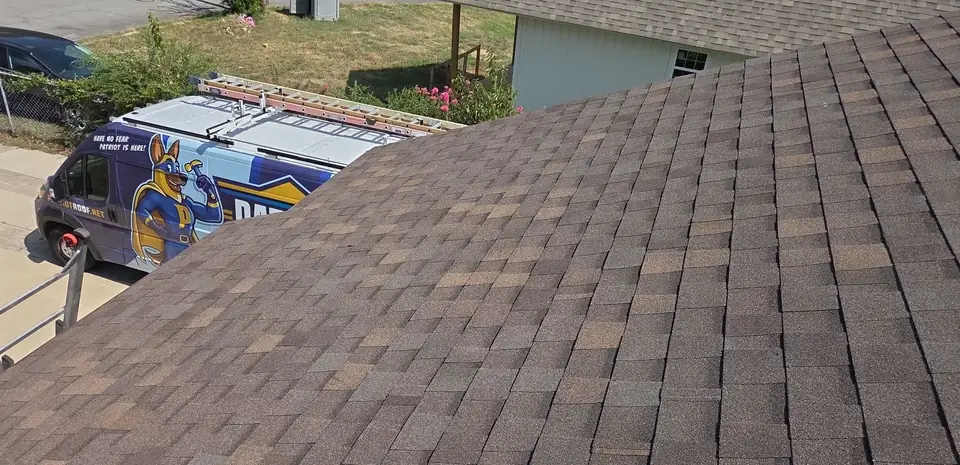
Architectural shingles came out in the 1970s and became common through the 1980s. GAF, one of the large shingle makers, says they were introduced in the 1970s and '80s to give homeowners a roof with more architectural interest, and IKO's history of asphalt shingles says almost all shingles were cut from a single layer until the 1970s, when laminated shingles arrived. They did not take over right away. A 2001 article in IIBEC's Interface journal described a "dramatic shift" to laminated, or architectural, shingles away from the older 3-tab shingle only in the late 1990s. Today architectural shingles are the standard choice for a new shingle roof.
A short timeline of the asphalt shingle
Architectural shingles are the latest step in a little over a century of asphalt roofing. Here are the dates the manufacturers and trade groups themselves publish. Where two sources give slightly different years, we say so.
- Early 1900s: the first individual asphalt shingles. IKO credits Henry Reynolds with cutting rolled roofing into individual shingles in 1903. CertainTeed's own company timeline says it perfected individual asphalt roofing shingles in 1904 and introduced individually cut asphalt shingles in 1912.
- 1935: the first 3-tab shingles. IKO says shingle brands released the first three-tab shingles in 1935, and that by the 1950s the 12 by 36 inch size had become standard across most manufacturers.
- 1940s: a new mat. The core of a shingle is called the mat. IKO says the industry moved away from cotton rag mats in the 1940s to a tougher organic mat.
- Late 1950s: self-sealing shingles. IKO says manufacturers created self-sealing shingles, with a factory-applied adhesive strip, in the late 1950s.
- 1970s: fiberglass mats. The Asphalt Roofing Manufacturers Association (ARMA) says fiberglass was introduced in the 1970s as a stronger, more durable and more fire-resistant reinforcement. IIBEC's 2001 article places the change from paper-based mats to glass mats in the late 1970s and early 1980s.
- 1970s and 1980s: laminated, or architectural, shingles. GAF and IKO both place the start of laminated shingles in the 1970s, with GAF adding the 1980s.
- 1990: super-premium shingles. CertainTeed says it introduced Grand Manor, which it calls the first super-premium roofing shingle on the market, in 1990.
- Late 1990s: architectural becomes the norm. IIBEC's April 2001 article said the five years before it had seen a dramatic shift to laminated or architectural style shingles, away from 3-tab.
What made architectural shingles different
A 3-tab shingle is one flat layer of shingle material with two slots cut into the bottom edge, which makes three equal tabs. On a roof, 3-tab shingles make a flat, even, brick-like pattern.
An architectural shingle, also called a dimensional or laminated shingle, is made of two or more layers bonded together. The layers are cut so that the bottom edge is uneven, which puts shadow lines across the roof and gives it depth, a bit like wood shake. IKO's history says that in the 1970s more modern tastes called for a sharper transition between colors, and laminated shingles answered that.
The extra layer also makes the shingle thicker and heavier. That is one reason our post on architectural vs 3-tab shingles says architectural shingles hold up better to Arkansas wind and hail. It is also why impact-rated shingles today are architectural-style shingles: a standard 3-tab shingle is not impact rated.
Shingles kept changing after that
The architectural shingle of the 1980s is not the architectural shingle on a new roof today. Shingles have kept getting bigger and gaining new features. Atlas, the shingle maker whose products we install most, says it opened in 1982 with a single plant in Meridian, Mississippi, making asphalt shingles and roll roofing. Atlas lists these later milestones for its own products:
- 2010: HP high-performance oversized shingles.
- 2011: shingles featuring 3M Scotchgard Protector, which is there to resist the black algae streaks you see on many older Arkansas roofs.
- 2019: Core4 enhanced polymer technology.
Size is an easy change to see. The old 3-tab standard was 12 by 36 inches. Atlas's data sheets for Pinnacle Impact, Pinnacle Pristine and ProLam list those shingles at 42 by 14 inches. Our post on how many bundles of shingles per square shows how that size works out on a roof.
How to tell what is on your roof now
You do not need to climb up to tell. From the yard, or in a clear photo:
- 3-tab: flat and uniform, with straight rows and evenly spaced slots, every tab the same size.
- Architectural: thicker looking, with uneven bottom edges, shadow lines and a layered, textured look. There are no evenly spaced slots.
The age of the house is not much of a clue. A home built in the 1980s may well have started with 3-tab, but we plan on 15 to 20 years for an asphalt shingle roof in Arkansas, so most homes that old have been reroofed at least once since. What matters is what is on the roof today and how worn it is.
What we install today, and what we still repair
We do not install new 3-tab roofs. When a 3-tab roof is worn out, we replace it with architectural or Class 4 impact-rated shingles. We do still repair existing 3-tab roofs. A repair visit is $79.99 for non-members and includes our 21-point inspection, and repairs carry the 365-Day Patriot Leak Free Guarantee.
Atlas is our primary shingle line. We install Atlas StormMaster Shake, Pinnacle Impact, Pinnacle Sun, Pinnacle Pristine and ProLam, and as an Atlas PRO+ contractor at the Gold level, we install Atlas Signature Select roofing systems. Our replacement packages are built around architectural shingles:
- Guardian: a Class 4 impact-rated shingle (UL 2218), with a 10-year Patriot Leak Free Guarantee.
- Defender: a Class 3 impact-rated architectural shingle, with a 5-year Patriot Leak Free Guarantee.
- Shield: a standard architectural shingle, not impact rated, with a 2-year Patriot Leak Free Guarantee.
Prefer metal? Our Armor package is a 26-gauge PBR steel roof with a 15-year Patriot Leak Free Guarantee. See our asphalt shingle roofing page for how the shingle packages compare, and our post on whether architectural shingles are worth it for the cost side.
Frequently asked questions
When did architectural shingles become popular?
They were introduced in the 1970s and grew through the 1980s, but a 2001 IIBEC article described the big shift away from 3-tab as happening in the late 1990s. Today they are the standard for a new shingle roof.
Are architectural shingles the same as dimensional or laminated shingles?
Yes. Architectural, dimensional and laminated are three names for the same kind of shingle: two or more layers bonded together for a thicker, textured look.
When did 3-tab shingles come out?
IKO dates the first three-tab shingles to 1935, with the 12 by 36 inch size becoming standard by the 1950s.
Do you still install 3-tab shingles?
No. We do not install new 3-tab roofs. We repair existing 3-tab roofs and replace worn ones with architectural or Class 4 impact-rated shingles.
Can I replace a few 3-tab shingles with architectural shingles?
The two do not match in look or thickness, so a patch of architectural shingles on a 3-tab roof will stand out. For a small repair we work with the existing roof. If the roof is worn out, replacing the whole roof gives you a matched roof.
Find out what your roof needs
Whether you have an older 3-tab roof or architectural shingles that are showing their age, contact us for a roof inspection and a written estimate. Hail, wind and storm damage inspections and full replacement estimates are free, and each comes with a 21-point report and photos.
21-Point Roof Inspection
Your Roofing Specialist checks the roof and attic and gives you a 21-point report with photos of what we find.
Roof Repair Diagnostic Visit
Includes the 21-Point Roof Inspection Report and attic analysis. Patriot Care Club members pay no service fee.