
Why Does My New Roof Look Wavy? Causes and What to Do
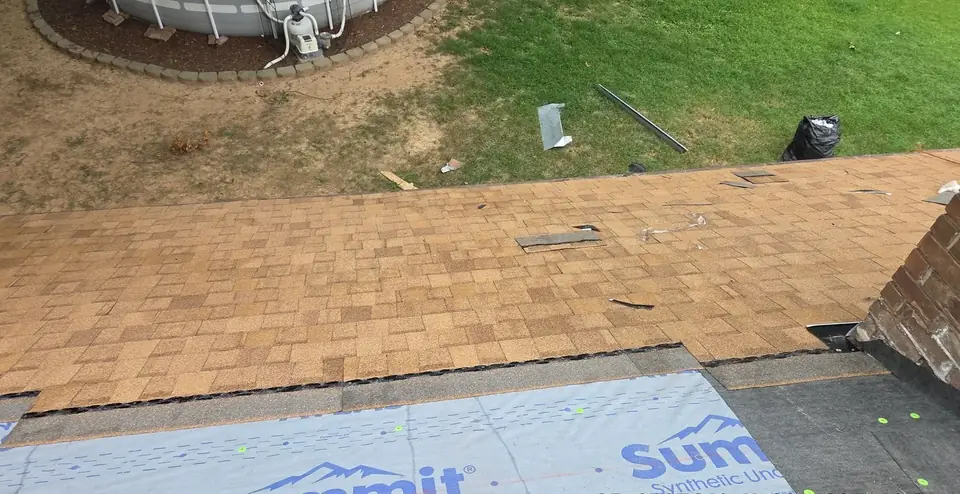
A new roof usually looks wavy for one of four reasons: the wood decking under it is uneven or has swelled with moisture, the underlayment wrinkled before the shingles went on, the shingles were laid over an old roof, or the framing under the deck is sagging. The Asphalt Roofing Manufacturers Association (ARMA) says shingle buckling "is most often the result of wrinkles in the roofing underlayment or movement of the wood decking." Some of these are a quick fix and some point to a structural problem, so the pattern of the waves matters. Here is how to read it, what to ask your roofer, and how we build a roof so it lies flat.
The four common causes of a wavy new roof
1. Decking that moved or swelled
Decking is the plywood or OSB nailed to the rafters under everything else. Wood takes on moisture and grows, and when sheets are butted tight together with no room to expand, the edges push up into a ridge. ARMA's bulletin "Plain Facts About Buckled Shingles" (revised March 2024) says decking not spaced at least 1/8 inch apart "can lead to buckling due to expansion from moisture," and that deck joints should be staggered so normal movement does not line up across the roof. ARMA also names moisture soaked up by the deck during construction or reroofing as a cause. A roof where the deck sat open to rain, or new sheets were installed wet, can show it.
2. Wrinkled underlayment
Underlayment is the layer that goes on the deck before the shingles. If it wrinkles and shingles are nailed over the wrinkle, the shingle above takes the same shape. GAF's technical bulletin R-105 says moisture trapped under the underlayment "may cause blistering, buckling or wrinkling of the shingles," that the underlayment "should have a relatively flat & smooth surface before installing shingles," and that damage from installing shingles over buckled felt is not covered by GAF. ARMA says to install shingles as soon as practical after the underlayment goes down, and to keep deck materials and underlayment away from excessive moisture before the shingles go on. See our post on synthetic vs felt underlayment for how the two materials behave.
3. Shingles laid over an old roof
When new shingles go over an existing layer, every curl, patch and dip in the old roof can show through the new one. It also hides the decking, so nobody sees soft or rotted wood before the new roof goes on. This is one reason we never lay new shingles over old ones (more on that below).
4. Sagging framing or a bad deck section
A dip between rafters, a swayback ridge, or a broad low area is usually not a shingle problem. ARMA lists structural deficiencies as a cause of abnormal deck movement and describes it as an obvious large disruption of the roof system. Rotted decking that was left in place, rafters that were undersized or cut, or a load the framing was not built for can all do it. New shingles will follow whatever shape the structure gives them.
Smaller, one-off bumps
ARMA also lists isolated causes: nails that were not driven flush, shingles bent by poor storage, or debris left under a shingle. These show up as single bumps in random spots, not as a pattern.
Read the pattern: what the waves tell you
ARMA's bulletin describes how each cause tends to look, which helps you sort a cosmetic issue from a serious one before anyone climbs a ladder:
- Straight lines or ridges in a grid. Distortions that line up with the joints in the roof deck point to deck movement from moisture, typically sheets with too little expansion gap.
- Random wrinkles across the roof. Distortions that do not follow deck joints point to underlayment that wrinkled before the shingles went on.
- A dip between rafters or a sagging ridge line. Points to the framing or a weak deck section, the one to have checked first.
- A single bump here and there. Usually a raised nail, a bent shingle or something under it.
Look from the street in low morning or evening light, when shadows make waves easy to see, and take photos from the same spot so you can tell whether anything changes. If you can safely look in the attic, check for wet or stained wood, daylight, or sagging between rafters. Do not walk on the roof.
Will the waves go away on their own?
Do not count on it. ARMA's bulletin does not say buckling corrects itself. It says buckling can be minimized when the right steps are followed during installation, and that if shingles still buckle, the roof should be professionally evaluated to find the root cause. Once the cause is fixed, ARMA says the shingles can be reinstalled flat or replaced if they are damaged. Fixing only the shingles without fixing the cause usually brings the waves back.
Does a wavy roof leak?
Not always, at least not right away. But a buckled shingle does not lie flat against the one below it, so wind can get under it more easily, and a raised ridge wears faster than flat shingle. A sag can also mean the wood under the roof is weak or wet. Treat waves on a new roof as a reason to call the installer now, while the roof is under their guarantee, rather than waiting for a stain on the ceiling.
What to ask the roofer who installed it
- Did you tear off down to the deck, or install over the old shingles?
- Was any decking replaced, and was it dry when it went on? Was it gapped and were joints staggered?
- Did rain get on the open deck or the underlayment before the shingles went on?
- Do you have photos of the deck and underlayment before the shingles covered them?
- What does your written guarantee cover, and for how long?
Photos answer most of these questions. A roofer who documented the job can show you exactly what the deck looked like.
How Patriot builds a roof so it lies flat
Every Patriot Roofing and Restoration replacement starts with a tear-off down to the decking, so we see the wood before anything new goes on. The decking is checked; the first 2 sheets of replacement decking are included, and any more are $100 a sheet installed, photographed and approved by you before we replace them. Our post on rotted decking found at tear-off explains how we handle it.
Every package uses synthetic underlayment, and every package includes ventilation: balanced ridge and intake ventilation on Defender and Guardian, turbines on Shield, and metal-compatible ventilation on Armor, because good attic ventilation helps keep moisture out of the deck. A production manager is on site during the first hours of the job and again at the end of the day. On a full roof replacement we take 250 to 1,000 photographs of the work, and you get a link to every one of them, including the deck before it was covered.
If your Patriot roof leaks or has a workmanship problem, we repair it at no charge for the term of your Patriot Leak Free Guarantee: Shield 2 years, Defender 5 years, Guardian 10 years and Armor 15 years, excluding acts of God and maintenance issues. That is a promise that the roof will not leak, which is plainer than a vague workmanship warranty. See our roof replacement page for everything a replacement includes.
If someone else installed your roof
Call the installer first, because their guarantee may cover it. If they are gone or will not come back, we can look at it. A roof repair visit is $79.99 and includes our full 21-Point Roof Inspection with attic analysis; Patriot Care Club members pay no service fee. We will tell you what is causing the waves and what it takes to fix, sorted into Need To Do, Should Do and Could Do, with prices from our published roof repair prices. If the roof is worn out or the deck needs work across the whole roof, a replacement inspection is free. Learn more about our roof repair service.
Frequently asked questions
Why does my new roof look wavy?
Most often because the decking under it moved or swelled with moisture, or the underlayment wrinkled before the shingles went on. Shingles installed over an old roof and sagging framing are the other common causes.
Is it normal for a new roof to look wavy?
Small single bumps can come from a raised nail or a bent shingle, but a pattern of waves on a new roof is not something to live with. ARMA recommends a professional evaluation to find the root cause when shingles buckle.
Will wavy shingles flatten out over time?
ARMA's guidance does not say they will. It says to find and fix the cause, then reinstall the shingles flat or replace them if they are damaged.
Can a wavy roof be fixed without replacing it?
Sometimes. A raised nail or a small area of bad decking can be fixed in a section. Waves across the whole roof from decking or underlayment usually mean taking the shingles off that area, fixing the cause, and reinstalling or replacing them.
Does Patriot install new shingles over old ones?
No. We tear off down to the decking on every replacement so the deck can be checked and the new roof lies on solid, flat wood.
Worried about waves in your roof?
Contact Patriot Roofing and Restoration to book a repair visit, or ask for a free storm or replacement inspection if your roof took storm damage or you are ready to replace it.
21-Point Roof Inspection
Your Roofing Specialist checks the roof and attic and gives you a 21-point report with photos of what we find.
Roof Repair Diagnostic Visit
Includes the 21-Point Roof Inspection Report and attic analysis. Patriot Care Club members pay no service fee.