

Why Arkansas Weather Is One of the Hardest Tests a Roof Can Face
How Arkansas heat, humidity, and storms shorten roof lifespan is something every homeowner in the state eventually confronts — often sooner than they expected. Arkansas sits in one of the most climatically demanding regions in the continental United States, where roofs face a relentless combination of forces that work together to break down materials faster than manufacturer ratings suggest.
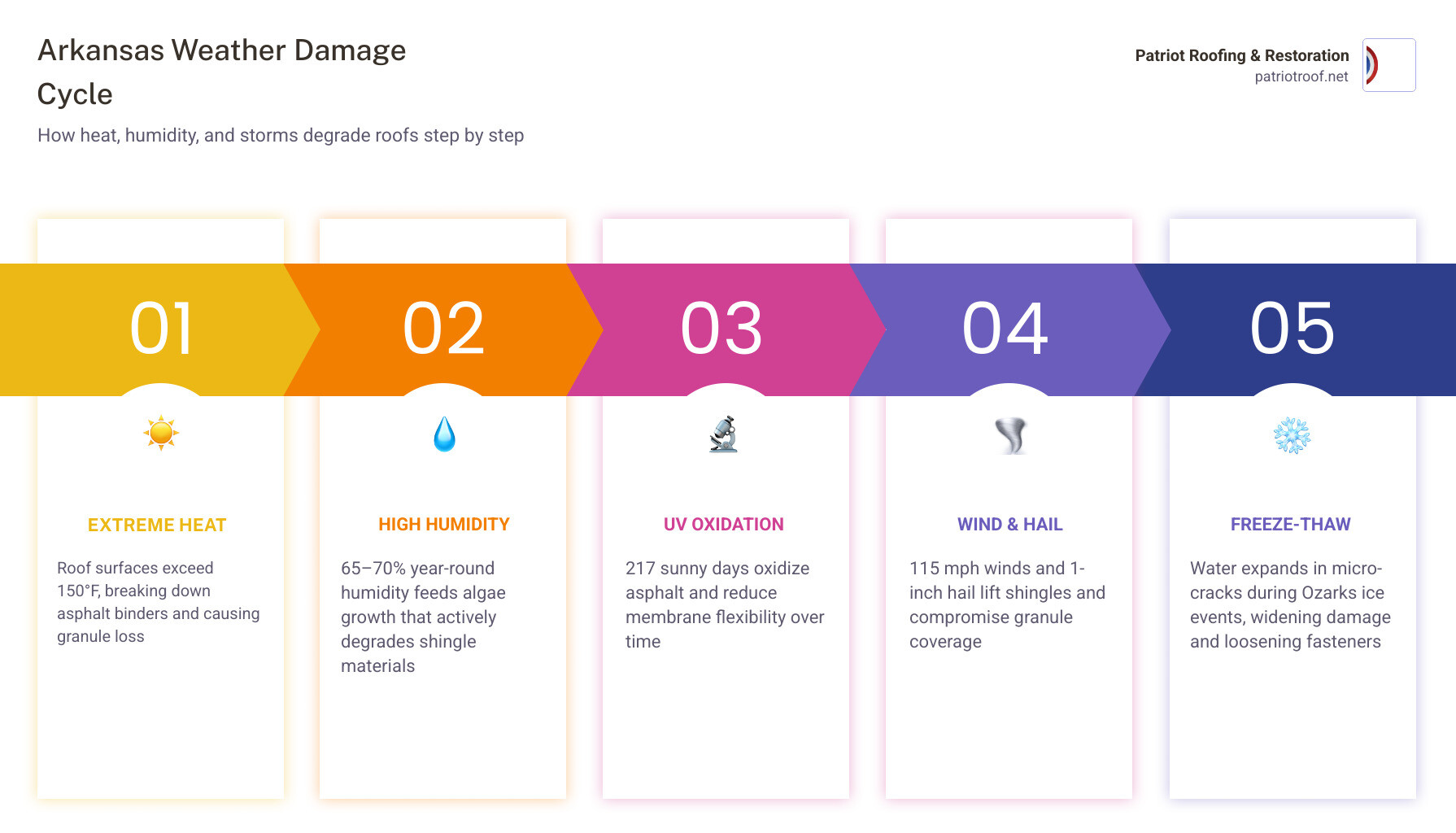
Here’s a quick summary of the main ways Arkansas weather damages roofs:
- Extreme heat — Roof surface temperatures can exceed 150°F in summer, breaking down asphalt binders and accelerating granule loss
- High humidity — Arkansas averages 65–70% relative humidity year-round, promoting algae growth that actively degrades shingle materials
- UV exposure — With roughly 217 sunny days per year, UV oxidizes asphalt and reduces the flexibility of roofing membranes
- Hailstorms — Quarter-sized hail (1 inch) is enough to compromise standard shingle granule coverage, and significant hail events hit many counties 2–4 times per year
- High winds and tornadoes — Design wind speeds reach 115 mph or higher in Arkansas’s most exposed zones, lifting shingles and breaking adhesive seals
- Freeze-thaw cycles — Especially in the Ozarks and Ouachitas, water expands in cracks during freezing, widening damage and loosening fasteners
- Ice damming — Trapped attic heat melts snow that refreezes at cold eaves, forcing water under shingles through capillary action
The result? Asphalt shingles rated for 30 years by manufacturers realistically last 15 to 20 years in Arkansas — and sometimes less on poorly maintained or inadequately ventilated homes. Southern heat, humidity, and UV exposure alone take a real bite out of roof lifespan compared with more moderate climates.
This guide walks you through exactly how each of these forces damages your roof, which materials hold up best, and what warning signs to watch for before a small problem becomes a costly failure.
How Arkansas Heat Humidity and Storms Shorten Roof Lifespan
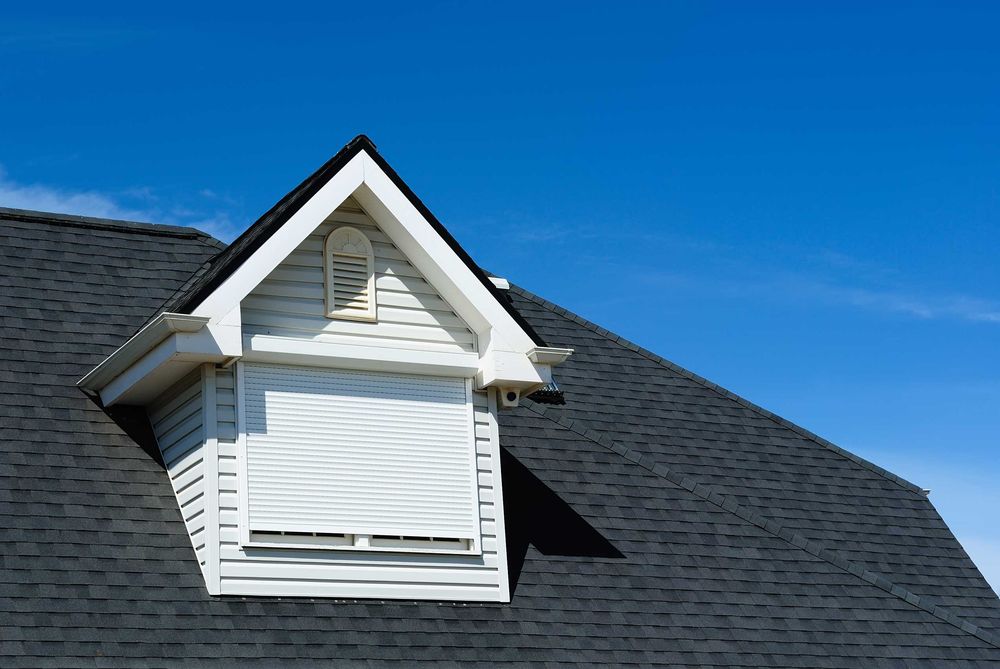
To truly understand how arkansas heat humidity and storms shorten roof lifespan, we have to look at the molecular level of how roofing materials are constructed. An asphalt shingle is not a solid block of waterproof material; it is a complex sandwich of a fiberglass mat, asphalt binders, volatile oils, and a top layer of protective mineral granules.
In Central Arkansas communities like Little Rock, Maumelle, and Hot Springs, our summers regularly push past 95°F with UV index levels routinely soaring above 9. Under these conditions, the sun acts like a slow-cooking oven.
Thermal Cycling and Rapid Temperature Swings
Inland regions like Arkansas experience rapid temperature shifts during the spring and fall. It is not uncommon for a warm 80°F afternoon to plummet into a 40°F night. This extreme swing of 40°F to 60°F or more within a single 24-hour period forces your roofing materials to expand and contract rapidly.
Because different components of your roof (such as metal flashing, wood decking, and asphalt shingles) expand and contract at different rates, this thermal cycling places immense mechanical stress on the entire system. Over time, this movement:
- Loosens roofing fasteners (nails and screws)
- Cracks and pulls apart perimeter sealants
- Breaks the wind-resistant adhesive strips holding your shingles down
UV Oxidation and Binder Volatilization
With an average of 217 sunny days per year, your roof is constantly bombarded by ultraviolet (UV) radiation. UV rays break down the chemical bonds within the asphalt binder of the shingles. This process, known as oxidation, causes the asphalt to lose its volatile oils. As these oils evaporate, the shingle loses its flexibility and becomes brittle.
Without its natural oils, the shingle can no longer adapt to thermal cycling. It begins to shrink, warp, curl at the edges, and shed its protective granules. Once these granules wash away into your gutters, the underlying asphalt is left completely exposed to direct sunlight, accelerating the destruction. If you want to make sure your home is ready for these summer extremes, take a look at our Tips to Help Prepare Roof for Summer Weather Maumelle to protect your investment.
The Double-Baking Effect and Attic Ventilation
One of the most destructive phenomena a roof can experience is what we call the “double-baking effect.” This occurs when extreme outdoor heat combines with inadequate attic ventilation to cook your shingles from both sides simultaneously.
On a typical July afternoon in Bryant or Sherwood, when ambient outdoor temperatures hover around 95°F, direct sunlight can easily push roof surface temperatures past 150°F. If your attic lacks proper ventilation, heat becomes trapped directly beneath the roof deck. Without a continuous escape route, attic temperatures can easily climb to 140°F or 160°F.
This trapped heat effectively bakes the shingles from underneath while the sun scorches them from above. This double-baking accelerates shingle aging, causing the asphalt to blister, bubble, and crack.
To prevent this, the International Residential Code (IRC Section R806) mandates a minimum net-free ventilation ratio of 1:150 for unconditioned attics. This means you need 1 square foot of ventilation for every 150 square feet of attic space, split evenly between intake vents (soffits) and exhaust vents (ridge vents). Proper ventilation regulates attic temperatures, reducing the thermal load on your shingles and extending your roof’s lifespan.
High Humidity and Algae Growth
Arkansas is famous for its lush landscapes, but that same beauty is driven by an average annual precipitation of 50 inches and relative humidity levels that frequently exceed 80% during summer months. This persistent moisture creates a perfect breeding ground for mold, mildew, and blue-green algae, specifically a strain called Gloeocapsa magma.
If you have noticed dark, vertical black streaks on your roof, you aren’t looking at soot or dirt — you are looking at an active algae infestation. Gloeocapsa magma feeds on the limestone filler used to add weight and stability to modern asphalt shingles.
As the algae consumes the limestone, it breaks down the shingle’s structural integrity. Furthermore, these dark algae patches:
- Hold moisture directly against the roofing materials, increasing the risk of wood rot in the underlying decking.
- Lower your home’s energy efficiency by turning reflective shingles into dark, heat-absorbing surfaces.
- Weaken the adhesive bonds between shingles, making them highly vulnerable to wind uplift.
To combat this, we highly recommend choosing algae-resistant shingles engineered with copper-containing granules, which naturally inhibit algae growth and keep your roof dry and clean.
How Storms, Wind, and Winter Weather Damage Arkansas Roofs
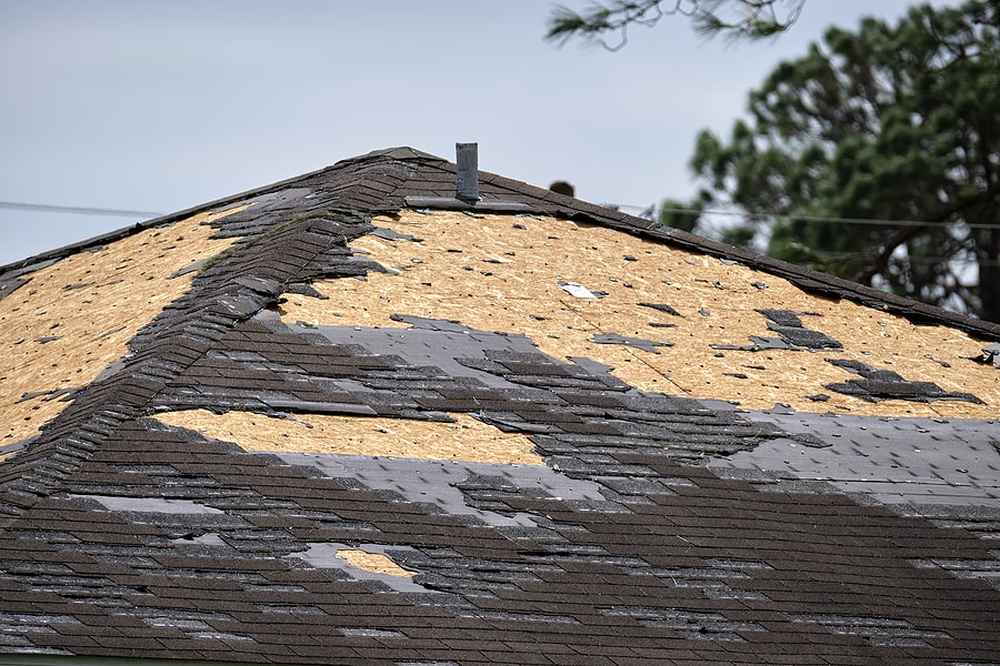
While the summer heat performs a slow, silent attack on your roof, Arkansas storm seasons bring immediate, catastrophic threats. From straight-line winds to sudden hailstorms, our local weather systems test every nail and seam of your home’s exterior. To understand how to handle these sudden events, you can read our guide on Storm Damage Little Rock.
How Arkansas Heat Humidity and Storms Shorten Roof Lifespan via Hail Damage
Hail is one of the primary drivers of premature roof replacements across Central Arkansas, particularly in counties like Pope, Sebastian, and Garland. Even sub-1-inch hail (about the size of a quarter) can cause significant, lasting damage to standard 3-tab asphalt shingles.
When hail strikes a shingle, it creates a localized impact zone. This impact:
- Knocks away the protective mineral granules, exposing the dark asphalt layer underneath.
- Bruises the underlying fiberglass mat, cracking the internal reinforcement of the shingle.
- Creates micro-fractures that allow water to seep through to the underlayment.
This damage is highly deceptive because it rarely causes an immediate, visible leak. Instead, the exposed asphalt degrades rapidly under UV radiation. Within a few months, the bruised area cracks completely, leading to water intrusion.
To protect your home, we recommend upgrading to shingles rated under UL 2218 Class 4. These impact-resistant shingles are tested by dropping a 2-inch steel ball from a height of 20 feet without cracking the shingle backing. You can learn more about how these specialized materials protect your home in our guide on the Benefits of Impact Resistant Shingles.
Tornadoes and High-Wind Structural Stress
Arkansas lies within a high-frequency tornado and severe storm corridor. Straight-line winds during spring and summer storms can easily exceed 70 to 90 mph, while localized tornadic activity brings even greater forces.
The Arkansas Fire Prevention Code and ASCE 7-22 standards establish design wind speeds for residential structures at 115 mph or higher in our state’s most exposed zones. High winds damage roofs through a force called wind uplift. As wind sweeps over your roof, it creates a pocket of low pressure above the surface, effectively vacuuming the shingles upward.
If your shingles have been weakened by heat, age, or poor adhesion, the wind will lift the shingle tabs. Once a tab is lifted, the adhesive seal is broken. Even if the shingle doesn’t blow off completely, it can no longer protect your home from driving rain. If a severe storm has recently swept through your neighborhood, it is vital to know the critical Steps to Take After Storm Damage Roof Little Rock to secure your home before secondary water damage occurs.
Ice Damming and Moisture Infiltration
While Central and Southern Arkansas are known for mild winters, we are still highly vulnerable to episodic winter weather, such as the historic February 2021 ice storm. In areas like Conway, Cabot, and the higher elevations surrounding Hot Springs, ice storms and freeze-thaw cycles present unique structural threats.
Ice damming occurs when snow or ice accumulates on your roof, and heat escaping from a poorly insulated attic melts the snow from underneath. The meltwater flows down the slope of the roof until it reaches the cold, unheated eaves (overhangs), where it refreezes.
As this cycle repeats, a solid barrier of ice forms at the edge of your roof. This ice dam traps subsequent meltwater, forcing it to back up under your shingles through capillary action. Once water gets past the shingles, it saturates the roof deck, ruins insulation, and damages interior ceilings.
To prevent this winter nightmare, we recommend installing a self-adhering ice and water shield membrane along all eaves, valleys, and penetrations. You can prepare your home for these freezing hazards by following our Preparing Roof for Winter Maintenance Checklist Little Rock.
How Arkansas Heat Humidity and Storms Shorten Roof Lifespan through Freeze-Thaw Stress
Even without snow accumulation, winter temperature fluctuations in Arkansas create a destructive “freeze-thaw” cycle. During a rainy winter day, water fills the microscopic cracks in your shingles, sealants, and flashing.
When the temperature drops below freezing at night, this trapped water freezes and expands by approximately 9% in volume. This expansion acts like a tiny wedge, widening the cracks and splitting the material further apart.
When the sun comes out the next day, the ice melts, allowing water to penetrate even deeper into the newly widened crack. Over a single winter, this continuous cycle:
- Splits asphalt shingle mats
- Cracks mortar on brick chimneys
- Tears open silicone and polyurethane sealants
- Loosens roofing nails, creating “nail pops” that push up through shingles
Because these damage points are incredibly small, they are hard to spot from the ground. If you suspect your roof has suffered from winter wear, it is critical to learn How to Act Quickly After Storm Roof Damage in Arkansas to avoid structural rot.
Realistic Roof Lifespans in Arkansas vs. Manufacturer Ratings
When you purchase roofing materials, the packaging often boasts of “30-Year,” “50-Year,” or even “Lifetime” warranties. However, these ratings are calculated under controlled laboratory conditions or in mild, stable climates.
In the real-world climate of Central Arkansas, material fatigue accumulates rapidly. The combined forces of 150°F summer heat, high humidity, winter freeze-thaw cycles, and seasonal storms mean that roofs rarely reach their theoretical maximum lifespans.
If you are wondering about the actual durability of your roof, you can read our detailed breakdown on How Long Will Asphalt Shingl Roof Last?. To give you a clear, realistic picture of what to expect, we have compiled the table below comparing manufacturer ratings to realistic Arkansas lifespans.
| Roofing Material Type | Manufacturer Lifespan Rating | Realistic Arkansas Lifespan | Primary Climate Limiters in Arkansas |
|---|---|---|---|
| 3-Tab Asphalt Shingles | 15–20 Years | 15–18 Years | High wind uplift, rapid thermal cracking, fast granule loss |
| Architectural Shingles | 30–50 Years | 15–20 Years | UV oxidation, algae growth, moderate hail damage |
| Impact-Resistant (Class 4) | 30–50 Years | 22–28 Years | Extreme heat-induced binder volatilization, severe hail |
| Standing Seam Metal | 40–60 Years | 40–60 Years | Thermal expansion at fasteners (highly resilient overall) |
| Exposed Fastener Metal | 30–40 Years | 25–35 Years | Gasket/washer degradation from UV, fastener backing-out |
| Synthetic/Composite | 50 Years | 30–50 Years | Extreme UV exposure (excellent hail and wind resistance) |
Frequently Asked Questions about Arkansas Roof Lifespans
What are the signs that an Arkansas roof is nearing the end of its service life?
Your roof will usually give you several warning signs before it fails completely. The most common indicators include:
- Granule loss — Finding a large amount of sandy, colorful granules in your gutters or near downspouts.
- Curling or cupping shingle edges — A clear sign that the asphalt binder has dried out and shrunk due to UV exposure.
- Cracked or missing shingles — Evidence of thermal cycling stress or wind damage.
- Dark streaks or moss growth — Indicating that humidity has allowed algae to damage the limestone fillers.
- Ceiling stains or attic mold — Signifying that water has already bypassed your shingles and underlayment.
If you are noticing these signs on your home, we recommend checking out The Definitive Guide to Roof Repair vs Replacement to help you weigh your options.
How do regulatory standards like ASCE 7 and UL 2218 protect my roof?
These standards ensure that the materials installed on your home are engineered to withstand local weather conditions:
- ASCE 7 (Wind Design) — Dictates how roofing systems must be fastened to resist wind uplift. In Central Arkansas, roofs must be designed to withstand winds of at least 115 mph.
- UL 2218 (Impact Testing) — Classifies shingles based on their ability to withstand hail. Class 4 is the highest rating, meaning the shingle can withstand severe impacts without cracking.
Investing in these rated materials not only extends your roof’s life but may also qualify you for an annual discount on your homeowner’s insurance premiums. You can learn more about these high-performance options in our Guide to Impact Resistant Shingles.
What is the best roofing material to withstand Arkansas weather?
For the absolute best durability, standing seam metal roofing is the top choice. It has no organic components to degrade, reflects up to 70% of solar radiant heat (reducing attic temperatures by up to 30°F), and easily handles hail and high winds.
For homeowners who prefer the classic look of shingles, Class 4 impact-resistant architectural shingles offer the best balance of cost, aesthetics, and storm protection.
Conclusion
Understanding how Arkansas heat, humidity, and storms shorten roof lifespan is the first step toward protecting your home. While our local climate is incredibly demanding, choosing the right materials, ensuring proper attic ventilation, and staying on top of regular maintenance can save you thousands of dollars in premature replacement costs.
At Patriot Roofing & Restoration, we specialize in helping homeowners throughout Little Rock, North Little Rock, Conway, Hot Springs, Benton, Bryant, Cabot, and surrounding areas build roofs that are engineered to last. As an Atlas PRO+ contractor at the Gold level, we combine a quality-first approach with our four written guarantees to give you total peace of mind through every season.
If you want to know more about how your roof is holding up against the elements, read our guide on How Long Do Most Roofs Last in Arkansas Weather Conditions or contact us today to schedule your professional inspection!