

Why Improper Gutters Are a Foundation Risk in Arkansas Clay Soil
Understanding how improper gutters cause foundation damage in Arkansas clay soil starts with one simple fact: when your gutters fail, water doesn’t just disappear — it soaks directly into the ground around your home’s foundation.
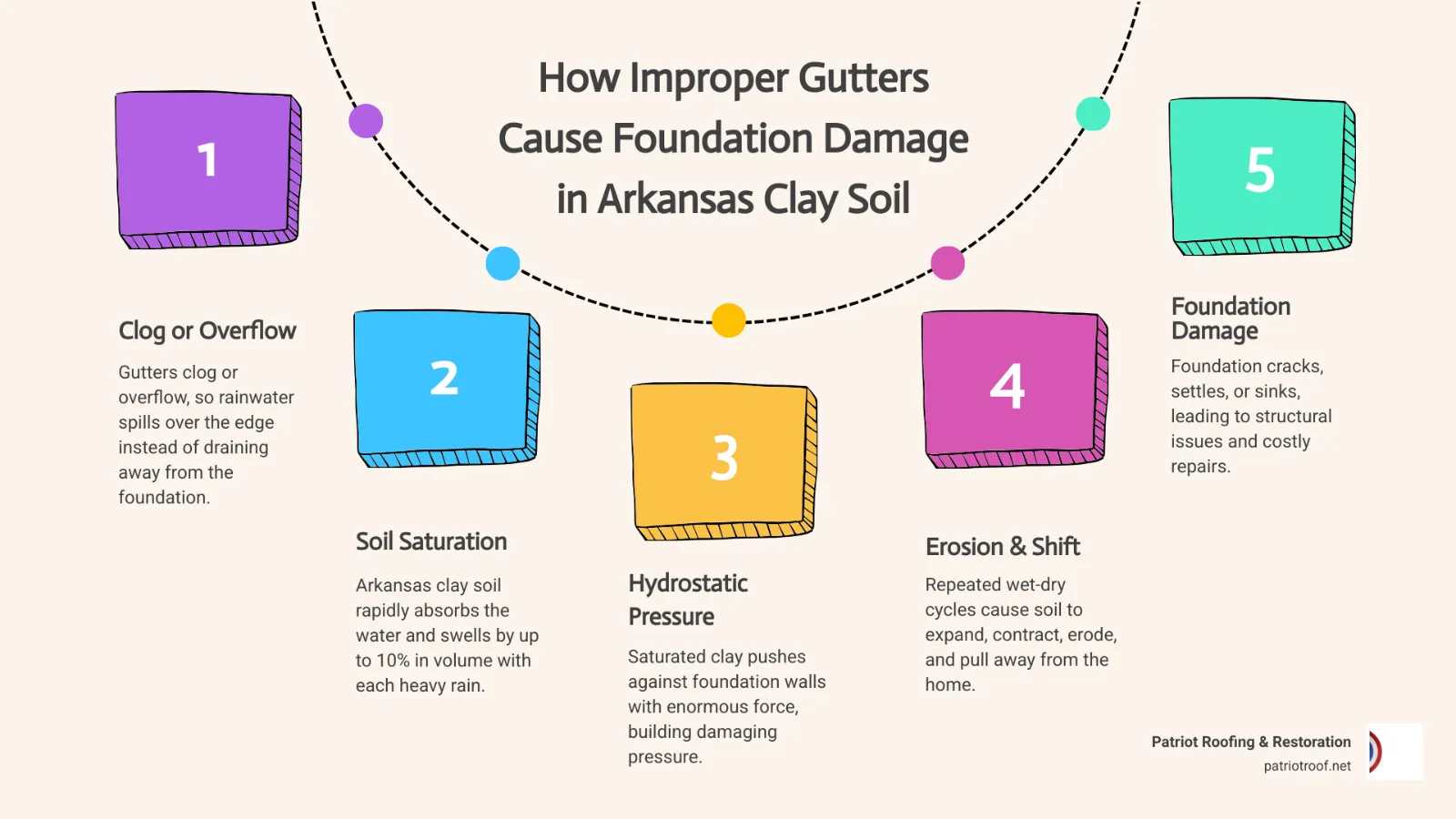
Here’s how it happens, step by step:
- Gutters clog or overflow — rainwater spills over the edge instead of draining away
- Water saturates the soil — Arkansas clay soil absorbs that water and swells by up to 10% in volume
- Hydrostatic pressure builds — saturated clay pushes against your foundation walls with enormous force
- Soil erodes or shifts — repeated wet-dry cycles cause the ground to expand, contract, and pull away
- Foundation cracks or settles — the structural base of your home begins to move, crack, or sink
Arkansas averages over 4 feet of rain every year. On clay-heavy soil — which covers much of the Little Rock area — that rainfall has nowhere to go fast. A gutter system that’s clogged, undersized, or draining too close to your home turns every rainstorm into a slow-motion threat to your foundation.
The good news? Most of this damage is entirely preventable with the right gutter maintenance and drainage setup.
The Science of Arkansas Clay Soil and Foundation Vulnerability
To understand why Central Arkansas homes are so prone to shifting, we have to look beneath the grass. Much of our service area — from Little Rock and North Little Rock to Maumelle, Benton, Bryant, and Conway — sits on highly active, expansive red clay soil.
Clay soil is fundamentally different from sandy or loamy soils. It is composed of microscopic, flat particles that act like tiny sponges. When dry, clay shrinks, hardens, and cracks. But when a heavy Arkansas downpour hits, those particles absorb water rapidly, causing the soil to swell noticeably in volume.
This dramatic physical change creates a relentless “shrink-swell” cycle. When clay soil expands, it exerts massive upward and outward force—known as hydrostatic pressure—against your home’s concrete slab or crawl space footings. This uplifting pressure can reach as high as 5,500 pounds per square foot (PSF). No residential concrete foundation is designed to withstand that kind of uneven, concentrated pressure indefinitely without cracking.
| Soil Property | Expansive Clay Soil (Central Arkansas) | Sandy Soil (Stable/Inert) |
|---|---|---|
| Water Retention | Extremely high; traps and holds moisture against walls | Very low; water drains through rapidly |
| Volume Change | Expands up to 10% when wet; shrinks when dry | Negligible volume change |
| Uplifting Pressure | Up to 5,500 PSF when saturated | Near zero pressure |
| Erosion Pattern | Forms deep underground voids and soft patches | Uniform surface runoff or even settling |
| Foundation Risk | High risk of differential settlement and heaving | Low risk (primarily localized erosion) |
With Central Arkansas receiving more than 50 inches of average annual precipitation, our soils are constantly in motion. If your gutter system doesn’t control where that water lands, you are essentially allowing a powerful hydraulic jack to push against your home’s structural base.
How Improper Gutters Cause Foundation Damage in Arkansas Clay Soil
Your roof is a massive water collector. In a standard rainstorm, thousands of gallons of water roll off your shingles. A properly designed gutter system acts as your home’s primary shield, catching this deluge and channeling it safely away.
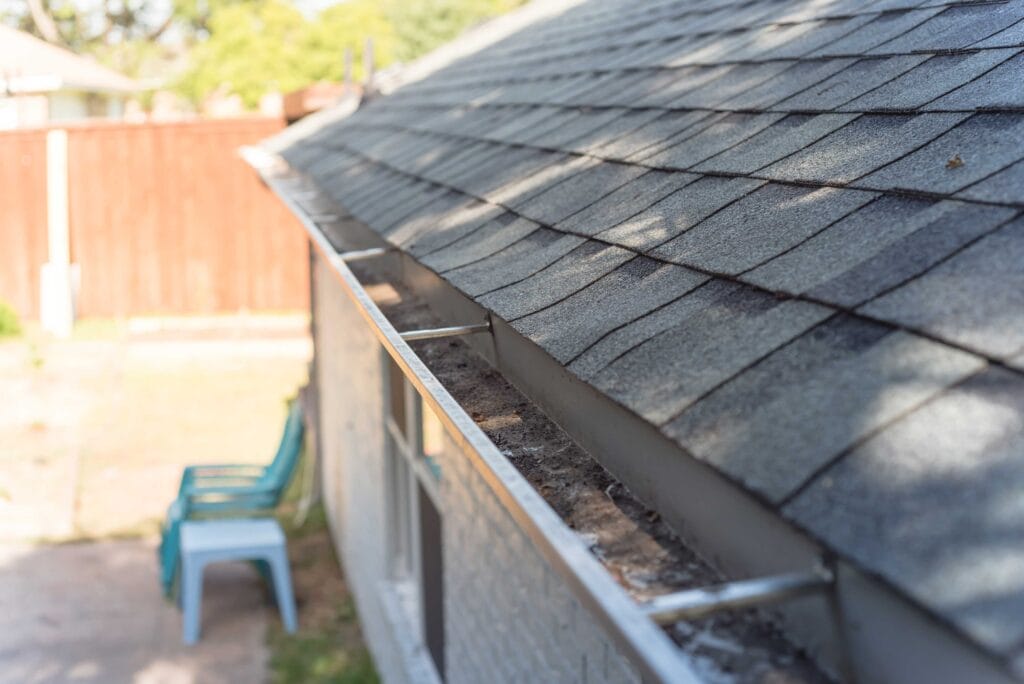
However, when gutters are neglected, undersized, or improperly pitched, they stop acting as a shield and start acting as a hazard. Clogged gutters quickly fill with leaves, pine needles, and debris. During our intense spring and summer storms, this blockage causes water to cascade over the sides of the gutter trough. Instead of being directed away, this concentrated waterfall dumps directly along the perimeter of your home.
When water pools consistently at the base of your home, it triggers localized soil failure. If you notice your gutters sagging, pulling away from the fascia, or spilling water during heavy rains, it’s critical to seek professional Gutter Repair Little Rock before the pooling water begins to compromise the soil structure below.
The Clay Bowl Effect: How Improper Gutters Cause Foundation Damage in Arkansas Clay Soil
One of the most insidious ways water damages a home is through a phenomenon known as the “clay bowl effect.”
When a home is built, contractors excavate a large hole in the natural, undisturbed clay soil to pour the foundation or build the crawl space. Once the concrete structure is cured, the space surrounding the foundation walls is filled back in with “backfill” soil.
This backfill soil is looser, more porous, and far less compacted than the surrounding, undisturbed native clay. As a result, it acts like a giant, porous ring surrounding your home. When improper gutters overflow, the water immediately sinks into this loose backfill soil. Because the native, unexcavated clay further out is highly dense and impermeable, it acts like a watertight bowl, trapping the pooled water directly against your foundation walls.
This trapped water saturates the backfill zone, building immense hydrostatic pressure against your basement or crawl space walls, eventually forcing moisture through concrete pores and causing structural walls to bow inward.
Soil Erosion and Differential Settlement: How Improper Gutters Cause Foundation Damage in Arkansas Clay Soil
While the clay bowl effect pushes inward and upward, soil erosion works by removing the support beneath your home.
When gutters overflow, the force of the falling water erodes the topsoil and digs trenches along your roofline. Over time, this water washes away the supporting soil beneath the edges of your concrete slab or crawl space footings, creating hidden underground voids.
Because clay loses its load-bearing capacity entirely when it becomes oversaturated, the heavy concrete foundation begins to sink into these soft spots and empty voids. This is known as differential settlement — when one section of your home sinks faster than the rest. As the home shifts unevenly, the rigid concrete is forced to bend, leading to deep structural cracks, sloping floors, and severe interior damage.
Warning Signs Your Gutters Are Damaging Your Foundation
Foundation issues rarely happen overnight. They develop slowly, leaving a trail of warning signs that every homeowner in Maumelle, Sherwood, or Benton should watch for.
By keeping a close eye on both your home’s exterior and interior, you can catch water-related structural issues before they require tens of thousands of dollars in deep underpinning or piering.
- Stair-Step Cracks in Brickwork: This is one of the most classic signs of foundation settlement. Look for diagonal, stair-step cracks running through the mortar joints of your exterior brick walls, particularly near corners or close to downspouts.
- Sticking Doors and Windows: When your foundation shifts, it pulls your home’s wood and drywall frames out of alignment. If doors refuse to latch, windows stick in their tracks, or gaps appear above door frames, your foundation is likely moving.
- A Leaning Chimney: Because chimneys sit on their own concrete pads, they are highly susceptible to localized soil saturation. A chimney pulling away from your roofline is a major red flag.
- Tiger Striping on Gutters: Dark, vertical stains on the front of your gutters indicate that water is regularly overflowing over the lip instead of flowing to the downspouts.
- Trench Lines and Persistent Mud: If you walk your yard and notice deep dirt trenches directly beneath your roofline, or if the soil near your foundation remains soggy and muddy days after a rain, your gutters are failing to manage the runoff.
Regular gutter maintenance is your absolute best defense against these structural nightmares. If you want to keep your gutters clear of debris and prevent overflow, check out our guide on the Importance Gutters Maintenance Gutter Cleaning Maumelle to establish a reliable seasonal cleaning routine.
Best Practices to Prevent Gutter-Related Foundation Damage
Preventing foundation damage doesn’t require complex engineering; it requires smart, consistent water management. By controlling where rainwater lands and how it flows, you can keep the clay soil around your home at a stable, consistent moisture level.
Here are the most effective strategies for protecting your Central Arkansas home:
1. Master the 5-to-10-Foot Downspout Rule
The single most common gutter mistake we see in places like Bryant and Jacksonville is downspouts that dump water directly at the base of the home. To protect your foundation, downspouts must extend at least 5 feet away from the structure. On the highly expansive clay soils of Central Arkansas, 10 feet is the much safer standard. Use rigid PVC extensions or underground bubbler pots to route water safely outside your home’s “zone of influence.”
2. Maintain a Positive Yard Grade
Your yard should never slope toward your home. Ensure the ground slopes away from your foundation with a positive grade of at least 6 inches of drop over the first 10 feet. This ensures that any water that does hit the ground is naturally carried away from your porous backfill zone.
3. Install Subsurface Drainage (French Drains)
If your yard has natural low spots or water tends to pool near your foundation despite proper gutter function, a French drain is an excellent investment. French drains use a perforated pipe buried in a gravel-filled trench to collect subsurface water and redirect it safely to a lower point on your property or to the street.
4. Upgrade to the Right Gutter System
If your gutters are constantly overflowing, they may simply be too small for your roof’s pitch. Upgrading to seamless 6-inch K-style gutters can significantly increase your system’s water capacity, preventing overflows during heavy storms. Explore Little Rocks Top Gutter Styles to find the perfect fit for your home’s architecture and local rainfall patterns.
Essential Gutter Maintenance Checklist
- Clean Gutters at Least Twice a Year: Clean your gutters in late spring and late fall—or more frequently if you have heavy tree cover near your roof.
- Check Gutter Pitch: Gutters must slope toward downspouts at a minimum rate of 1/4 inch for every 10 feet of run to prevent standing water.
- Perform a Rainy Day Audit: Grab an umbrella during a heavy rainstorm and walk around your home. Look for leaks, sagging troughs, and overflowing edges.
- Install Gutter Guards: High-quality gutter guards prevent leaves and pine needles from entering your troughs, ensuring unobstructed water flow year-round.
Investing in a robust water management system not only protects your home’s structure but also enhances its curb appeal and long-term resale value. To learn more about how a new gutter system can protect your property, read our article on how New Gutters Add Value Home Maumelle.
Frequently Asked Questions About Gutter and Foundation Drainage
Managing water around your home can feel like a balancing act. Here are answers to some of the most common questions Central Arkansas homeowners ask about keeping their gutters and foundations in harmony.
How far should downspouts extend from an Arkansas home?
In Central Arkansas, downspouts should extend at least 5 to 10 feet away from your home’s foundation. Because our local clay soil swells when saturated, discharging water any closer than 5 feet ensures that moisture will seep directly into the loose backfill soil surrounding your foundation walls. For maximum protection, routing downspouts into buried PVC pipes that discharge at the curb or a designated drainage swale is highly recommended.
What are the long-term costs of ignoring gutter-related foundation damage?
Ignoring gutter and drainage issues can lead to catastrophic financial consequences. Over a 5-year period, untreated water intrusion and the resulting structural settlement can decrease a home’s market value by as much as 20%.
While regular gutter cleaning and minor repairs are highly affordable, major structural repairs are incredibly costly. If your foundation settles unevenly, stabilizing a single corner with steel push piers can easily cost thousands of dollars, and full-house underpinning can run tens of thousands of dollars. To understand the cost-benefit of proactive roofline maintenance, check out our guide on Gutters Cost Little Rock.
Can I fix foundation drainage issues myself?
While homeowners can easily handle basic tasks like cleaning out debris, adjusting gutter hangers, and adding flexible downspout extensions, complex drainage issues require professional help.
Improperly sloped French drains or incorrect yard grading can actually backfire, trapping even more water against your foundation. Plenty of homeowners attempt a DIY French drain, and many fail because the slope is wrong. Professional grading and subsurface drainage systems ensure that water flows away from your home permanently, protecting your structural investment.
Conclusion
Your home’s foundation is only as stable as the soil beneath it. In Central Arkansas, our active red clay soil is a moving target, expanding and contracting with every shift in moisture. When improper, clogged, or poorly designed gutters dump water directly at your home’s base, they set off a destructive cycle of soil expansion, erosion, and differential settlement.
Proactive gutter maintenance is the easiest and most cost-effective way to protect your home from devastating structural damage. At Patriot Roofing & Restoration, we specialize in helping homeowners throughout Little Rock, North Little Rock, Maumelle, Conway, Benton, Bryant, and surrounding areas secure their homes from the roofline down. With our quality-first approach, Atlas certification, and our four written guarantees, we ensure your gutters perform flawlessly in every season.
Don’t wait for cracks to appear in your brickwork. Protect your home’s foundation today by visiting our Gutter Services page to schedule a professional inspection and gutter consultation!