

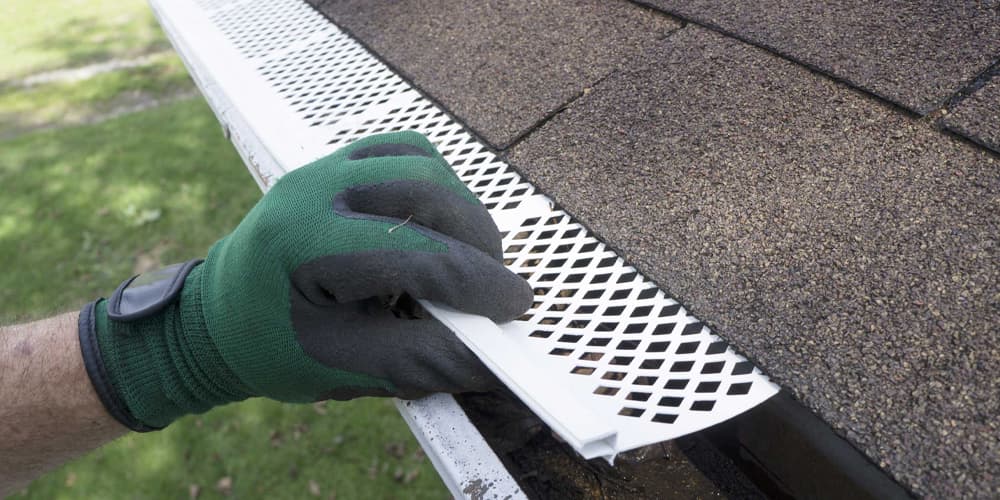
Are Gutter Guards Worth It in Central Arkansas? Here’s What You Need to Know
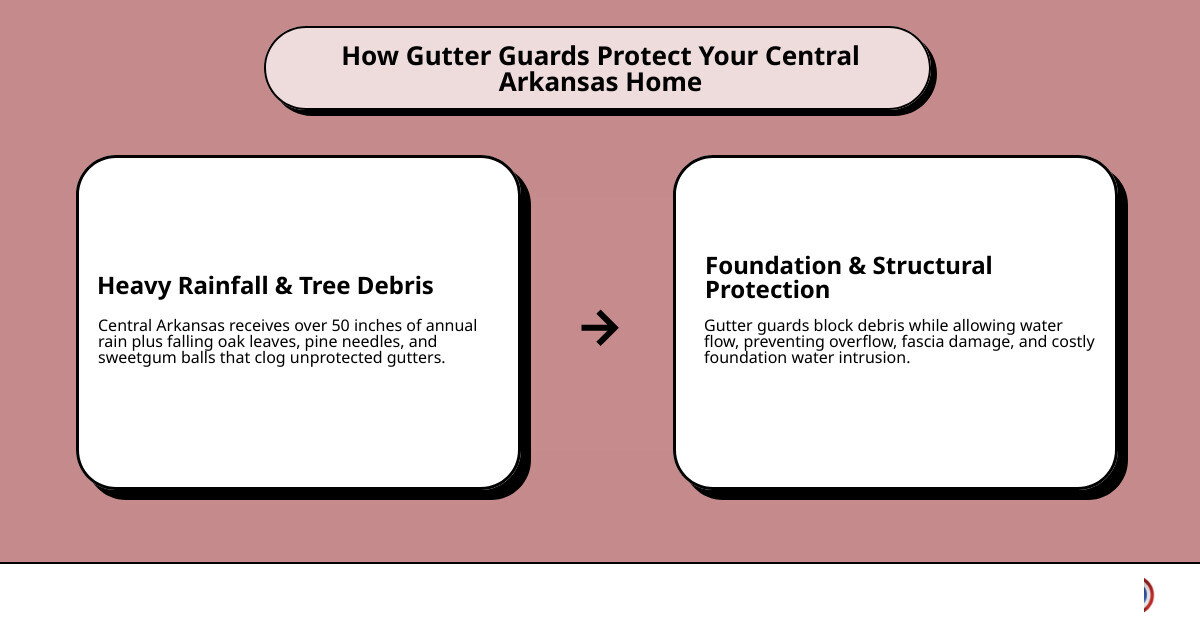
What are gutter guards and are they worth it in Central Arkansas? Gutter guards are covers or inserts placed over your gutters to block leaves, pine needles, and debris while letting rainwater flow through — and for most Central Arkansas homeowners, they’re absolutely worth considering. With over 50 inches of annual rainfall, dense tree canopy, and seasonal debris from oaks, sweetgums, and pines, clogged gutters here aren’t just an inconvenience — they’re a real threat to your home’s foundation, siding, and roof structure.
Quick Answer:
| Question | Answer |
|---|---|
| What are gutter guards? | Covers or inserts that block debris while allowing water into your gutters |
| Do they work in Central Arkansas? | Yes — especially micromesh and reverse-curve styles |
| Are they worth it? | For most homes with tree cover, yes — they reduce cleaning frequency and protect your foundation |
| Do they eliminate all maintenance? | No — but they significantly reduce how often gutters need attention |
| Who benefits most? | Homes with heavy oak, pine, or sweetgum tree cover |
Without gutter protection, Little Rock homeowners often deal with gutters that fill up fast — sometimes requiring cleaning two to three times a year. Left unchecked, clogged gutters can send water cascading down your fascia, pooling around your foundation, and creating the kind of water damage that turns a simple maintenance task into a costly repair.
This guide walks you through everything you need to know — from how different guard types perform in Arkansas’s climate to whether the investment makes financial sense for your specific home.
What Are Gutter Guards and How Do They Work?
At their core, gutter guards are designed to solve a simple but frustrating problem: keeping solid debris out of your gutter channels while allowing rainwater to enter and flow freely to your downspouts. When gutters are left completely open, they act as catch-alls for everything shedding from your roof. When you add a protective barrier, you fundamentally change how your gutter system handles runoff and waste.
The science behind modern gutter guards relies heavily on water behavior. High-quality systems utilize physical filtration or fluid dynamics, such as surface tension and liquid adhesion, to guide water. Liquid adhesion is the tendency of water molecules to cling to a solid surface. In some specialized gutter designs, water wraps around a curved hood and slips into a narrow opening, while leaves and larger debris, which cannot wrap around the tight curve, simply slide off the edge and fall to the ground.
Other systems use fine physical filtration, acting like a high-performance sieve. No matter the engineering, matching the guard style to your home is crucial. The shape, slope, and size of your gutters play a major role in how guards perform, which is why understanding Little Rock’s Top Gutter Styles is the first step toward choosing a system that works in harmony with your home.
Micromesh and Screen Guards
Micromesh gutter guards are widely considered the gold standard for comprehensive debris protection. These systems feature a rigid frame—often made of weather-resistant aluminum or stainless steel—supporting an incredibly fine surgical-grade stainless steel mesh.
A high-quality micromesh typically features a 275-micron pore size. To put that in perspective, a single micron is microscopic; a 275-micron mesh is tight enough to block shingle grit, pine needles, and even sticky pollen sludge, while still pulling heavy sheets of water into the gutter.
Basic screen guards, on the other hand, feature larger, perforated openings. While screens are excellent for blocking large oak leaves, they often struggle with smaller debris. In Central Arkansas, where pine needles and spring pollen are abundant, basic screens can let fine debris slip through, leading to a build-up of organic sludge inside the gutter that is highly difficult to clean out without removing the screens entirely.
Reverse Curve and Surface Tension Systems
Reverse curve guards—often referred to as surface tension hoods—take a completely different approach. Instead of filtering water through a screen, these systems feature a solid, curved metal hood that sits over the gutter opening.
As rainwater flows off your roof, it follows the curve of the hood, wrapping around the “nose” of the guard and dropping directly into the gutter channel. Meanwhile, leaves, twigs, and sweetgum balls shoot straight off the edge and land in your yard.
These systems are incredibly durable and can handle massive amounts of heavy rain. However, they must be pitched perfectly to work. If the alignment is off even slightly, water can overshoot the gutter entirely, cascading down your siding and pooling near your foundation. If you are experiencing issues with overflowing water or sagging channels, it is highly recommended to look into professional Gutter Repair in Little Rock before installing any heavy reverse-curve systems.
Foam and Brush Inserts
If you have strolled down the aisles of a local home improvement store in Conway or Benton, you have likely seen foam inserts and brush guards. These are the most common DIY-friendly options on the market.
- Brush guards look like giant, heavy-duty pipe cleaners that sit inside your gutter channel. The bristles face outward, keeping leaves on the surface while water flows through the bottom.
- Foam inserts are triangular blocks of porous polyurethane foam that completely fill the gutter channel, letting water soak through while keeping debris on top.
While these options have a low upfront cost and are easy to install, they come with significant long-term drawbacks in our humid climate. Foam inserts act like giant sponges. Under the intense Central Arkansas sun, the foam degrades rapidly from UV exposure, crumbling within a few seasons.
Even worse, the damp, organic-rich environment of a foam or brush insert makes them a perfect growing medium for moss, weeds, and mold. Before long, you may find a miniature garden growing directly out of your gutters, completely defeating the purpose of the guards.
Central Arkansas Weather and Its Impact on Gutter Performance
Living in Central Arkansas means experiencing a climate of extremes. We get a little bit of everything: intense spring thunderstorms, sweltering summer humidity, heavy autumn leaf drops, and occasional winter freeze-thaw cycles. With our region averaging over 50 inches of rainfall annually, your gutters are put through a grueling test every single year.
During a heavy downpour, a standard roof can shed thousands of gallons of water in a matter of minutes. If your gutters are choked with debris, that water has nowhere to go but backward under your shingles or forward over the front lip of the gutter. This constant moisture exposure is why understanding the Importance of Gutters Maintenance and Gutter Cleaning in Maumelle is so vital for local property owners.
When you add the stress of summer humidity and winter ice to a clogged gutter, you create the perfect recipe for wood rot, mold growth, and structural sagging.
Oak Leaves, Pine Needles, and Sweetgum Balls
The beautiful, mature trees that shade neighborhoods in West Little Rock, Heights, Hillcrest, and Sherwood are the primary source of gutter headaches. Different trees drop different types of debris throughout the year, requiring a gutter guard that can handle multiple shapes and sizes of organic waste:
- Oak Trees: In the spring, oaks drop massive amounts of pollen tassels (catkins), which quickly turn into a thick, gooey paste when wet. In the fall, they drop heavy leaves and acorns that can easily weigh down and clog open gutters.
- Pine Trees: Areas like Hot Springs Village and Bryant are famous for their beautiful pines. However, pine needles are thin, sharp, and highly flexible. They easily slide into the small slots of basic screen guards, creating a “nest” that traps other debris.
- Sweetgum Trees: If you have a sweetgum tree in your yard in Cabot or Maumelle, you are intimately familiar with “spiky gumballs.” These hard, round seed pods are notorious for rolling down roofs and perfectly plugging downspout openings.
A successful gutter guard in our region must be versatile enough to block tiny pine needles and sticky oak tassels while shedding large leaves and sweetgum balls.
Heavy Downpours and Water Capacity
Central Arkansas is no stranger to flash flooding and torrential rain. It is not uncommon for a single spring storm to dump several inches of water in an hour. Some premium gutter guard systems are engineered to handle incredible volumes of water—up to 32 inches of rain per hour—which is far more than the worst storms on record in Pulaski County.
However, the guard is only as good as the gutter beneath it. Many older homes in the area have standard 5-inch gutters, which can quickly become overwhelmed during a severe storm. Upgrading to larger 6-inch gutters provides roughly 40 percent more water capacity.
When paired with a high-flow gutter guard, a 6-inch system ensures that even during a summer cloudburst, water is safely channeled away from your fascia boards and foundation rather than washing over the sides.
What Are Gutter Guards and Are They Worth It in Central Arkansas?
To truly evaluate whether gutter guards are worth the investment for your home, it helps to compare how the different types stack up against our local weather conditions and tree species:
| Guard Type | Debris Specialty | Heavy Rain Performance | Lifespan | Arkansas Weather Suitability |
|---|---|---|---|---|
| Surgical Micromesh | Blocks everything (needles, oak tassels, grit) | Excellent (when pitched correctly) | 20+ Years | Excellent. Highly recommended for all local tree types. |
| Reverse Curve | Sheds large leaves, sweetgum balls | Excellent (handles heavy flow) | 15-20 Years | Good. Great for heavy rain, but requires professional alignment. |
| Perforated Screens | Blocks large leaves; lets needles/tassels slip through | Moderate (can clog over time) | 5-10 Years | Fair. Better than nothing, but requires manual cleaning of fine debris. |
| Foam & Brush Inserts | Blocks large leaves; traps fine debris | Poor (restricts overall water flow) | 1-3 Years | Poor. Rapidly degrades in Southern heat and grows moss. |
A quality gutter guard system is an investment in your home’s long-term health. By preventing water from overflowing, you protect your siding from unsightly water stains, preserve your landscaping from soil erosion, and—most importantly—prevent water from pooling around your foundation, which can cause incredibly expensive structural settling.
Additionally, keeping water flowing smoothly through your gutters prevents moisture from backing up under your roofline, which is a major factor in extending the lifespan of your entire roofing system. Investing in your gutters is a proven way to protect your property, and as many homeowners in Pulaski and Saline counties have found, New Gutters Add Value to Your Home in Maumelle and surrounding areas.
What Are Gutter Guards and Are They Worth It in Central Arkansas for Homes with Heavy Tree Cover?
If your home is nestled under a dense canopy of old-growth oaks in West Little Rock or surrounded by towering pines in Hot Springs Village, the answer is a resounding yes.
Without guards, a heavily wooded property can require gutter cleanings every few months. Climbing up a ladder to scoop out rotting, smelly leaves is not only deeply unpleasant—it is highly dangerous. Falls from ladders are a leading cause of household injuries.
By installing a high-quality micromesh or reverse-curve system, you can safely keep your feet on the ground. While you may still need to occasionally brush off some dry leaves from the top of the guards after a heavy autumn leaf fall, you will completely eliminate the dangerous, messy chore of scooping wet sludge out of your gutter channels.
Cost vs. Savings: What Are Gutter Guards and Are They Worth It in Central Arkansas?
When looking at the financial side of the equation, you have to weigh the upfront cost of installing gutter guards against the recurring cost of professional maintenance.
If you do not have guards, hiring a professional crew to clean your gutters multiple times a year adds up quickly. Over the course of five to ten years, those cleaning bills can easily surpass the cost of a high-quality, professionally installed gutter guard system. To get a better sense of standard gutter expenses in our area, you can review our breakdown of Gutters Cost in Little Rock.
When you factor in the “peace of mind” value—knowing that a sudden midnight thunderstorm won’t cause water to flood your basement or rot your fascia boards—the return on investment becomes even clearer. For most local homeowners, the system pays for itself in both time saved and damage prevented.
Installation and Cost Guide for Little Rock Homeowners
When deciding to add gutter protection to your home, several factors will influence the overall cost of the project. No two homes are exactly alike, and a custom approach is always required to ensure the system performs flawlessly.
Key cost factors include:
- Total Linear Footage: The overall size of your roofline and the amount of guttering that needs to be covered.
- Gutter Condition: If your existing gutters are sagging, leaking, or improperly sloped, they will need to be repaired or replaced before guards can be installed.
- Roof Height and Complexity: Multiple stories, steep pitches, and complex roof valleys require more labor and specialized safety equipment.
- Debris Environment: Homes with heavy pine needle coverage require premium micromesh, whereas homes with only a few oak trees might do well with standard perforated aluminum guards.
Professional Installation vs. DIY Kits
While the appeal of saving money with a weekend DIY project is understandable, installing gutter guards yourself carries significant risks.
First and foremost is safety. Working on a ladder for hours at a time, especially on two-story homes, is inherently hazardous. Professional crews are fully insured, OSHA-compliant, and trained to work safely at heights.
Second is the precision required for proper performance. Gutter guards must be installed at the exact correct angle to match your roof’s pitch. If they are pitched too steeply, water will simply slide over the top and overshoot the gutter. If they are too flat, leaves will accumulate on top instead of washing away.
Furthermore, many DIY systems require slipping the guard under your lower row of shingles. If done incorrectly, this can easily damage your roof’s underlayment and completely void your manufacturer’s shingle warranty. Professional installers mount guards directly to the gutter frame or fascia board, keeping your roof warranty fully protected.
Frequently Asked Questions About Gutter Protection
Do gutter guards eliminate the need for gutter cleaning?
No gutter guard on the market is 100% maintenance-free. While they will prevent heavy clogs and eliminate the need to scoop wet sludge out of your gutters, you will still need to perform occasional light maintenance. This typically involves using a telescopic brush or hose to sweep away dry leaves, pine needles, or pollen that may sit on top of the guards during dry spells. An annual visual inspection is also recommended to ensure everything remains securely in place.
Will gutter guards damage my roof or void my warranty?
They can if they are installed incorrectly. Many cheap DIY guards require you to slide the back edge under your roof’s shingles, which can break the sealant strip and void your roof’s warranty. Professional gutter guards are typically attached directly to the lip of the gutter and secure to the fascia board, completely avoiding contact with your shingles and keeping your manufacturer roof warranty fully intact.
What is the best gutter guard for pine needles in Arkansas?
Stainless steel micromesh is by far the best option for pine needles. The incredibly fine mesh (around 275 microns) prevents the thin needles from slipping through or getting stuck in the openings. Traditional screen guards or vinyl covers have openings that are far too large, allowing pine needles to quickly clog the system.
Conclusion
Gutter guards are a highly effective way to protect your home from the heavy rain, dense foliage, and humid climate of Central Arkansas. By keeping leaves, pine needles, and sweetgum balls out of your system, you can safeguard your foundation, prevent rot, and keep your feet safely on the ground.
At Patriot Roofing & Restoration, we bring a quality-first approach to every home we serve across Little Rock, West Little Rock, Maumelle, Benton, Bryant, Conway, and surrounding areas. Our work is backed by our four written guarantees, Atlas certification, and our signature four written guarantees.
If you are ready to stop climbing ladders and start protecting your home with a system built to withstand Arkansas weather, we are here to help. Explore Professional Gutter Services in Central Arkansas and schedule your free, detailed consultation with our team today!