
Why Choosing the Right Shingle Color and Style for an Arkansas Home Matters More Than You Think
Knowing how to choose the right shingle color and style for an Arkansas home comes down to balancing four things: your home’s exterior, Arkansas’s demanding climate, your energy efficiency goals, and neighborhood expectations. Here’s a quick overview to get you started:
Quick-Start: How to Choose Shingles for an Arkansas Home
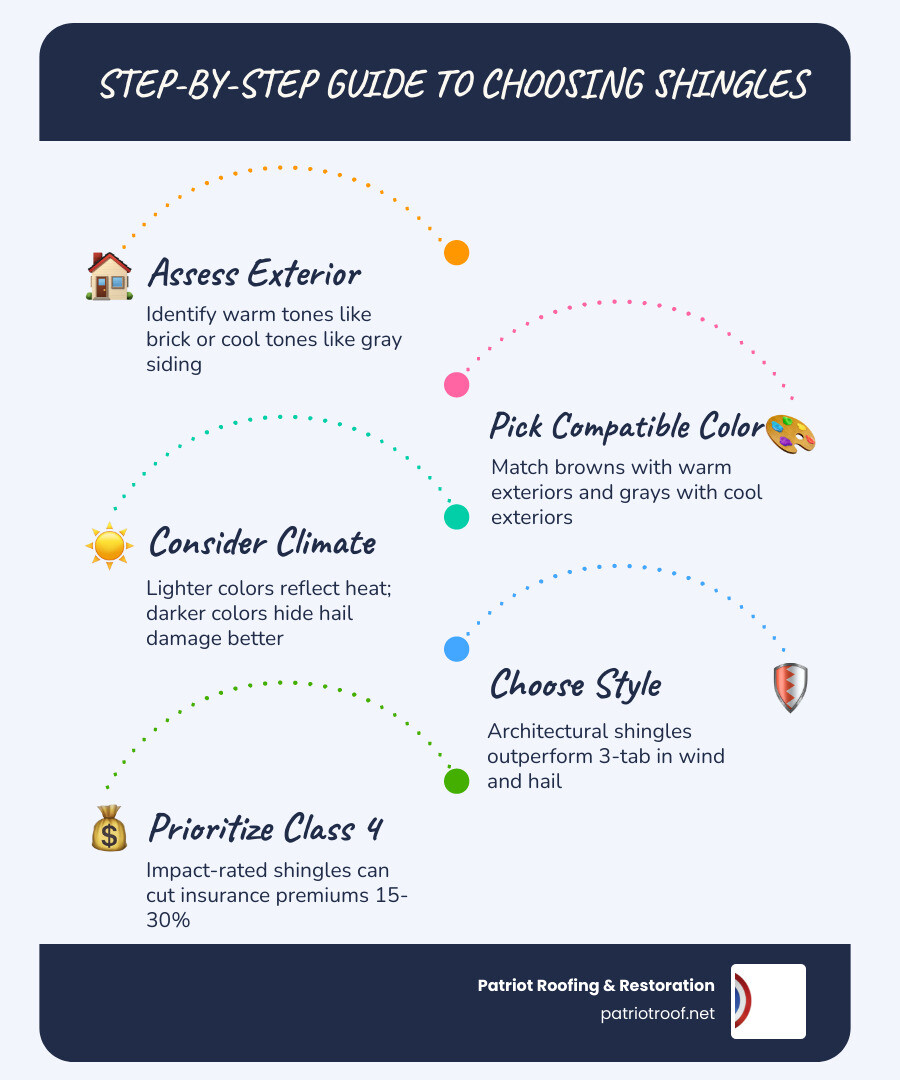
- Assess your exterior — Identify whether your home has warm tones (brick, tan siding) or cool tones (gray, white, blue siding)
- Pick a compatible color — Match warm exteriors with brown or earth-tone shingles; match cool exteriors with gray or charcoal shingles
- Consider the Arkansas climate — Lighter colors reflect heat and lower cooling costs; darker colors show granule loss more in hail-prone areas
- Choose the right style — Architectural (dimensional) shingles outperform 3-tab in Arkansas’s high winds and hail events
- Prioritize impact resistance — Look for Class 4 rated shingles, which may qualify for a homeowners insurance discount, though it varies by insurer and you should confirm with your agent
- Check HOA rules — Review neighborhood guidelines before finalizing any color
- Preview before you commit — Use a digital visualizer and request physical shingle samples to view in natural light against your home
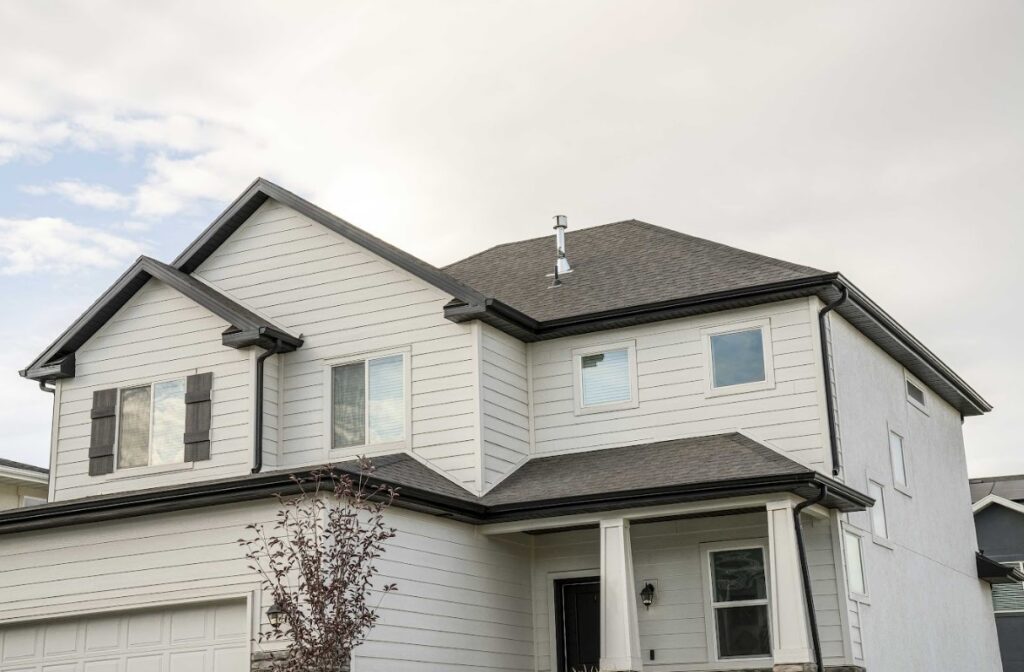
Your roof isn’t just a protective layer — it makes up as much as 40% of your home’s visible exterior. That means your shingle choice has an outsized impact on curb appeal, energy bills, and even resale value. A roof and exterior that clearly go together is one of the first things a buyer notices from the curb.
Arkansas adds its own layer of complexity. The state sits squarely in the Central U.S. hail belt, endures summers that regularly push past 90°F with high humidity, and faces year-round weather extremes that can shorten roof life if you choose the wrong material or color. A shingle that looks great in a mild climate may show algae streaks, granule loss, or accelerated fading in Little Rock after just a few seasons.
The good news? With the right approach, you can find a shingle color and style that looks sharp, holds up to Arkansas weather, and protects your home for its full service life.
How to Choose the Right Shingle Color and Style for an Arkansas Home
When it’s time to replace your roof, you aren’t just buying protection; you are making a major design decision. The process of Choosing a Roof requires looking at your home as a complete ecosystem. You have to consider your existing siding, your landscaping, the architectural design of your home, and the unique weather patterns we experience right here in Central Arkansas.
Whether you live in a historic craftsman in Little Rock, a sprawling estate in West Little Rock, or a modern suburban home in Conway, your roof should feel like a natural extension of your home’s personality. If you have a highly visible, steeply pitched roof, your shingle choice is going to be the dominant visual element of your home’s exterior. If you have a low-slope roof, the color will be more of an accent.
By taking a systematic approach, you can avoid the dreaded “roof regret” and choose a combination that makes you smile every time you pull into the driveway.
Understanding the Arkansas Climate: Heat, Humidity, and Hail
Our local weather is notoriously tough on building materials. Central Arkansas sees a wild mix of extreme summer heat, high humidity, intense spring thunderstorms, and the occasional winter ice storm. Each of these elements impacts how your shingles perform and age.
First, let’s talk about heat and UV exposure. Our summer temperatures routinely soar into the 90s, sending attic temperatures climbing. If your roof absorbs too much of this heat, your air conditioner has to work overtime, driving up your energy bills.
Second, our year-round average relative humidity of 65–70% creates the perfect breeding ground for cyanobacteria, specifically Gloeocapsa magma. This is the airborne algae responsible for those ugly black streaks you see on older roofs in Maumelle and Sherwood. If you choose a solid, light-colored shingle without modern algae protection, those dark streaks will show up incredibly fast.
Finally, we have the hail risk. Sitting on the edge of the severe weather belt means our roofs regularly take a beating from spring hail. When analyzing the Pros Cons Asphalt Shingles Little Rock Homes, durability is just as important as aesthetics. Hail impacts knock protective granules loose. On a solid black or very dark roof, these bald spots stand out like a sore thumb. On a blended, textured architectural shingle, minor wear and tear is naturally masked by the multi-toned design.
Balancing HOA Rules and Neighborhood Aesthetics
Before you fall in love with a specific color, you have to make sure it’s allowed. Many active Homeowners Associations (HOAs) in communities like Maumelle, Bryant, and West Little Rock have strict covenants regarding roof colors and materials. Some HOAs restrict choices to a pre-approved list of neutrals (like Weathered Wood or Charcoal) to maintain a cohesive neighborhood look.
Even if you don’t have a strict HOA, it’s wise to look at the homes around you. You want your home to stand out for its beauty, not because it looks completely out of place. If your street is filled with warm, earthy brick homes topped with brown and gray roofs, installing a bright, high-contrast roof might hurt your home’s resale value.
When looking for Tips Help Choose Best Roof Maumelle, we always recommend finding a balance: choose a color that reflects your personal style but stays within the general color palette of your neighborhood. Neutral, multi-tone shingles consistently offer the widest appeal for future buyers while still giving your home a fresh, updated look.
Analyzing Shingle Colors: Light vs. Dark Roofs in Arkansas
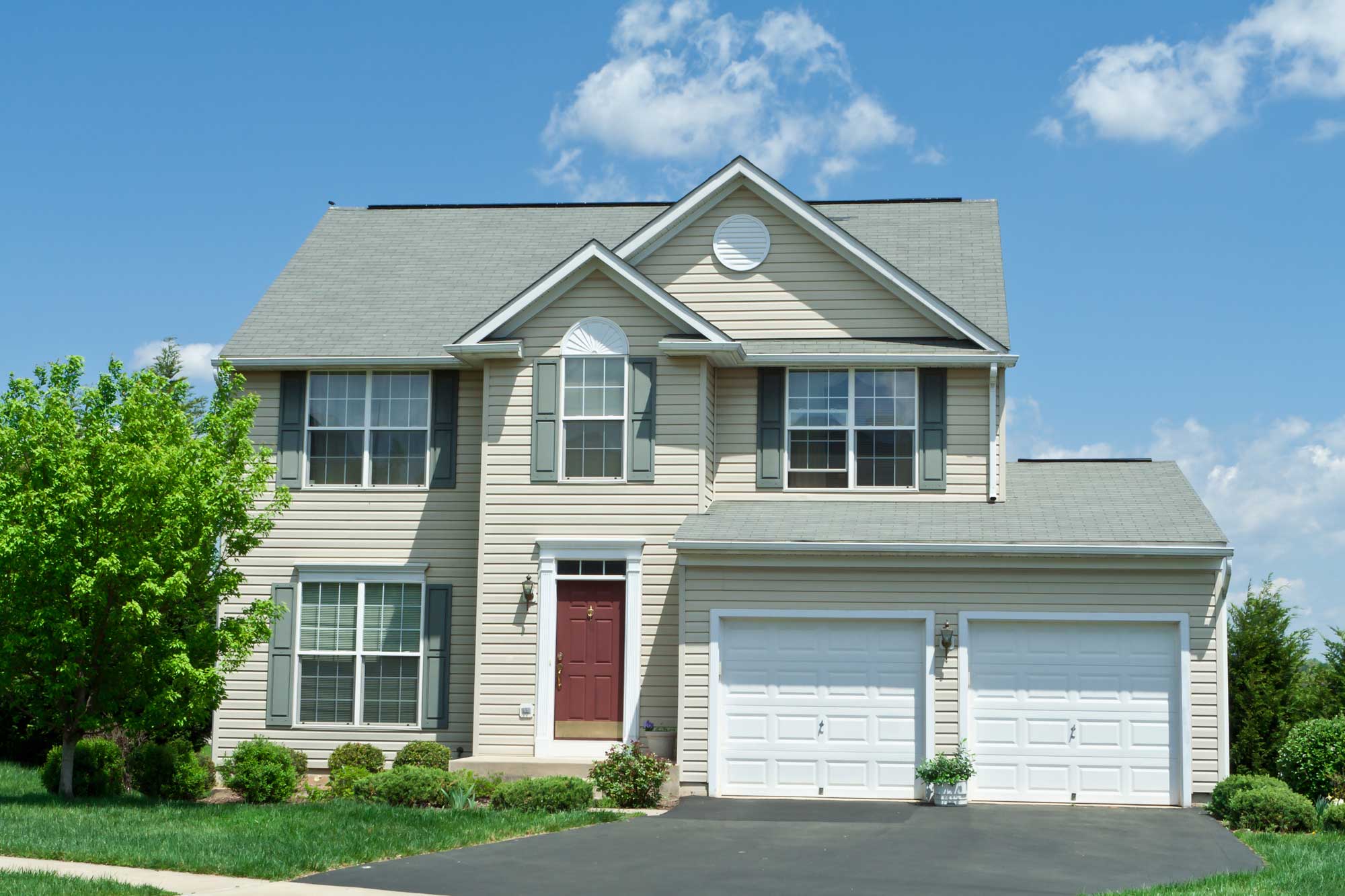
One of the most common debates homeowners face is whether to go with a light or a dark roof. In a hot climate like ours, this choice has real-world consequences for both your wallet and your home’s comfort.
| Feature / Consideration | Light Shingles (e.g., Cool Grays, Silver, Sand) | Dark Shingles (e.g., Charcoal, Black, Dark Brown) |
|---|---|---|
| Heat Absorption | Low (reflects more solar radiation) | High (absorbs heat, warms attic space) |
| Attic Temperature Impact | Can reduce attic temps by 30–40°F on hot days | Can raise attic temps without proper ventilation |
| Algae & Streak Visibility | High (black streaks show up easily) | Low (masks dark algae streaks well) |
| Granule Loss & Wear Visibility | Low (blends with the underlying asphalt layer) | High (bald spots appear as dark or shiny patches) |
| Visual Effect | Makes a home look larger and more modern | Provides classic, grounding contrast; looks sleek |
Energy Efficiency and Heat Absorption in Southern Summers
It is a proven scientific fact: lighter colors reflect solar radiation, while darker colors absorb it. On a blazing July afternoon in Benton or Cabot, a highly reflective, lighter-colored roof can reduce attic temperatures by 30–40°F. This thermal barrier can cut your household cooling energy costs by 10–25%.
However, this doesn’t mean you are forced to install a stark white roof to keep your home cool. Modern manufacturing has given us highly reflective “cool roof” granules that are integrated directly into popular, medium-toned shingles.
Furthermore, your roof’s thermal performance is heavily dependent on attic ventilation and insulation. A dark charcoal roof installed over a properly ventilated attic with active ridge vents and R-38 insulation will often perform better than a light roof over a sealed, poorly ventilated attic. If you love the dramatic look of Popular Roof Colors like deep gray or dark brown, you can absolutely choose them—just make sure your contractor pairs them with an engineered ventilation system.
Hiding Wear, Tear, and Algae in Humid Climates
While light roofs win the pure energy efficiency battle, dark and medium-toned roofs have a major advantage when it comes to hiding wear and tear.
In our humid climate, those ugly black algae streaks show up quickly on light gray or tan roofs. If you choose a lighter shade, it is critical to select a shingle that features advanced algae-resistant technology. For example, shingles engineered with copper-containing granules prevent algae growth and keep your roof looking clean for ten years or more.
On the flip side, dark roofs are excellent at hiding dirt, dust, and algae, but they struggle to hide physical storm damage. When hail hits a dark shingle and knocks the colored granules away, the dark black asphalt underneath eventually weathers, sometimes showing up as shiny or contrasting spots. This is why blended, medium-toned shingles—like Weathered Wood—are so incredibly popular in Central Arkansas. They offer the best of both worlds: they are light enough to assist with energy efficiency, yet textured and dark enough to hide both algae streaks and minor storm wear.
Matching Shingle Colors with Your Home’s Exterior Materials
To create a cohesive, beautiful exterior, you have to treat your roof as part of a larger color palette. The secret is matching the undertones of your siding, brick, stone, or stucco with the undertones of your shingles.
We categorize home exteriors into warm and cool palettes. Warm palettes feature beige, cream, red brick, and natural wood tones. Cool palettes feature crisp white, gray, blue, and green siding. When browsing for a Popular Shingle Color, always match warm with warm and cool with cool.
Pairing Shingles with Red Brick and Stone Exteriors
Many homes in established neighborhoods across Little Rock, Sherwood, and Jacksonville feature classic red brick or natural stone. Brick and stone are permanent, highly textured materials, which means your roof needs to complement them rather than fight them for attention.
If your home has red or orange brick, look for shingles with warm, earthy undertones. Deep browns, warm grays, and multi-toned charcoal blends work beautifully. A solid black roof can sometimes look too harsh or heavy against red brick, whereas a blended shingle like Weathered Wood adds a softer, more natural transition.
For stone exteriors, look at the dominant color in the stone. If your stone has warm gold and tan highlights, a brown-based shingle will tie the look together. If your stone features cool gray and blue slate tones, a pewter gray or charcoal shingle is the perfect match. You can see how these combinations work in real life by exploring the Most Popular Shingle Color Little Rock trends.
Selecting Shingles for Siding and Stucco Homes
Siding and stucco give you a bit more design flexibility because they can be painted, but the principles of contrast and color temperature still apply.
If you have a classic white farmhouse or a light gray siding home, a dark charcoal or slate gray roof provides a stunning, high-contrast look that grounds the property. If your home has warm beige, tan, or stucco siding, pairing it with a warm brown or gold-accented shingle creates a welcoming, Mediterranean or traditional feel.
For monochromatic homes—such as a dark gray house with white trim—it is important to maintain some distinction. A roof that matches your siding color exactly can make your home look flat and uninspiring. Instead, create contrast: pair dark siding with a medium-gray roof, or light siding with a dark roof. To see some incredible transformations, take a look at how Maumelle’s Top Roof Colors Transform Home designs.
Selecting the Best Shingle Styles for Arkansas Weather
While color is what everyone notices first, the style of your shingle is what actually keeps the rain, wind, and hail out of your living room. In Arkansas, choosing the right shingle style is a direct investment in your home’s longevity and structural integrity.
Architectural vs. 3-Tab Shingles: how to choose the right shingle color and style for an arkansas home
If you are shopping for a new roof, you will primarily choose between traditional 3-tab shingles and modern architectural (dimensional) shingles.
Traditional 3-tab shingles are flat, single-layer shingles that lay in a uniform, brick-like pattern. While they are a budget-conscious option, they have significant drawbacks in our climate. They typically carry a wind rating of only 60 mph and a shorter lifespan of 15 to 20 years. In a strong spring storm, 3-tab shingles are much more prone to blowing off.
Architectural shingles, on the other hand, are constructed from multiple layers of asphalt laminated together. This creates a beautiful, three-dimensional look that mimics the texture of natural wood shakes. Because they are thicker and heavier, they carry wind ratings of 110 to 130 mph and last 25 to 30 years or more.
When you look at Why Architectural Shingles Worth Investment, the decision becomes clear. They offer superior protection against our local storms, add substantial depth and character to your home’s exterior, and yield a much higher return on investment when it’s time to sell. To learn more about the differences, check out our guide on Roof Shopping Made Easy From 3 Tab to Architectural Shingles.
Class 4 Impact-Resistant Shingles and Insurance Savings
If you want the ultimate protection against Arkansas hail, you should consider Class 4 impact-resistant shingles. These shingles undergo rigorous UL 2218 testing, where a two-inch steel ball is dropped twice from a height of 20 feet onto the same spot. To pass and receive a Class 4 rating, the shingle must show no signs of cracking or tearing on its back mat.
By choosing an impact-resistant shingle, like the Atlas Pinnacle or Atlas Pristine lines, you are protecting your home from costly hail damage claims. Because these shingles are so resilient, many homeowners insurance carriers in Arkansas offer an annual premium reduction for homes with Class 4 roofs, with the amount varying by carrier. Over the lifespan of your roof, these premium savings can easily offset the slightly higher upfront cost of the shingles, making them an incredibly smart financial move.
Popular Shingle Colors and How to Preview Them
Once you understand the science of climate and color matching, it’s time for the fun part: picking your perfect shade.
Weathered Wood vs. Charcoal vs. Slate vs. Barkwood: how to choose the right shingle color and style for an arkansas home
Four colors consistently dominate the roofing industry in Central Arkansas, each offering a distinct aesthetic:
- Weathered Wood — This is the undisputed champion of shingle colors. It is a highly versatile, multi-toned blend of warm grays, light browns, and dark charcoal highlights. It looks fantastic on almost any home, from red brick to light siding, and is incredibly forgiving when it comes to hiding dust, pollen, and minor wear.
- Charcoal — If you want a modern, upscale, and dramatic look, Charcoal is the way to go. It provides a crisp, dark gray finish that looks spectacular on white, blue, and gray homes. It mimics the classic look of slate at a fraction of the cost.
- Slate — A cool, refined medium-gray that offers a softer alternative to Charcoal. Slate shingles have distinct blue-gray undertones that pair beautifully with stone accents, brick, and cool-toned siding.
- Barkwood — A rich, warm, deep brown that brings out the beauty of rustic, craftsman, and earth-toned homes. Barkwood is perfect for homes nestled in wooded areas or those with heavy wood trim and stone features.
Using Virtual Remodelers and Physical Samples
While online visualizers and virtual remodelers are fantastic tools to help you narrow down your choices, you should never make your final decision based on a computer screen. Digital screens display colors differently, and a digital rendering cannot capture the texture and depth of a real shingle.
Always ask your roofing contractor to bring physical shingle boards to your home. Hold the actual shingles up against your siding, brick, and trim. Look at them at different times of the day—in the bright morning sun, under the midday glare, and in the soft evening shade. A color that looks light gray in the morning might look almost white under the harsh afternoon sun. Taking this extra step ensures you know exactly what your new roof will look like before the first nail is driven.
Frequently Asked Questions about Arkansas Roof Selection
Does roof color affect home insurance premiums in Arkansas?
The color of your shingles itself does not directly affect your homeowners insurance premiums. However, the style and performance rating of the shingle absolutely does. Installing a Class 4 impact-resistant shingle can qualify you for an annual premium discount with most major insurance carriers in Arkansas, with the amount varying by carrier. Additionally, upgrading to wind-resistant architectural shingles can lower your risk of filing storm damage claims, keeping your long-term insurance rates more stable.
What is the most popular shingle color in Little Rock?
Weathered Wood is by far the most popular shingle color in Little Rock, Maumelle, and the surrounding areas. Its popularity stems from its neutral, multi-toned blend of gray and brown, which allows it to complement almost any architectural style and siding material. Charcoal is a close second, especially for modern farmhouses and homes with light siding or dark brick.
How long do asphalt shingles last in the Arkansas climate?
In our humid subtropical climate, a standard 3-tab asphalt shingle roof typically lasts 15 to 20 years. High-quality architectural shingles generally last 15 to 20 years in Arkansas. However, these lifespans can be shortened by severe hail storms, poor attic ventilation, or a lack of regular maintenance. Ensuring your roof has proper ventilation and choosing high-quality, impact-resistant materials are the best ways to maximize your roof’s lifespan.
Conclusion
Choosing the right shingle color and style is one of the most important decisions you will make for your home. It’s a choice that affects your home’s safety, comfort, energy bills, and curb appeal for decades to come.
At Patriot Roofing & Restoration, we are dedicated to helping you make the right choice. Our quality-first approach is backed by our four written guarantees, our exclusive four written guarantees, and our elite Atlas Certification. We proudly serve homeowners across Central Arkansas, including Little Rock, North Little Rock, West Little Rock, Maumelle, Sherwood, Jacksonville, Cabot, Austin, Ward, Conway, Mayflower, Scott, Bryant, Benton, Alexander, Hot Springs, and Hot Springs Village.
Let us help you design a roof that protects your family and makes your home the envy of the neighborhood. Get started with professional asphalt shingle roofing in Little Rock by contacting our friendly team today for a free, no-pressure consultation and physical sample viewing!