

Why Arkansas’s Climate Is One of the Harshest Tests Your Siding Will Ever Face
How Arkansas heat, humidity, and storm debris damage siding over time is something every Little Rock homeowner needs to understand — because the forces working against your siding here are relentless, and the consequences of ignoring them are expensive.
Arkansas sits in one of the most climatically demanding regions in the country for exterior building materials. Consider what your siding faces every single year:
- ~217 sunny days of UV exposure that oxidizes materials and strips elasticity
- Relative humidity exceeding 80% during summer months, creating sustained moisture pressure
- ~50 inches of annual rainfall that forces water into every gap and micro-crack
- Design wind speeds of 115 mph or higher in the state’s most exposed zones
- Frequent hail events — with quarter-sized hail large enough to compromise siding on impact
- Repeated thermal cycling as temperatures swing dramatically between seasons
No single one of these factors would be a serious problem on its own. Together, they create a compound degradation effect that shortens siding lifespans well below what manufacturers advertise — sometimes by years.
The result? Warped panels. Hidden rot. Mold growing behind walls where you can’t see it. And repair bills that could have been avoided with earlier action.
This guide breaks down exactly what’s happening to your siding, which materials hold up best in Arkansas conditions, and what you can do to protect your home before small damage becomes a structural problem.
How Arkansas Heat Humidity and Storm Debris Damage Siding Over Time
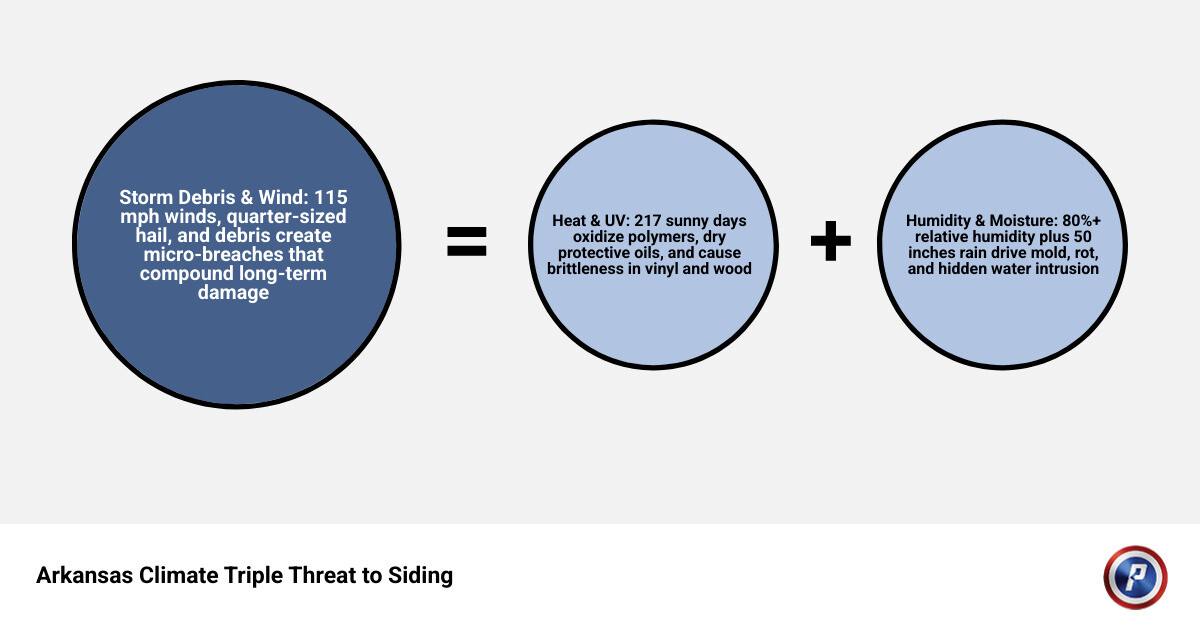
To understand why siding degrades so rapidly in Central Arkansas, we have to look at the three-way alliance between extreme heat, oppressive humidity, and sudden, violent storms. When these environmental factors take turns attacking your home, they don’t just cause superficial cosmetic wear. They steadily compromise the protective envelope of your property.
Our region experiences approximately 217 sunny days per year. While that makes for beautiful weekend afternoons at Pinnacle Mountain, it also means your home is subjected to continuous ultraviolet (UV) radiation. This intense sunlight acts like a slow-burning oven, baking the essential polymers out of vinyl siding and drying out the protective oils and paint on natural wood. Over time, this UV exposure causes materials to become brittle, losing the elasticity they need to handle physical impacts or thermal movement.
At the same time, Arkansas receives an average of 50 inches of precipitation annually. When this heavy rainfall combines with our frequent summer humidity levels of 80% or higher, your siding is under constant moisture pressure. Moisture-laden air tries to find its way behind your siding panels, looking for any gap, poor seal, or uncaulked seam.
Once moisture gets behind the exterior cladding, it has a difficult time drying out. This creates a perfect, humid microclimate where organic growth can thrive, slowly eating away at your home’s wood framing and sheathing. If you want to dive deeper into the different types of siding and how they handle these conditions, check out our comprehensive guide on the Category: Siding.
The Science of How Arkansas Heat Humidity and Storm Debris Damage Siding Over Time
The true destroyer of siding in Central Arkansas is a phenomenon known as “thermal shock.” On a typical July afternoon in Little Rock, the surface temperature of your siding can easily exceed 150°F, especially if you have darker-colored panels. When a sudden afternoon thunderstorm rolls through, pouring cold rain onto those baking hot walls, the surface temperature can plummet by 50 degrees or more in a matter of minutes.
This rapid temperature drop causes immediate, violent contraction of the siding material. This cycle of extreme expansion during the day and sudden contraction during storms puts immense mechanical stress on your siding, its fasteners, and the caulking at the seams. Over time, this thermal cycling creates microscopic stress cracks and loosens nails.
Once those micro-cracks form, high humidity and rainwater step in to finish the job. High humidity creates an ideal breeding ground for biological growth. You might notice black streaks or green spots on your home’s exterior. This is often Gloeocapsa magma, a resilient type of algae that feeds on organic matter and limestone fillers in some materials, or mold and mildew.
As these organisms grow, they hold moisture directly against the siding material, preventing it from drying. Eventually, this moisture penetrates deep enough to cause structural rot in the plywood sheathing and wood studs behind the wall, compromising your home’s structural integrity. To learn more about how different siding types resist these biological threats, explore our resources in the Category: Popular Siding Types.
Recognizing How Arkansas Heat Humidity and Storm Debris Damage Siding Over Time
Most homeowners don’t realize their siding is failing until they see a major problem, but the warning signs are usually there much earlier if you know what to look for. Here are the primary indicators of climate-driven siding damage:
- Warping and Buckling: When siding is exposed to intense heat and isn’t allowed to expand and contract freely (often due to tight nailing), it will warp, wave, or buckle.
- Fading and Discoloration: Severe chalking or uneven fading indicates that UV rays have broken down the material’s protective outer layer, leaving it brittle and vulnerable to storm debris impacts.
- Soft or Spongy Spots: If you press on a section of wood or engineered wood siding and it feels soft or gives way, water has penetrated the outer barrier and rot has settled in.
- Rattling or Whistling Panels: If you hear your siding rattling during a windy night in Maumelle or Bryant, it means wind uplift has loosened the fasteners, leaving the panels vulnerable to being torn off in the next storm.
- Interior Clues: Sometimes the best place to spot siding damage is inside your home. Keep an eye out for peeling paint, bubbling wallpaper, or mold growth on drywall, especially along exterior walls.
If you notice any of these warning signs after a heavy weather event, it is crucial to seek professional help immediately. Delaying repairs can turn a simple panel replacement into a massive structural remediation project. Read more about our local storm restoration services on our Storm Damage Repair Little Rock page.
The Impact of Storm Debris and Severe Weather on Siding Integrity
While heat and humidity do their damage slowly and quietly, storm debris acts with sudden, devastating force. Arkansas lies within a high-frequency severe weather corridor, meaning our homes must be built to withstand intense straight-line winds, tornadoes, and severe hailstorms.
According to ASCE 7-22 design standards, residential structures in our most exposed zones must be built to handle design wind speeds of 115 mph or higher. When winds reach these speeds, they don’t just blow against your home; they create immense wind uplift pressure. This pressure acts like a vacuum, pulling siding panels outward away from the wall. If the siding was already weakened by thermal cycling or poor installation, the wind can easily rip panels clean off their fasteners.
Wind also turns ordinary yard objects, tree branches, and gravel into high-speed projectiles. During severe weather events, such as the historic 1-11-24 Severe Storm Hail Damage Heavy Winds Little Rock and Maumelle storm, wind-driven debris and large hail can batter your home’s exterior, leaving behind a trail of cracked, punctured, and dented siding.
Micro-Breaches and the Threat of Hidden Moisture Intrusion
It is easy to spot a siding panel that has been ripped off by a tornado or crushed by a fallen tree limb, but the most dangerous storm damage is often the smallest. Hailstones — particularly quarter-sized hail (1 inch in diameter) or larger — can cause “micro-breaches” in your siding.
On vinyl siding, hail can leave star-shaped fractures or small chips along the bottom edges of the panels. On fiber cement or engineered wood, hail impacts can chip away the protective paint and primer, exposing the raw, absorbent composite material underneath to the elements.
Once a micro-breach occurs, the clock starts ticking. The very next rainstorm will force water directly into these tiny openings. Because the siding is designed to shed water downward, any water that gets behind the panel through a crack or puncture becomes trapped.
With nowhere to go, this moisture seeps into the housewrap and eventually the wood sheathing. Within just a few weeks of a severe weather event, like the one documented during the 4-16-24 Hail Damages Roland Roofs storm, these tiny, unnoticed breaches can lead to structural rot, ruined insulation, and toxic mold growth inside your walls.
Siding Material Performance in the Arkansas Climate
Choosing the right siding material for your home in Central Arkansas is all about balancing upfront cost, aesthetic preference, and long-term durability against our unique weather challenges. Different materials react in vastly different ways to our high-heat, high-humidity, and storm-prone environment.
To help you compare your options, we’ve put together a performance breakdown of the most common siding materials used across Little Rock, Benton, Conway, and surrounding areas:
| Siding Material | Advertised Lifespan | Real-World Arkansas Lifespan | Maintenance Requirements | Vulnerability to Heat & Humidity | Vulnerability to Storm Debris |
|---|---|---|---|---|---|
| Standard Vinyl | 40–60 Years | 20–35 Years | Very Low (Occasional wash) | High (Warping, fading) | High (Cracks, punctures) |
| Insulated Vinyl | 40–60 Years | 25–40 Years | Low | Moderate (Better stability) | Moderate (Foam backing absorbs impact) |
| Fiber Cement | 50+ Years | 40–50+ Years | Moderate (Paint/caulk every 10-15 years) | Extremely Low | Extremely Low (Highly impact-resistant) |
| Engineered Wood | 30–50 Years | 25–35+ Years | Moderate (Requires strict paint/seal upkeep) | Low (If properly sealed) | Low to Moderate (Good impact resistance) |
| Traditional Wood | 40+ Years | 15–30 Years | High (Paint/seal every 3-5 years) | High (Rot, warping, insects) | Moderate (Dents, scratches) |
Selecting the right material can dramatically reduce your long-term maintenance costs and protect your home’s resale value. For a deeper look at what local homeowners are choosing, check out our article on the Most Popular Siding Type Little Rock.
Vinyl and Insulated Vinyl Siding
Vinyl siding remains a popular choice throughout Central Arkansas due to its affordability and low maintenance requirements. However, standard vinyl is highly susceptible to the physical stresses of our climate. Because vinyl has a high coefficient of thermal expansion, standard panels expand and contract significantly as temperatures swing. If the siding was nailed too tightly during installation, this movement causes the panels to buckle, warp, and pull away from the wall.
Additionally, prolonged UV exposure over our 217 annual sunny days causes standard vinyl to fade and become brittle over time. What was once a flexible plastic panel becomes a fragile shell that can easily crack when struck by a stray baseball or a wind-driven tree branch.
Insulated vinyl siding offers a significant upgrade. The rigid foam backing fused to the vinyl panel acts as a shock absorber, greatly improving the material’s impact resistance against hail and storm debris. It also adds an R-value of R-2 to R-5, helping to keep your home cooler during those blistering August days. To learn more about how long you can expect these materials to last on your home, read our guide on How Long Will New Siding Last in Maumelle.
Fiber Cement Siding
When it comes to pure durability in the face of Arkansas weather, fiber cement (such as James Hardie siding) is the gold standard. Made from a mixture of Portland cement, sand, and cellulose fibers, this material is completely immune to the effects of humidity and moisture. It will not rot, swell, or support the growth of mold and mildew, even if subjected to sustained moisture loads.
Fiber cement also excels in its dimensional stability. Unlike vinyl, it does not expand or contract significantly during rapid temperature swings, meaning your paint job and caulking seams will last much longer without cracking.
Furthermore, fiber cement is incredibly heavy and dense, providing outstanding impact resistance against hail and wind-driven storm debris. While the upfront investment is higher than vinyl, its real-world lifespan of 40 to 50+ years makes it a highly cost-effective choice for long-term homeowners. You can explore a detailed breakdown of installation investments on our Little Rock New Siding Cost page.
Engineered Wood and Traditional Wood Siding
Engineered wood siding, such as LP SmartSide, combines the natural beauty of wood with advanced manufacturing technology. By treating wood strands with water-resistant waxes, zinc borate (to resist fungal decay and termites), and advanced binders, manufacturers have created a product that is far more durable than traditional lumber. In our climate, engineered wood typically lasts 25 to 35+ years, provided that the homeowner maintains the paint and caulking.
Traditional wood siding, like cedar, offers unmatched warmth and curb appeal, but it requires a serious commitment to upkeep. Cedar naturally contains protective oils that repel insects and resist decay, but our relentless humidity and 50 inches of annual rainfall will eventually break down these natural defenses.
To prevent warping, splitting, and rot, traditional wood siding must be cleaned, stained, or painted every 3 to 5 years. If this maintenance is neglected, moisture will quickly take hold, leading to expensive structural damage. If your wood siding has already suffered from storm-related moisture issues, you can learn about repair options on our Category: Storm Damage page.
Installation Details and Ventilation: The Keys to Siding Longevity
Even the most expensive, high-grade siding material will fail prematurely if it is installed incorrectly. In practice, most premature siding failures we are called out to look at trace back to how the siding was installed rather than to a defect in the material itself. In Arkansas’s intense climate, proper installation techniques are non-negotiable.
First and foremost is the management of thermal expansion. Vinyl siding can expand and contract by as much as 3/4 of an inch over a 12-foot span between winter and summer. To accommodate this movement, installers must hang the siding rather than nail it tight. Fasteners should be driven straight into the center of the nail slots, leaving a space about the thickness of a dime between the nail head and the siding panel. If nailed too tightly, the siding will warp and buckle as soon as the summer heat hits.
Another critical factor is the moisture barrier and flashing. A high-quality housewrap must be installed behind the siding to act as a second line of defense against wind-driven rain. Proper flashing must be installed around all windows, doors, and roof-to-wall intersections to direct water away from the home’s interior framing.
Finally, we must address the “double-baking effect.” When a home has poor attic ventilation, heat from the summer sun gets trapped inside the attic space, raising attic temperatures above 150°F. This heat bakes the roof from below, while the sun bakes it from above.
This extreme heat also transfers directly to the exterior walls. Proper attic ventilation, conforming to IRC Section R806 standards (minimum 1:150 net-free ventilation ratio), is essential to draw this trapped heat out of the home, reducing the thermal load on both your roof and your siding.
Proactive Maintenance and Professional Siding Care
While you can’t control the weather in Central Arkansas, you can control how prepared your home is to handle it. Implementing a proactive maintenance routine is the single most effective way to extend your siding’s lifespan and protect your investment.
Here is a checklist of essential siding maintenance steps every homeowner should follow:
- Perform Annual Inspections: Walk the perimeter of your home every spring and fall. Look for loose panels, cracked caulking, faded paint, or signs of insect activity. Pay close attention to the areas near the ground and around windows.
- Wash Your Siding Regularly: At least once a year, clean your siding to remove dirt, pollen, algae, and mold. Use a mild detergent, a soft-bristled brush, and a standard garden hose. Avoid using high-pressure power washers, as they can force water behind vinyl panels or chip the paint on wood and fiber cement.
- Trim Nearby Vegetation: Keep trees, shrubs, and climbing vines trimmed at least 1 to 2 feet away from your siding. Blown-in branches can scratch and puncture siding during storms, and dense foliage traps moisture against the walls, accelerating rot and mold growth.
- Maintain Your Gutters: Ensure your gutters and downspouts are clean and functioning properly. Overflowing gutters spill water directly down your siding, leading to concentrated moisture loads and localized rot.
- Conduct Post-Storm Checks: After any major storm event in Little Rock, Maumelle, or Benton, perform a thorough visual inspection of your exterior. Look for hail dings, cracked panels, or loose trim. If you suspect damage, document it immediately with photos and videos.
- Address Repairs Promptly: Never ignore a small crack or a loose panel. Fixing a small issue today prevents water from getting behind the siding and causing thousands of dollars in structural damage down the road.
If you do find storm damage, taking immediate action is also crucial for protecting your insurance claim. Insurance companies often have strict timelines for filing claims, and failing to mitigate ongoing water damage can lead to a claim denial. To learn more about the steps you should take immediately after severe weather, read our guide on Steps to Take After Storm Damage Roof Little Rock.
Frequently Asked Questions about Arkansas Siding Damage
How does high humidity cause mold and rot behind siding?
High humidity levels (frequently exceeding 80% in Arkansas summers) create a heavy vapor pressure that drives moisture into any small gap or unsealed seam in your siding. Once water vapor gets behind the siding, it condenses into liquid water.
If the home lacks a proper drainage plane (such as a rainscreen gap or high-quality housewrap), this moisture becomes trapped against the wood sheathing. Combined with warm summer temperatures, this trapped moisture creates the perfect environment for wood-decaying fungi and mold to thrive, leading to structural rot and poor indoor air quality.
Can I repair individual damaged siding panels or do I need a full replacement?
Yes, in many cases, individual damaged panels can be spot-repaired or replaced, especially with vinyl or fiber cement siding. However, there are a few challenges to keep in mind. First, matching the color of your existing siding can be difficult. Over years of exposure to our 217 sunny days, your original siding will have faded. A brand-new replacement panel from the manufacturer will likely stand out against the weathered panels.
Additionally, if the damage is widespread, or if the siding is near the end of its useful lifespan and has become brittle, attempting spot repairs can cause more damage to surrounding panels. A professional inspection can help determine if a spot repair is viable or if a full replacement is the smarter long-term investment.
Does homeowners insurance cover siding damage from storms in Arkansas?
Standard homeowners insurance policies in Arkansas typically cover sudden and accidental damage caused by wind, hail, and flying storm debris. If a severe storm cracks your vinyl siding or tears panels off your home, the cost of repair or replacement is generally covered, subject to your policy’s wind/hail deductible (which is often 1% to 2% of your home’s insured value).
However, insurance does not cover damage caused by normal wear and tear, neglect, lack of maintenance, or gradual rot. This is why documenting storm damage immediately and working with an experienced local contractor is so important to ensure your claim is processed fairly.
Conclusion
Your home’s siding is its first line of defense against the elements. In Central Arkansas, where intense summer heat, oppressive humidity, and violent storm debris join forces, keeping your siding in peak condition is essential to protecting your entire home from structural damage.
At Patriot Roofing & Restoration, we bring a quality-first approach to every project we undertake. Serving Little Rock, Maumelle, Benton, Bryant, Conway, and surrounding areas, we specialize in helping homeowners navigate the unique challenges of our local climate. Whether you need a minor storm repair, a proactive maintenance inspection, or a complete siding replacement, our team is here to help.
We back our craftsmanship with our four written guarantees and our standing as an Atlas PRO+ contractor at the Gold level to give you ultimate peace of mind. Don’t wait for a small leak to become a major headache. Contact us today to schedule your professional exterior consultation and protect your home for years to come. Explore our full range of services on our Siding Little Rock page.