

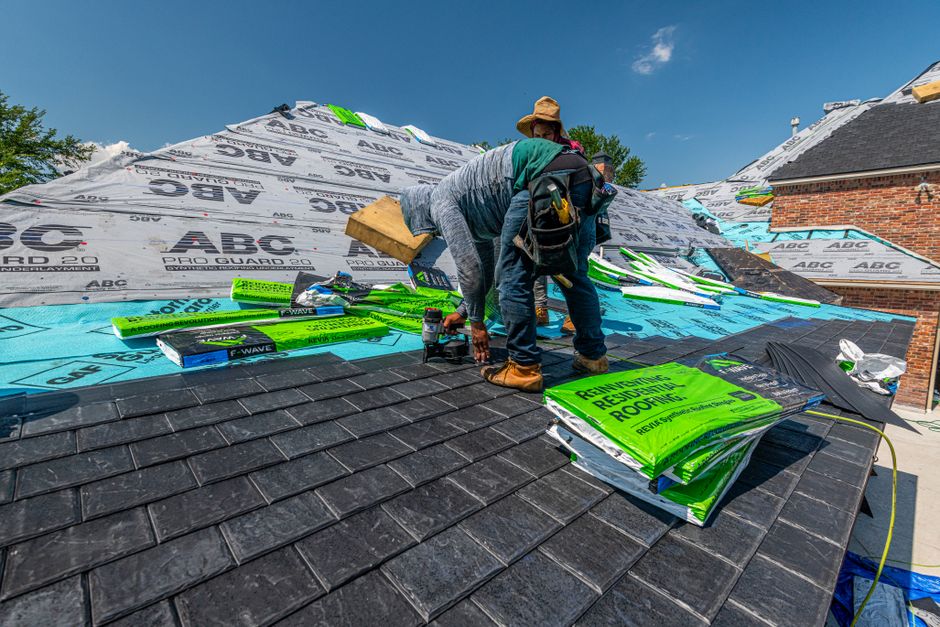
Why Central Arkansas Homeowners Need to Understand Hail Damage on Asphalt Shingles
How hail damages asphalt shingles in Central Arkansas is something every homeowner in the Little Rock area needs to understand — because it happens more often than most people expect, and the damage is frequently invisible from the ground.
Here’s a quick breakdown of the ways hail damages asphalt shingles:
- Granule loss — Hailstones knock protective granules off the shingle surface, exposing the asphalt underneath to UV rays and accelerating aging
- Fiberglass mat fractures — The impact can crack the structural mat beneath the surface, weakening the shingle even when it looks intact
- Shingle bruising — Soft spots form where the mat is fractured; these are only detectable by pressing on the shingle, not by looking at it
- Seal strip damage — Hail breaks the adhesive bond that holds shingles down, allowing wind-driven rain to push moisture underneath
- Surface pitting and circular impact marks — Dark, circular spots where granules have been displaced, exposing raw bitumen
Arkansas ranks among the top 10 most hail-vulnerable states in the country, where severe hail is reported most years. Central Arkansas counties like Pulaski, Faulkner, and Saline fall into a moderate-to-high frequency hail zone, meaning your roof takes repeated hits over its lifetime.
The trouble is, a roof can look perfectly fine from the street while hiding damage that quietly shortens its lifespan by five to ten years — or leads to a leak months down the road. Knowing what to look for, and when to act, can save you from a much costlier repair later.
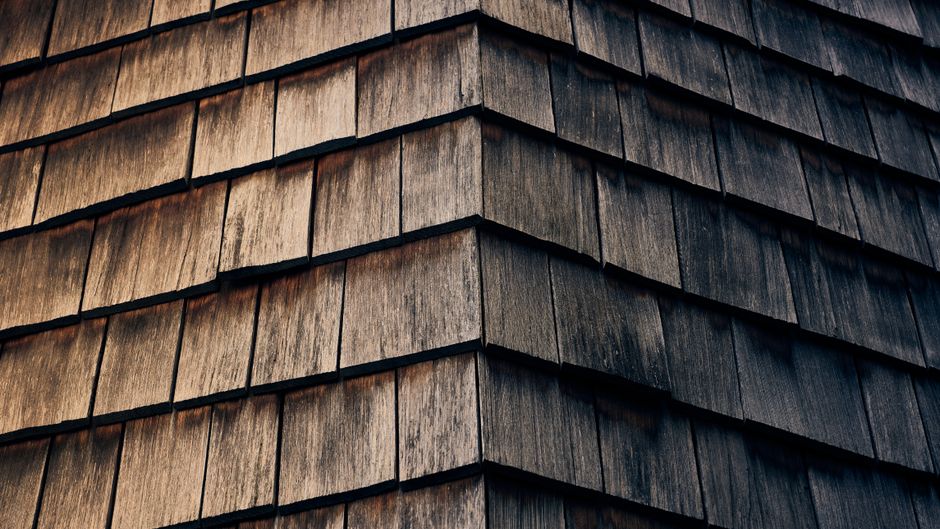
The Mechanics of How Hail Damages Asphalt Shingles in Central Arkansas
To understand exactly how a chunk of ice falling from the sky ruins a roof, we first have to look at what an asphalt shingle actually is. It is not just a solid sheet of black tar. Modern asphalt shingles are engineered in three distinct layers:
- The Fiberglass Mat (The Backbone): This is the core structural layer that gives the shingle its strength, tear resistance, and shape.
- The Asphalt Coating (The Water Barrier): Thick, specially formulated asphalt coats both sides of the fiberglass mat to keep water out of your home.
- The Granules (The Shield): Hard, ceramic-coated mineral crushed stone is embedded into the top layer of asphalt. These granules protect the asphalt from the sun’s harsh ultraviolet (UV) rays and give your roof its color.
When a severe thunderstorm rolls over Conway, Hot Springs, or Jacksonville, it brings high winds and updrafts that suspend frozen water droplets. These droplets grow into hailstones, eventually falling to earth at high speeds.
When a hailstone strikes your roof, it transfers massive amounts of kinetic energy directly into these three shingle layers. The impact compresses the mineral granules into the soft asphalt coating, fracturing the underlying fiberglass mat.
Once the granules are knocked away, the black asphalt beneath is left completely exposed to the elements. Under the intense Central Arkansas sun, raw asphalt oxidizes rapidly. UV radiation bakes the exposed bitumen, causing it to dry out, crack, and flake away. Within months, a minor impact point becomes a direct path for rainwater to reach your roof decking, leading to wood rot, mold, and interior ceiling stains.
Cosmetic vs. Functional Damage
One of the biggest points of confusion for homeowners (and sometimes insurance adjusters) is the difference between cosmetic and functional roof damage.
| Feature | Cosmetic Hail Damage | Functional Hail Damage |
|---|---|---|
| Definition | Surface-level scuffs, minor granule displacement, or small dents that do not compromise the water-shedding ability or expected lifespan of the roof. | Direct physical compromise of the shingle’s water-shedding capability or a measurable reduction in its long-term service life. |
| Physical Signs | Light scuffing on the surface, minor dents on heavy metal flashing, or small granule loss without exposing the dark bitumen layer. | Fractured fiberglass mat, deep circular bruises, exposed black asphalt, and broken adhesive seal strips. |
| Long-Term Risk | Primarily aesthetic; does not immediately lead to leaks or accelerated roof failure. | High risk of water intrusion, mold development, wood rot, and wind blow-offs during subsequent storms. |
| Insurance Coverage | Often excluded or highly contested under standard policies unless specific cosmetic riders are present. | Universally covered by standard homeowner insurance policies as a direct physical loss. |
Hail Size Thresholds and Their Impact on Roof Integrity
Not all hail is created equal. A light dusting of pea-sized hail is noisy, but it rarely does more than clean the dust off your shingles. However, as hailstones grow, their weight, terminal velocity (the speed at which they fall), and kinetic energy increase exponentially.
- Pea-to-Marble Hail (1/4″ to 1/2″): Falls relatively slowly and lacks the mass to fracture shingles. At most, it may wash away loose, naturally shedding granules on older roofs.
- Dime-to-Penny Hail (3/4″): Can cause minor surface scuffing. It rarely damages healthy, modern architectural shingles but can start to bruise older, brittle 3-tab shingles.
- Quarter-Size Hail (1″): This is the official National Weather Service threshold for a severe thunderstorm. At 1 inch in diameter, hailstones travel at roughly 50 mph. This impact is strong enough to cause structural damage to standard roofing materials.
- Ping-Pong Ball Hail (1.5″): Traveling at over 60 mph, hail of this size produces clear, functional damage. It easily cracks shingle mats and fractures underlying layers.
- Golf Ball-to-Tennis Ball Hail (1.75″ to 2.5″): Falling at speeds of 70 to 80 mph, these heavy ice stones reliably destroy asphalt shingles, dent metal valley flashing, and shatter plastic roof vents.
How Hail Damages Asphalt Shingles in Central Arkansas at 1 Inch or Larger
Once hail reaches 1 inch (quarter-size) or larger, the likelihood of structural roof damage increases dramatically. At this size, the impact creates micro-fractures in the fiberglass mat. These fractures are often shaped like stars or crescent moons on the underside of the shingle.
The type of shingle on your home also dictates how it handles these impacts:
- 3-Tab Shingles: These are traditional, flat, single-layer shingles. Because they are thinner and lighter, they are highly vulnerable to 1-inch hail. Studies show that standard fiberglass 3-tab shingles can suffer functional damage from impacts of just 1 to 1.25 inches.
- Laminated (Architectural) Shingles: These consist of two or more layers of shingle material laminated together. Because they are thicker and heavier, they have a higher damage threshold, usually resisting functional damage up to 1.25 or 1.5 inches. However, a direct hit from a 1.5-inch stone will still fracture the mat and require professional attention.
How Hail Damages Asphalt Shingles in Central Arkansas on Older Roofs
Roof age is the ultimate vulnerability multiplier. Asphalt shingles are designed to be flexible when new, allowing them to expand and contract with the temperature and absorb physical impacts.
However, as a roof ages in our humid subtropical climate, it undergoes constant thermal cycling. The extreme heat of Arkansas summers followed by winter cold causes the asphalt to lose its volatile oils. Over time, the shingles become dry, stiff, and highly brittle.
An 11-year-old roof is significantly more vulnerable to hail than a 2-year-old roof. What might be a harmless bounce on a new, flexible shingle becomes a shattering blow on an older, brittle one. Furthermore, the adhesive seal strips that bond the shingles together degrade over a 15-year actuarial lifespan. Once hail impacts break these weakened seals, the shingles are easily lifted and blown away by standard wind gusts.
Visible vs. Hidden Signs of Hail Damage
If you walk outside after a storm in Bryant or Sherwood and don’t see shingles lying in your yard, you might assume your roof survived unscathed. This is a dangerous assumption. Hail damage is notoriously stealthy. From the ground, a severely bruised roof can look completely normal.
Up close, however, a trained eye will look for several key indicators:
- Circular Dents and Bruises: These are dark, round spots where granules have been violently displaced. They often feel soft to the touch, similar to a bruised apple.
- Exposed Bitumen: If you see dark, shiny black spots on your shingles, the protective granules are gone, and the raw asphalt is directly exposed to the sun.
- Gutter Granule Accumulation: While some granule shedding is normal for new roofs, finding heavy piles of granules in your gutters or downspout cleanouts after a storm is a clear sign of accelerated shingle damage.
- Soft Metal Dents: Always check your roof accessories first. Aluminum ridge vents, attic turbines, metal valleys, chimney flashing, and plastic turtle vents are highly sensitive to hail. If these soft metals are covered in dents, your shingles almost certainly took a beating too.
- Dented AC Condenser Fins: Walk around your yard and look at your outdoor air conditioning unit. If the thin metal cooling fins on the side of the unit are flattened or dented, it provides clear physical evidence of the storm’s hail size and direction.
Shingle Anomalies Mistaken for Hail Damage
Because hail claims can lead to full roof replacements, it is vital to distinguish actual storm damage from common roof anomalies. Many homeowners and inexperienced inspectors mistake normal wear and tear for hail impacts:
- Foot Scuffs: If a service technician or homeowner walks on a hot roof in the middle of a July afternoon, their shoes can scuff away the granules, leaving a dark mark. Unlike hail bruises, foot scuffs are usually elongated, superficial, and do not fracture the underlying fiberglass mat.
- Adhesive Spots: During manufacturing or installation, small drops of asphalt adhesive can get on the face of the shingles. These spots look dark but are raised, whereas hail damage is always concave (dented downward).
- Blistering: This is a manufacturing anomaly caused by moisture trapped inside the shingle during fabrication. When the sun heats the roof, the moisture expands, creating small bubbles that eventually pop and lose granules. Blisters have steep, vertical edges and lack the compacted, bruised feel of a hail strike.
- Normal Weathering: As roofs approach the end of their lifespan, they naturally lose granules and develop small cracks. This is a gradual process, not a sudden accidental loss caused by a storm.
Navigating Arkansas Insurance Claims for Hail Damage
Filing an insurance claim for storm damage in Central Arkansas can feel like a second job. Understanding how your policy works is key to getting a fair payout.
First, you must understand your wind-hail deductible. Unlike your standard homeowner deductible, which is usually a flat rate (like $1,000), wind and hail deductibles in storm-prone states like Arkansas are often calculated as a percentage of your home’s total insured value — typically 1% to 2%. If your home is insured for $300,000, a 2% deductible means you will have to pay $6,000 out-of-pocket before your insurance coverage kicks in.
Second, pay close attention to whether your policy is Actual Cash Value (ACV) or Replacement Cost Value (RCV):
- RCV Policies: These cover the actual cost to replace your roof with a new one of similar quality at today’s market prices, minus your deductible.
- ACV Policies: These only pay what your roof is worth at the time of the damage. If your roof is 12 years old, the insurance company will deduct significant depreciation from your payout, leaving you to cover the remaining balance yourself.
Additionally, Arkansas insurance regulations have evolved. Under standard guidelines, roofs over seven years old may face steeper depreciation schedules, and most insurance companies enforce a strict depreciation window (often 6 to 12 months from the date of loss) to claim your final recoverable depreciation payment.
If you find yourself facing high out-of-pocket costs due to a steep deductible or an ACV policy, we recommend reading A Practical Guide to Roofing Financing for Arkansas Homeowners to explore your options for keeping your home protected without draining your savings.
Step-by-Step Post-Storm Action Plan for Homeowners
When a severe hailstorm hits your neighborhood in Maumelle, Cabot, or Benton, taking immediate, organized action is the best way to protect your property and secure a successful insurance claim.
- Safety First: Never climb onto a wet, steep, or potentially compromised roof yourself. Leave the high-altitude climbing to licensed professionals who have the proper safety harnesses and training.
- Document the Date and Time: Note the exact date and time of the storm. Insurance companies rely on local National Oceanic and Atmospheric Administration (NOAA) weather reports to verify that a hail event actually occurred at your address on that specific date.
- Conduct a Ground-Level Inspection: Walk around your home and take timestamped photos of visible damage. Photograph hail accumulation in your yard, dented gutters, damaged window screens, shredded landscaping, and dented air conditioning units.
- Check the Interior: Go up into your attic with a flashlight. Look for active drips, dark water stains on the rafters, or damp insulation. Check your top-floor ceilings for new water rings or bubbling paint.
- Call a Trusted Local Roofer: Before you call your insurance company to file a claim, have a certified local contractor perform a comprehensive inspection. A professional roofer can provide a detailed damage report, complete with photo evidence, to ensure your adjuster doesn’t miss hidden structural damage during their visit.
Frequently Asked Questions about Arkansas Roof Hail Damage
What is the difference between cosmetic and functional hail damage?
Cosmetic damage refers to minor surface issues, like small dents in flashing or light granule loss, that do not affect the roof’s ability to shed water or shorten its overall lifespan. Functional damage involves structural compromise, such as cracked fiberglass mats or broken shingle seals, which directly reduces the roof’s life expectancy and leads to leaks. Standard homeowners insurance policies cover functional damage but often exclude cosmetic issues.
How long do I have to file a hail damage claim in Arkansas?
While Arkansas does not have a single statutory deadline for storm claims, most insurance policies require you to file within one year of the storm event (the date of loss). It is always best to file within 30 to 60 days of discovering the damage. Waiting too long makes it harder to prove that the damage was caused by a specific storm rather than normal wear and tear, which can lead to a claim denial.
Can granule loss from hail actually shorten my roof’s lifespan?
Yes, absolutely. Granules are your shingles’ only defense against UV radiation. When hail knocks these granules away, the underlying asphalt is exposed to direct sunlight. The sun quickly bakes, dries, and cracks the exposed asphalt, causing it to deteriorate. This accelerated aging can shorten your roof’s effective service life by five to ten years, leading to premature roof failure and leaks.
Conclusion
When a severe storm rolls through Central Arkansas, your roof is your home’s primary shield. Because hail damage to asphalt shingles is often subtle and hidden from view, leaving it unaddressed can turn a simple fix into a major structural headache down the road.
At Patriot Roofing & Restoration, we are proud to serve homeowners across the Little Rock metro area — including Alexander, Austin, Bryant, Mayflower, Scott, and West Little Rock. As an Atlas PRO+ contractor at the Gold level, we combine a quality-first approach with our four written guarantees to give you ultimate peace of mind.
If your home has recently been hit by a storm, don’t wait for a ceiling stain to tell you there is a problem. Schedule a professional storm damage inspection with our expert team today, and let us help you keep your home safe, dry, and fully protected.
This article is general information about roofing and storm damage in Arkansas, not insurance advice. Coverage, deductibles and claim deadlines vary by policy and by carrier. Confirm your own coverage with your insurance agent before you make a decision.