

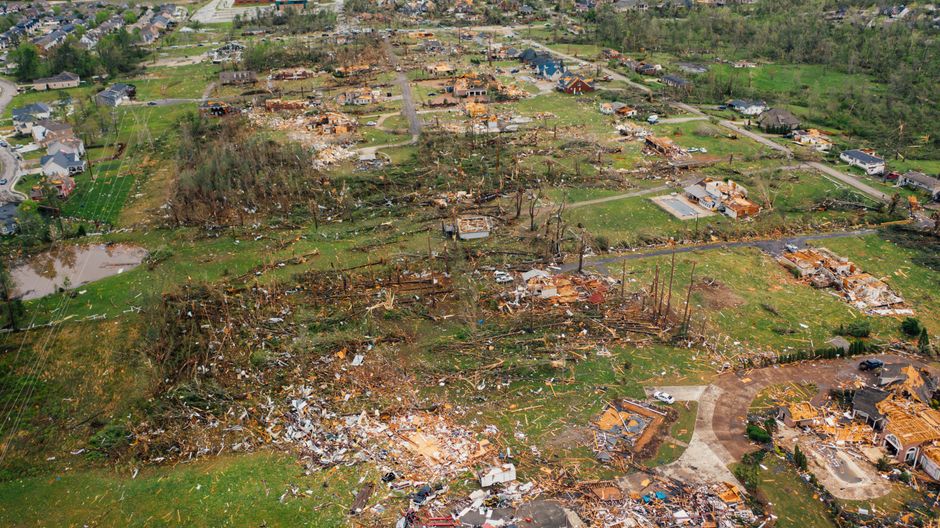
What Arkansas Homeowners Need to Know After a Storm Hits Their Roof
Figuring out should I repair or replace my roof after storm damage in Arkansas is one of the most stressful decisions a homeowner can face — especially when the weather is still threatening and water may already be getting in. Here’s a quick answer to help you decide:
Repair your roof if:
- Damage affects less than 25-30% of the total roof surface
- Your roof is relatively new (under 15 years old)
- Shingles are still flexible and granule loss is minor
- Damage is isolated to one area (a few missing shingles, a flashing failure)
- The roof deck underneath is solid with no rot or sagging
Replace your roof if:
- Damage covers 25-30% or more of the roof surface
- Your roof is 15-20+ years old and already showing wear
- You have multiple leaks across different slopes
- The roof deck is soft, rotted, or structurally compromised
- Repairs would cost 70% or more of a full replacement
Arkansas sits squarely in severe weather territory. The state averages roughly 37 tornadoes per year, plus frequent hailstorms, high-wind events, and ice storms that can quietly destroy a roof overnight. In fact, hail and wind are the leading causes of residential roofing claims — and Arkansas homeowners feel that reality every spring and summer.
The challenge is that storm damage isn’t always obvious from the ground. Hail can bruise shingles and break their waterproof seal without leaving visible holes. Wind can lift shingles and break their adhesive bond even when they appear to lay flat afterward. That’s why the repair-versus-replace decision almost always starts with a professional inspection — not a gut check from your driveway.
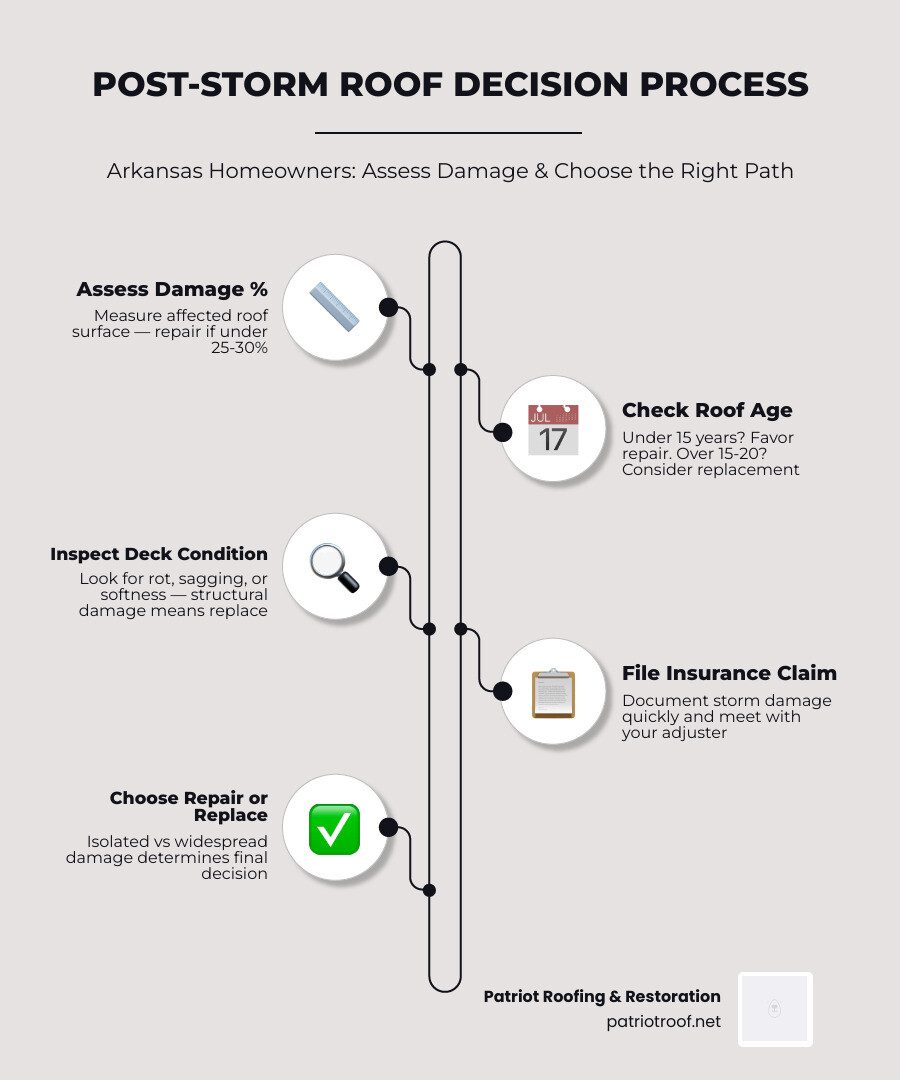
The Core Dilemma: Should I Repair or Replace My Roof After Storm Damage in Arkansas?

When severe weather rolls through Central Arkansas—whether you are in Little Rock, Conway, or Hot Springs—it leaves a trail of anxious homeowners looking up at their shingles. The immediate question is always: Can we get away with a simple patch job, or is it time to invest in a brand-new roof?
Making this decision requires balancing structural integrity, long-term costs, and safety. A roof is your home’s primary shield. If we patch a roof that is actually structurally compromised, we are only delaying the inevitable while risking interior water damage, mold growth, and compromised framing. On the other hand, replacing a perfectly healthy roof that only suffered minor, localized wind damage is an unnecessary expense.
To find the right path, we look at the physical evidence left by the storm, the age of the materials, and how local building codes and insurance policies guide the decision.
Evaluating Your Options: Should I Repair or Replace My Roof After Storm Damage in Arkansas?
The most reliable starting point for this evaluation is the 25-30% rule. This is an industry-standard benchmark used by contractors and insurance adjusters alike.
If the storm damage is concentrated in one small area—such as a single slope affected by a fallen tree limb in Bryant or a few shingles torn away by high winds in Cabot—a targeted repair is highly cost-effective. However, if the damage is scattered across multiple slopes, or if hail has compromised more than 25% to 30% of the entire roof surface, a full storm damage roof replacement becomes the smarter, more stable long-term solution.
Furthermore, local building codes often dictate this boundary. Under the Arkansas Fire Prevention Code (which adopts standard International Residential Code guidelines), if a certain percentage of the roof is damaged or being replaced, the entire roof assembly must be brought up to current code standards. This legal boundary often makes partial repairs technically or financially impractical.
How Roof Age Influences the Decision to Repair or Replace
Your roof’s age is the silent partner in every storm damage decision. In Central Arkansas, our hot, humid summers and freezing winter temperatures wear down roofing materials faster than the national average.
- Standard 3-Tab Asphalt Shingles: These typically last 15–20 years in our climate.
- Architectural Shingles: These are heavier and more durable, generally reaching the upper end of that range.
If your roof is 18 years old and suffers moderate hail damage, attempting to repair it is often a waste of resources. Older shingles lose their flexibility and become brittle. When a technician tries to lift aged shingles to patch a damaged section, the surrounding shingles often crack or lose their remaining granules, creating a “Frankenstein” effect of mismatched, fragile patches.
If your roof has fewer than five years of estimated service life remaining, we almost always recommend a full replacement. It resets your home’s protection timeline, improves energy efficiency, and ensures you aren’t paying for repeated repairs on a system that is already failing.
Key Signs of Storm Damage: Repair vs. Replacement Indicators
Identifying the exact nature of the damage is key to choosing the right solution. Different storm elements leave distinct footprints on your roof.
When a Targeted Roof Repair is the Right Choice
A targeted repair is highly effective when the damage is isolated, structural components are dry, and the roofing material is young enough to handle the physical manipulation of a repair.
- Isolated Flashing Failure: If the flashing around your chimney in Maumelle or your plumbing boots in Sherwood has pulled away or cracked, we can replace those specific components without touching the rest of the roof.
- Minor Wind Damage: If a localized gust of wind lifted or tore away a small cluster of shingles on a single slope, and the surrounding shingles remain flexible and fully adhered, we can easily slip in matching replacement shingles.
- Puncture from Small Debris: A fallen branch that punctures a small, localized spot can often be repaired by replacing the damaged decking section and shingles directly over the impact zone.
When You Must Replace Your Roof After Storm Damage
Certain warning signs indicate that the system has failed as a whole, requiring a full tear-off and replacement.
- Widespread Granule Loss: Hail impacts knock away the protective mineral granules on asphalt shingles. If you see piles of dark sand in your gutters or at the base of your downspouts after a storm, your shingles have lost their UV protection and will degrade rapidly.
- Systemic Wind Uplift: High winds can create a vacuum effect, lifting entire sections of shingles. Even if the shingles lay back down, their adhesive seal is broken. Once this seal is gone, the roof is highly vulnerable to the next rainstorm.
- Structural Sagging and Deck Rot: If water has penetrated the underlayment and rotted the wooden decking beneath, the roof will begin to sag. We cannot safely nail new shingles into rotted wood; the entire decking must be replaced.
- Multiple Active Leaks: If you have water stains appearing on ceilings in different rooms of your home, it indicates systemic water intrusion that a simple patch cannot resolve.
Common Storm Damage Signs Checklist:
- [ ] Missing, creased, or curled shingles
- [ ] Dark, circular “bruises” on shingles (hail hits)
- [ ] Excessive shingle granules in gutters and downspouts
- [ ] Dented metal valley flashing, ridge vents, or gutters
- [ ] Water stains on attic rafters or interior ceilings
- [ ] Damaged siding, window screens, or garage doors (strong indicators of hail)
Navigating Arkansas Insurance Claims and Building Codes
Managing the financial and legal side of storm damage can feel more complicated than the physical repair itself. Understanding how insurance policies and local building codes interact in Arkansas is crucial.
For homeowners looking at their financial options, we recommend reading A Practical Guide to Roofing Financing for Arkansas Homeowners to understand how to bridge any gaps between insurance payouts and the cost of a high-quality roof system.
How Arkansas Insurance Handles Storm Damage Claims
Most standard homeowners insurance policies in Central Arkansas cover sudden storm damage, including wind, hail, and fallen trees. However, how much you pay out of pocket depends on your policy type:
- Replacement Cost Value (RCV): This is the ideal policy. It covers the actual cost to repair or replace your roof at current market rates, minus your deductible.
- Actual Cash Value (ACV): These policies pay out a depreciated amount based on the age of your roof. If your 15-year-old roof is damaged, an ACV policy will only pay a fraction of the replacement cost, leaving you to cover the rest.
In Arkansas, deductibles for storm damage are typically structured as a percentage of your home’s total insured value (often 1% to 2%).
Pro-Tip on Insurance Discounts: Many major insurance carriers in Arkansas offer substantial premium discounts (often between 15% and 30%) if you upgrade to impact-resistant Class 4 shingles during your roof replacement. These shingles are tested to withstand hail impacts and can pay for themselves over time through lower insurance rates.
Local Building Codes and the 25% Rule in Arkansas
Arkansas building codes dictate when a repair must legally become a replacement. Under locally adopted building codes across Central Arkansas municipalities (including Little Rock, North Little Rock, and Benton):
The 25% Rule: If more than 25% of a roof covering is repaired, replaced, or recovered within any 12-month period, the entire roof system must be brought up to current building code requirements.
This means if a hailstorm damages 30% of your roof, we cannot legally perform a partial repair. The entire roof must be replaced to ensure it meets modern wind-resistance fastening schedules, underlayment requirements, and attic ventilation standards.
Costs, Timelines, and Immediate Mitigation Steps
When a storm damages your roof, the clock starts ticking. Delaying action can turn a simple repair into a major structural restoration project.
Average Costs for Roof Repair vs. Replacement in Arkansas in 2026
While we do not quote specific pricing without a hands-on inspection, the overall cost of your project is driven by several local variables:
- Roof Size and Pitch: Larger roofs and steeper slopes require more materials, specialized safety equipment, and more labor hours.
- Material Selection: Upgrading from standard 3-tab shingles to architectural shingles or durable metal roofing changes the upfront investment but offers vastly superior storm protection.
- Decking Condition: If structural plywood sheets have rotted due to storm leaks, they must be torn out and replaced before new shingles can be laid down.
| Project Type | Average Duration | Best Suited For | Long-Term Durability |
|---|---|---|---|
| Targeted Repair | 1 to 3 Days | Isolated wind damage, minor punctures, flashing leaks on young roofs. | Moderate (depends on surrounding shingle health) |
| Full Replacement | 1 to 2 Days | Widespread hail damage, old roofs, structural rot, or damage exceeding 25% of the surface. | High (20 to 50+ year lifespan depending on material) |
Immediate Steps and Risks of Delaying Your Decision
If you suspect your roof has storm damage, take these immediate steps to protect your property:
- Safety First: Never climb onto a wet, storm-damaged roof yourself. Perform a visual inspection from the ground using binoculars.
- Document Everything: Take timestamped photos and videos of any visible damage from the ground, as well as any leaks or water stains inside your home.
- Arrange Emergency Mitigation: If your roof is actively leaking, call for professional emergency tarping. Homeowners have a legal obligation under their insurance policies to mitigate further damage. If you allow water to pour into your home without trying to cover the roof, your insurer may deny coverage for subsequent interior water damage.
- Watch the Insurance Window: Most insurance policies in Arkansas require you to file a storm damage claim within one year of the storm event. Waiting too long can result in a denied claim, forcing you to pay for the entire replacement out of pocket.
Frequently Asked Questions About Roof Storm Damage in Arkansas
How quickly should I file an insurance claim after storm damage in Arkansas?
You should file your claim as soon as possible, ideally within 30 days of the storm. This ensures the damage is fresh, easily verifiable by an insurance adjuster, and cross-referenced with local NOAA storm reports. Waiting close to the typical one-year limit makes it harder to prove the damage was caused by a specific storm rather than normal wear and tear.
Can insurance cover a full roof replacement after storm damage in Arkansas?
Yes. If a professional inspection confirms that the storm damage is widespread (exceeding the 25-30% threshold), or if repairing the roof would violate local building codes, your insurance policy should cover a full replacement, minus your deductible. This is especially true if you have a Replacement Cost Value (RCV) policy.
How do I know if I should repair or replace my roof after storm damage in arkansas?
The most reliable way to find out is by scheduling a professional roof inspection. A qualified local inspector will climb onto your roof, examine every slope, check the attic for hidden leaks, evaluate the condition of the decking, and provide you with a detailed damage report complete with photos.
Conclusion
Navigating the aftermath of an Arkansas storm doesn’t have to be overwhelming. At Patriot Roofing & Restoration, we are proud to serve homeowners across Central Arkansas—including Little Rock, Benton, Bryant, Cabot, Conway, Hot Springs, and surrounding areas.
We take a quality-first approach to every project, providing honest assessments backed by our our four written guarantees, Atlas certification, and our signature four written guarantees. We don’t believe in high-pressure sales pitches; we believe in giving you the clear, factual information you need to make the best decision for your home and family.
If you are trying to decide whether to repair or replace your roof, check out our guide on when to replace a roof or contact us today to schedule a comprehensive, professional storm damage inspection. Let us help you secure your home’s first line of defense.
This article is general information about roofing and storm damage in Arkansas, not insurance advice. Coverage, deductibles and claim deadlines vary by policy and by carrier. Confirm your own coverage with your insurance agent before you make a decision.