

How the Roof Insurance Claim Process Works in Arkansas (And Why It Matters)
Understanding how does the roof insurance claim process work in arkansas is essential for any homeowner after a storm — because making the wrong move early can cost you thousands of dollars.
Here’s a quick overview of the process:
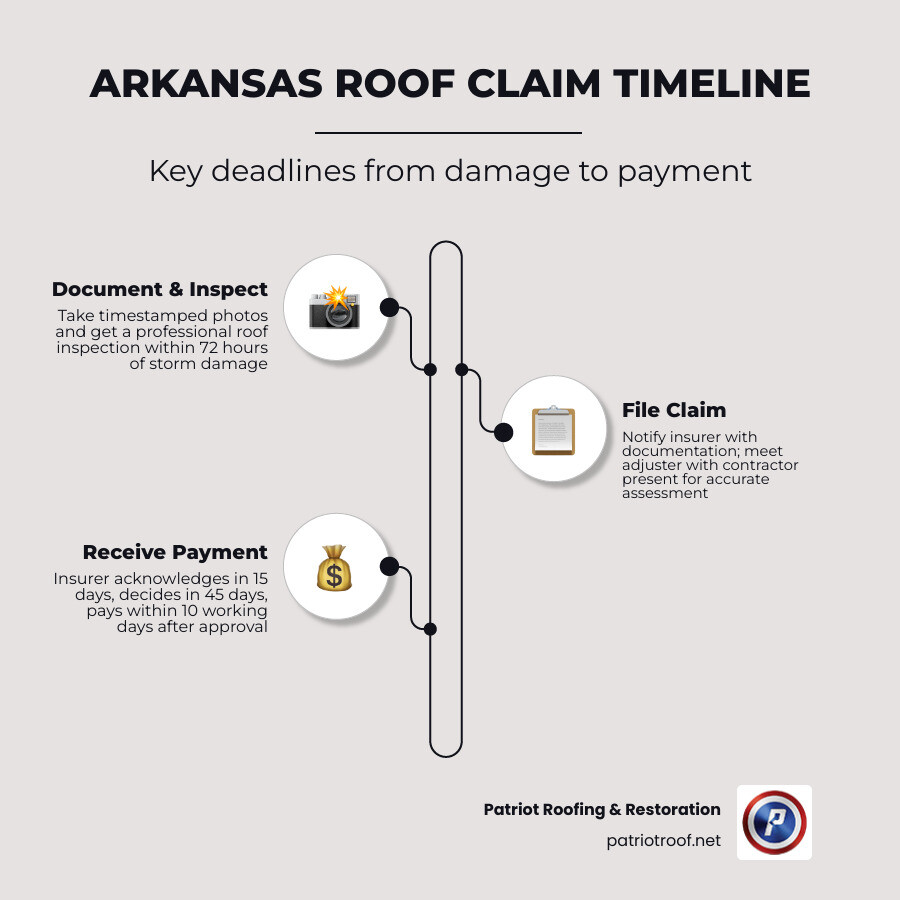
- Document the damage — Take timestamped photos and videos of all damage before making any repairs
- Schedule a professional inspection — Get a licensed roofing contractor to assess the damage within 72 hours
- Review your policy — Check your coverage type (ACV vs. RCV), deductibles, and filing deadlines
- File your claim — Contact your insurer with your policy number, date of loss, and damage documentation
- Meet the adjuster — Have your roofing contractor present during the adjuster’s inspection
- Review the settlement — Compare the insurer’s estimate against your contractor’s scope of work
- Complete repairs — Work with a licensed contractor and submit final documentation to release any remaining funds
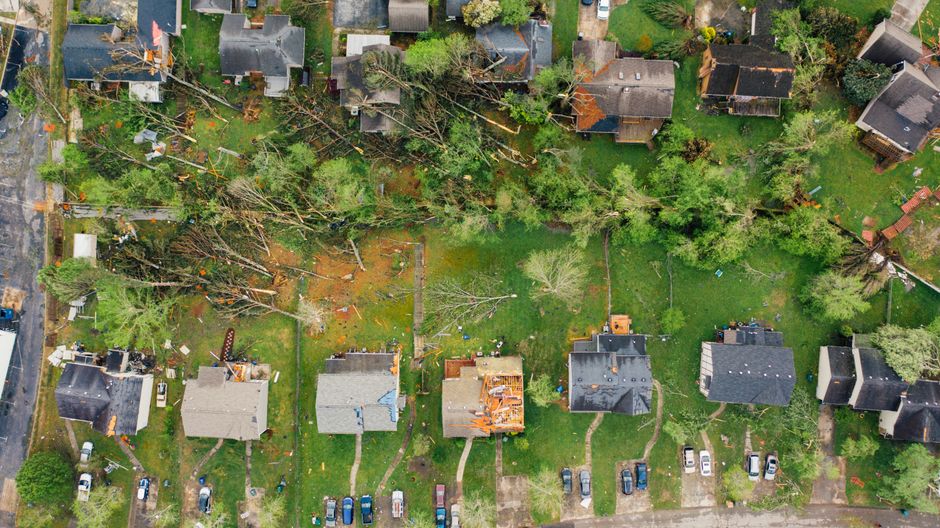
Arkansas is no easy state for homeowners when it comes to weather. The state ranks among the top 10 most vulnerable states to hail damage in the country, and severe hail is reported somewhere in the state most years. That’s not counting the tornadoes, ice storms, and wind events that regularly batter roofs across the state — from the Ozarks to Central Arkansas.
When your roof takes a hit, the insurance claim process can feel like a maze. There are state-specific regulations, policy fine print, adjuster negotiations, and real deadlines that affect your payout. Getting it right matters.
What Does Arkansas Homeowners Insurance Cover for Roof Damage?
Before diving headfirst into the claims process, it is crucial to understand what your policy actually covers. Standard homeowners insurance policies in Arkansas are designed to cover sudden, accidental, and physical damage.
Covered Perils
Standard policies typically protect your roof from:
- Wind Damage: High winds from severe thunderstorms, microbursts, or tornadoes (Arkansas averages roughly 37 confirmed tornadoes annually) can lift shingles, tear off flashing, or send tree limbs crashing onto your roof.
- Hail Damage: Large hail can bruise asphalt shingles, crack tile, dent metal vents, and strip away the protective mineral granules that shield your roof from UV rays.
- Ice Storms: Heavy ice accumulation—frequent during Arkansas winters—can place immense physical weight on your roof deck, causing structural sagging or creating ice dams that force water under your shingles.
If severe weather has struck your home, securing professional Storm Damage Repair Little Rock is the first line of defense to restore your home’s structural integrity.
Common Exclusions
Insurance is not a catch-all maintenance plan. Your policy will almost certainly exclude:
- Flood Damage: If a rising river or surface water floods your home, standard homeowners insurance will not cover it. You must have a separate policy through the National Flood Insurance Program (NFIP).
- Wear and Tear: Standard asphalt shingles last about 15 to 20 years in Arkansas. If your roof is simply reaching the end of its natural lifespan, your insurer will not pay for a replacement.
- Neglect: If a small leak goes unaddressed for months and causes widespread decking rot, your insurer may deny the claim on the grounds of neglected maintenance.
How Does the Roof Insurance Claim Process Work in Arkansas?
Filing a roof claim requires a structured, methodical approach. Knowing the proper Steps to Take After Storm Damage Roof Little Rock ensures you protect your rights as a policyholder and secure a fair payout.
Step 1: Documenting the Damage and Scheduling an Inspection
The moment it is safe to go outside after a storm, your priority is documentation.
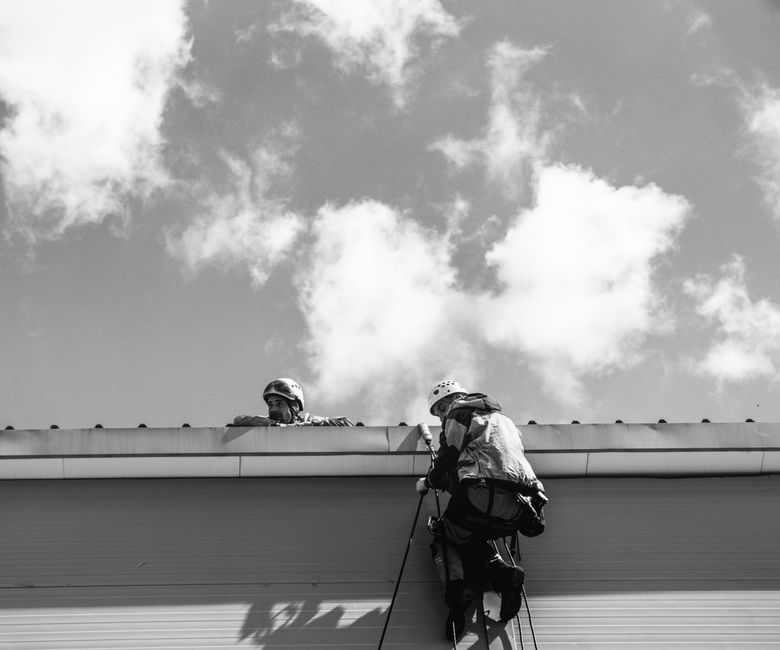
- Safety First: Never climb onto your roof to inspect it yourself. Use binoculars from ground level or hire a professional.
- Document the Ground: Walk your property and take timestamped photos and videos of dented gutters, damaged window screens, shredded siding, dented outdoor air conditioning units, and any shingles or metal flashing that have blown onto your lawn.
- Track the Weather: Take a screenshot of local weather reports or NOAA (National Oceanic and Atmospheric Administration) storm data confirming hail size or wind speeds in your area on the date of the storm.
- Get a Professional Opinion: Before calling your insurance company, schedule a free storm or replacement inspection with a licensed local contractor. A professional roofer will provide a comprehensive, itemized damage report and an honest assessment of whether the damage warrants filing a claim.
Step 2: Filing the Claim and Meeting the Adjuster
Once you have your contractor’s assessment in hand, you can confidently file your “notification of claim” with your insurance provider. Give them your policy number, the specific date of the storm, and a summary of the damage.
The insurance company will assign a claim number and schedule an on-site inspection with an insurance adjuster.
- The Golden Rule: Always request that your roofing contractor be present during the adjuster’s inspection.
- Why This Matters: Adjusters are busy and may overlook subtle hail bruising, minor wind lifting, or necessary code upgrades. Having an experienced professional from a trusted service like Storm Damage Repair West Little Rock AR on-site ensures both parties look at the exact same damage, leading to a much more accurate initial estimate.
Arkansas Insurance Regulations and Prompt Payment Deadlines
The Arkansas Insurance Department (AID) enforces strict consumer protection laws under Title 23 of the Arkansas Insurance Code to ensure insurance companies handle claims fairly and promptly. Understanding these statutory deadlines keeps your carrier on track:
- Claim Acknowledgment (15 Working Days): Insurers must acknowledge your claim within 15 working days of receiving notification, unless payment is made sooner.
- Proof of Loss Forms (20 Days): Your insurer must provide you with necessary proof of loss forms within 20 days of your claim notification, or they waive the right to require them.
- Claim Investigation (45 Calendar Days): The insurance company is legally required to complete its investigation within 45 calendar days of receiving notification, unless it is reasonably impossible to do so.
- Claim Decision (15 Working Days): Once you submit a properly completed proof of loss document, the insurer must notify you in writing of their acceptance or denial of the claim within 15 working days. If they need more time, they must explain why and provide updates every 45 days.
- Prompt Payment (10 Working Days): Once a settlement is agreed upon, the claim file is closed, and it is ready for payment, the insurer must issue your check within 10 working days.
- Lawsuit Deadline (2 Years): Under Arkansas law, the statute of limitations to file a lawsuit against your insurance company regarding a property claim is 2 years from the date of loss. Arkansas law strictly prohibits insurance policies from writing shorter limits into their contracts.
If your carrier is dragging their feet, remind them of these timelines. If you are dealing with delays after a storm in Central Arkansas, working with a local specialist in Storm Damage Repair Conway AR can help streamline the documentation your insurer needs to close the file.
How Does the Roof Insurance Claim Process Work in Arkansas for Roofs Over 7 Years Old?
A major regulatory shift in recent years has changed how insurers handle older roofs in Arkansas. Under modern policy guidelines approved by state regulators, many insurance companies are permitted to apply depreciation schedules to roofs that are over 7 years old, even if you have a Replacement Cost Value (RCV) policy.
For the first 7 years of your roof’s life, your policy covers full replacement cost. However, once your roof crosses that 7-year threshold, the insurer may reduce the initial payout based on the age and wear of your shingles.
This means if you have a 10-year-old roof that needs a complete replacement, you may face higher out-of-pocket costs initially. Understanding the true Cost of Roof Replacement Little Rock is vital so you can plan for any financial gaps before construction begins.
How Does the Roof Insurance Claim Process Work in Arkansas with Wind and Hail Deductibles?
Another financial hurdle for Arkansas homeowners is the shift from flat-dollar deductibles to percentage-based wind and hail deductibles.
Traditionally, you might have had a flat $1,000 deductible for any claim. Today, severe storm risks have forced many carriers to implement wind/hail deductibles ranging from 1% to 5% of your home’s total insured dwelling value.
- The Math: If your home is insured for $300,000 and you have a 2% wind/hail deductible, your out-of-pocket responsibility for a storm-damaged roof is $6,000.
- The Payout: If a full roof replacement costs $20,000, your insurance company will subtract your $6,000 deductible and pay you $14,000. You are legally responsible for paying the remaining $6,000 directly to your contractor.
If you are facing a high deductible after a storm in areas like Maumelle, consult with experts in Storm Damage Repair Maumelle AR to explore your options and ensure you receive an accurate scope of work.
Actual Cash Value (ACV) vs. Replacement Cost Value (RCV) Policies
Your policy type dictates exactly how your claim payout is calculated. Here is a direct breakdown of how Actual Cash Value (ACV) and Replacement Cost Value (RCV) policies compare:
| Policy Variable | Actual Cash Value (ACV) | Replacement Cost Value (RCV) |
|---|---|---|
| Basic Definition | Pays the depreciated value of the roof at the time of loss. | Pays the actual cost to replace the roof with like materials today. |
| Depreciation Applied? | Yes. Age and wear are permanently deducted from your payout. | Yes, but it is “recoverable” after the work is completed. |
| Payment Structure | One single check (minus deductible and depreciation). | Two checks: Initial ACV check, then a second check for depreciation. |
| Out-of-Pocket Costs | High. You must pay the deductible plus all depreciated value. | Low. You only pay your deductible (and any non-covered upgrades). |
| Monthly Premiums | Lower premiums. | Higher premiums. |
The Two-Check RCV Process
If you have an RCV policy, your insurer will release the funds in two stages:
- The First Check (ACV): The insurer calculates the total cost to replace your roof, subtracts your deductible, and subtracts depreciation based on the roof’s age. They send you this initial check so you can pay your contractor to begin work.
- The Second Check (Recoverable Depreciation): Once the roof is fully installed, your contractor submits a final invoice to the insurance company proving the work is complete. The insurer then releases the remaining withheld depreciation to cover the final balance.
Knowing which policy you have determines your budget for a full Roof Replacement Little Rock. Always review your policy declarations page carefully.
The Role of Roofing Contractors and Public Adjusters
Navigating a claim involves multiple professionals, and it is important to know who does what.
Roofing Contractors
Your contractor is your technical expert. In Arkansas, the Arkansas Contractors Licensing Board (ACLB) requires any contractor performing work over $2,000 to hold an active commercial or residential builders license. Always verify your roofer’s license before signing anything.
- What they can do: Inspect your roof, write detailed estimates, identify local building code upgrades, meet with your insurance adjuster to point out damage, and submit “supplements” (requests for additional funds if hidden damage like rotted decking is found during tear-off).
- What they CANNOT do: Under Arkansas law, roofing contractors cannot negotiate policy coverage, settle claims, or act as public adjusters on your behalf.
If you suspect minor wind damage or require localized leak mitigation, starting with a targeted Roof Repair Little Rock is often the best way to prevent interior water damage while your claim is being processed.
Public Adjusters
A public adjuster is an independent claims professional licensed by the state to represent policyholders. They do not work for the insurance company; they work for you.
- Fees: Public adjusters typically charge a fee of 10% to 15% of your final insurance settlement.
- When to hire one: If your claim is highly complex, involves massive structural damage, or if you are locked in a major valuation dispute with your insurance carrier.
What to Do If Your Arkansas Roof Claim Is Denied or Underpaid
If your insurance company denies your claim or offers a lowball estimate that does not cover the cost of repairs, you have legal rights and options.
- Request the Full Claim File: Ask for the adjuster’s complete report, photos, and a written explanation of the denial.
- Get a Second Opinion: Have a licensed local roofing contractor perform an independent inspection to document functional damage that the adjuster may have dismissed as “cosmetic.”
- Invoke the Appraisal Clause: Most Arkansas policies contain an appraisal clause. If you and your insurer disagree on the cost of the damage, both parties can hire independent appraisers to determine the fair value of the loss.
- File an AID Complaint: You can file an official complaint with the Arkansas Insurance Department to investigate unfair claims practices or statutory delays.
- Understand Bad Faith Laws: Under Arkansas Code Annotated A.C.A. § 23-79-208, if an insurer fails to pay a claim within the time specified in the policy, and you successfully sue them, the court can order the insurer to pay a 12% penalty on top of the loss amount, plus your reasonable attorney’s fees.
If you are dealing with a disputed or underpaid claim in Garland County, getting an independent assessment for Storm Damage Repair Hot Springs AR can provide the clear, code-compliant evidence you need to challenge your insurer’s decision.
Frequently Asked Questions About Arkansas Roof Claims
How long do I have to file a roof insurance claim in Arkansas?
While Arkansas does not have a strict statutory deadline for filing first-party property claims, most policies contractually require “prompt notification”—typically within 365 days (one year) from the date of the storm.
However, under the “discovery rule” established in Arkansas courts (such as First Baptist Church v. Zurich American Insurance Co.), the claims clock starts when the damage is actually discovered (or reasonably should have been discovered), rather than when the storm occurred. Still, the safest approach is to file within 30 to 60 days of the storm. If you are in Cabot and suspect recent storm damage, acting quickly to secure Storm Damage Repair Cabot AR is critical to avoiding late-reporting denials.
Will filing a storm damage claim raise my insurance rates?
Filing a single storm-related claim (such as wind or hail damage) is considered an “Act of God” because it is a natural event beyond your control. Arkansas insurance regulations generally prevent carriers from raising your individual premiums solely because of an Act of God claim.
However, if your entire geographic area experiences severe storm activity, your insurance company may raise rates across the board for all policyholders in your zip code to offset regional losses. If your home in Bryant has been impacted, getting a professional evaluation for Storm Damage Repair Bryant AR will help you determine if filing a claim is the right financial move.
Can a contractor waive my insurance deductible in Arkansas?
No. It is a violation of Arkansas law for a roofing contractor to offer to waive, absorb, or rebate your insurance deductible.
Under Arkansas insurance fraud statutes, a deductible is a mandatory contract agreement between you and your insurer. If a contractor submits an invoice to your insurance company claiming they charged the full amount while secretly waiving your deductible, they are committing insurance fraud, and you could be held liable as well. Always avoid “storm chasers” who offer to pay your deductible. For honest, legal, and transparent services in Sherwood, trust local professionals specializing in Storm Damage Repair Sherwood AR.
Conclusion
Navigating the roof insurance claim process in Arkansas doesn’t have to be a headache. By acting quickly, documenting every detail, and understanding your rights under Arkansas law, you can protect your home and ensure your insurer pays what you are legally owed.
At Patriot Roofing & Restoration, we are committed to helping homeowners across Central Arkansas navigate this complex process with ease. As a licensed, Atlas PRO+ contractor at the Gold level, we bring a quality-first approach to every project, backed by our four written guarantees.
Whether you need a simple repair or a full replacement, our team is here to provide the honest, professional support you deserve. If your roof has been damaged by wind, hail, or ice, contact us today to schedule your professional inspection and get your home back in tip-top shape. Let us handle the heavy lifting while you enjoy peace of mind.
This article is general information about roofing and storm damage in Arkansas, not insurance advice. Coverage, deductibles and claim deadlines vary by policy and by carrier. Confirm your own coverage with your insurance agent before you make a decision.