


What to Expect When Filing a Roof Insurance Claim
How long does the roof insurance claim process take from start to finish? For most homeowners, the answer falls somewhere between 4 and 8 weeks — but that range can stretch to several months if your claim hits complications.
Here’s a quick breakdown:
| Claim Type | Typical Timeline |
|---|---|
| Straightforward (no supplements) | 4 to 6 weeks |
| Claim with supplements | 6 to 12 weeks |
| Complex or disputed claim | 3 to 6 months |
The national average quoted by insurers is 30 to 60 days — but few roof claims follow that pattern in practice. Hidden damage, adjuster backlogs after storms, supplement disputes, and mortgage company endorsements can all push that timeline well beyond what you were told when you filed.
If you’ve just had a storm roll through Little Rock and you’re staring at missing shingles or water stains on your ceiling, the uncertainty of not knowing when you’ll get paid — or how much — can be just as stressful as the damage itself. The financial stakes are real too. Wind and hail claims on a full roof commonly run well into five figures, and a first Scope of Loss frequently misses items that only turn up when someone walks the roof and the attic. That is what the supplement process exists to correct.
Understanding the process before it happens puts you in a much stronger position.
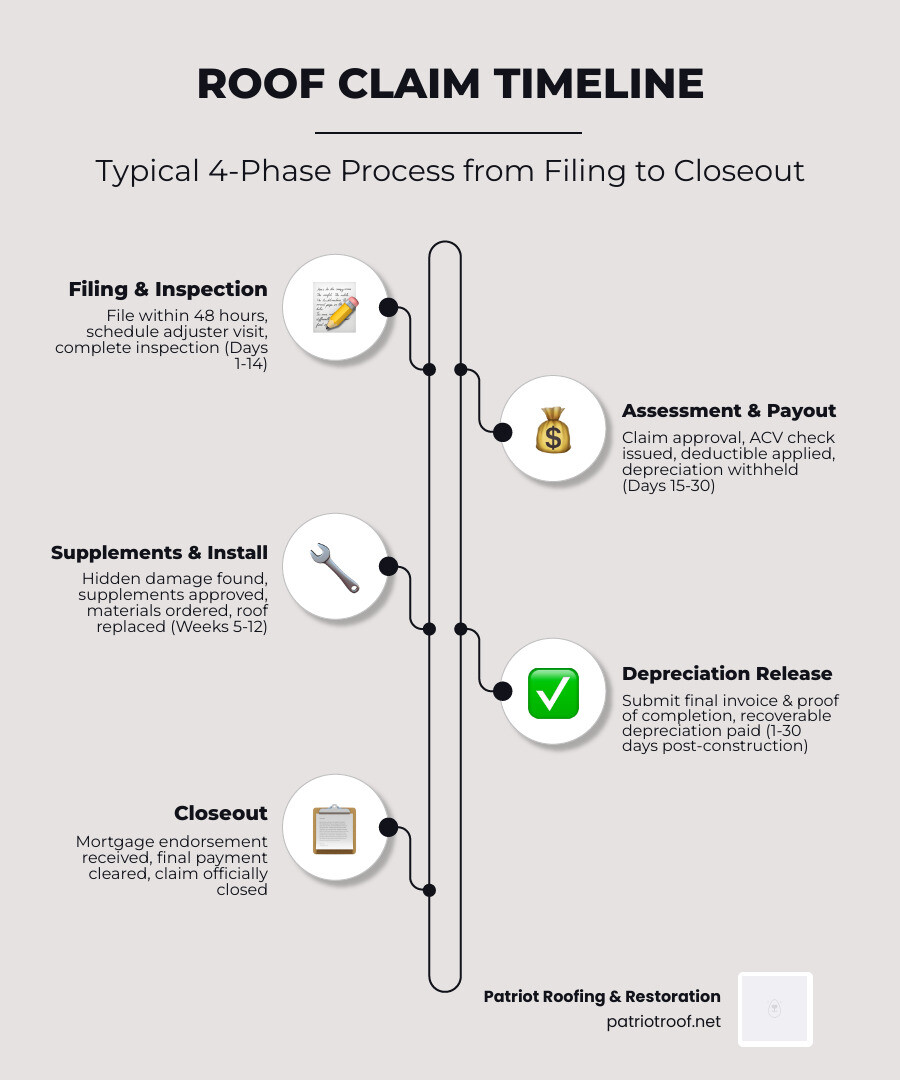
How Long Does the Roof Insurance Claim Process Take From Start to Finish?
When you ask an insurance agent how long does the roof insurance claim process take from start to finish, they will likely quote you a standard window of 30 to 60 days. While that sounds reasonable, the reality on the ground in Central Arkansas can look very different. A straightforward claim with zero complications can wrap up in as little as 4 weeks, while a complex claim involving multiple adjustments, severe storm backlogs, or disputes can easily stretch past 90 days.
To help you visualize where the time actually goes, we have broken down the typical timelines for both basic and complex claims below.
| Milestone Phase | Straightforward Claim Timeline (No Supplements) | Complex/Disputed Claim Timeline |
|---|---|---|
| Filing & Inspection | 1 to 14 days | 14 to 30 days (Post-storm backlog) |
| Adjuster Report & Approval | 7 to 14 days | 14 to 30 days (Desk review delays) |
| Initial Payout (ACV Check) | 3 to 7 days | 7 to 14 days |
| Supplement Submission & Approval | Skipped | 14 to 30 days (Negotiation phase) |
| Roof Installation | 1 to 3 days | 1 to 3 days |
| Recoverable Depreciation Release | 7 to 14 days | 14 to 30+ days (Mortgage escrow holds) |
| Total Estimated Duration | 4 to 6 Weeks | 3 to 6 Months |
Straightforward vs. Complex: How Long Does the Roof Insurance Claim Process Take From Start to Finish?
The stark difference between a 4-week turnaround and a 6-month saga usually comes down to two major factors: claim complexity and the supplement process.
A straightforward claim occurs when your insurance adjuster visits your property, accurately documents all the wind or hail damage, and writes an estimate that aligns perfectly with a local contractor’s real-world pricing. No hidden damage is found when the old shingles are torn off, and your insurer quickly cuts the check. This ideal scenario takes about 4 to 6 weeks.
However, a first Scope of Loss frequently comes in short. Adjusters working under tight deadlines or high stress after a major storm may miss critical details—like damaged drip edges, starter shingles, or local building code requirements.
When your roofing contractor identifies these omissions, they must file a “supplement”—a request for additional funds to cover the necessary but overlooked work. This supplement process acts as a mini-negotiation, often adding 2 to 6 weeks to the overall timeline. If the insurer disputes the necessity of these repairs, or if they require a re-inspection, the claim crosses into the complex category, pushing the finish line to 3 to 6 months.
Key Factors Determining How Long Does the Roof Insurance Claim Process Take From Start to Finish
If you are wondering where your claim will fall on this spectrum, keep an eye on these major variables:
- Storm Volume & Seasonality: If a severe convective storm dumps hail across Little Rock, Benton, and Bryant on the same afternoon, local insurance adjusters will instantly be flooded with thousands of claims. This high volume creates an immediate bottleneck during the scheduling phase.
- Adjuster Backlogs: During peak storm seasons, insurance companies often fly in “catastrophe adjusters” from out of state. If they are spread thin, just getting an adjuster to climb onto your roof can take 2 to 3 weeks instead of the usual 3 to 5 days.
- Documentation Quality: Claims backed by high-resolution, date-stamped photos, clear storm date records, and detailed independent contractor estimates move through the system much faster. Poor documentation invites skepticism and manual desk reviews, which slow everything down.
- Contractor Experience: Working with a contractor who understands how to speak the insurance company’s language, uses industry-standard estimating software like Xactimate, and knows local building codes can shave weeks off the negotiation process.
- Policy Language: Whether you have an Actual Cash Value (ACV) policy or a Replacement Cost Value (RCV) policy dictates how many checks are cut and how much back-and-forth documentation is required to release your final funds.
Step-by-Step Timeline of a Roof Insurance Claim
Navigating a roof claim can feel like learning a foreign language. To demystify the journey, let’s walk through the four distinct phases of a typical claim, from the moment the storm passes to the final payment clearing your bank account.
Phase 1: Filing and Inspection (Days 1 to 14)
Your timeline officially begins the moment you notice storm damage. We always recommend a prompt filing window—ideally within 24 to 48 hours of the storm event. Filing quickly puts you at the front of the queue, which is crucial if your neighborhood was hit hard.
Once you contact your insurer, they will assign a claim number and an adjuster.
- Adjuster Assignment: This typically takes 1 to 14 days depending on regional storm volume.
- On-Site Inspection: Once assigned, the adjuster will schedule an on-site visit. The inspection itself takes about 1 to 3 hours, during which they will measure the roof, count hail hits per square, and assess wind damage.
To ensure your claim gets off to a flying start, make sure you have the following documentation ready:
- Date of the Storm: The exact date the weather event occurred (often verified using National Weather Service reports).
- Photo Evidence: Clear, wide-angle and close-up photos of the damage, as well as any interior ceiling leaks.
- An Independent Contractor’s Estimate: A professional assessment from a trusted local roofer to compare against the adjuster’s findings.
Phase 2: Assessment and Initial Payout (Days 15 to 30)
After the inspection, the adjuster submits their report to a desk examiner who will officially approve or deny the claim. This step generally takes 3 to 7 days.
If approved, the insurance company will calculate your payout using industry-standard software like Xactimate. They will then issue your first check, known as the Actual Cash Value (ACV) payment.
- The ACV Calculation: This check represents the current value of your damaged roof, taking into account its age and wear-and-tear. The insurer calculates the total replacement cost, subtracts your deductible, and holds back a portion called recoverable depreciation.
- Deductible Calculation: Your deductible is your out-of-pocket responsibility. The insurer subtracts this amount directly from your check; you will pay this portion directly to your contractor.
Phase 3: Supplements and Installation (Weeks 5 to 12)
Once the ACV check is in hand, your contractor can schedule the work. However, this is also when hidden damage is most frequently uncovered.
When the old shingles are torn away, we often find rotted decking, deteriorated flashing, or missing underlayment that could not be seen during the initial walk-through. Additionally, local building codes may require upgrades (such as drip edge installation) that the adjuster omitted.
Your contractor will document this hidden damage with photos and submit a supplement request to the insurer.
- Supplement Approval: This process can add 1 to 4 weeks to your timeline as the insurer reviews the photos and approves the extra material and labor costs.
- Material Selection & Scheduling: Once the scope is settled, choosing your shingle colors and getting on the contractor’s schedule takes 1 to 14 days.
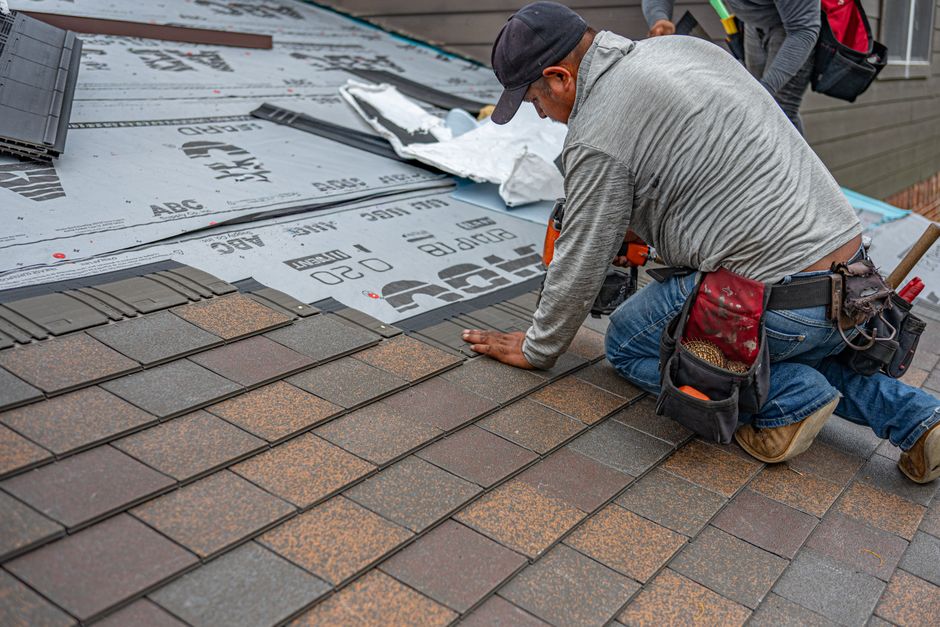
- Roof Installation: The actual physical labor is the fastest part of the entire process, typically taking just 1 to 3 days.
If you are concerned about covering out-of-pocket costs like your deductible while waiting for insurance disbursements, you might find our guide on A Practical Guide to Roofing Financing for Arkansas Homeowners helpful for managing the cash flow.
Phase 4: Recoverable Depreciation and Closeout (1 to 30 Days Post-Construction)
With your beautiful new roof installed, you enter the final stretch: recovering the withheld depreciation.
If you have a Replacement Cost Value (RCV) policy, the depreciation held back in Phase 2 is “recoverable.” To get it, your contractor must submit a proof of completion package, which includes the final invoice showing the job is complete and built to code.
- Depreciation Release: The insurer typically reviews this closeout package and releases the final check within 7 to 21 days.
- The Mortgage Company Hurdle: If you have a mortgage on your home, your lender will likely be listed as a co-payee on all insurance checks. Getting their endorsement requires sending the check to their mortgage department, which can add an extra 2 to 4 weeks of administrative delay as they verify the work before releasing the funds from escrow.
Common Bottlenecks That Delay Roof Claims
Even with the best preparation, a claim can hit speed bumps. Recognizing where these bottlenecks occur allows you to navigate around them proactively.
Statutory Deadlines and Prompt Payment Laws
Many states have strict consumer protection laws designed to keep insurance companies from dragging their feet. While states like Texas enforce the strict Texas Prompt Payment of Claims Act (imposing 15-business-day response limits), Arkansas also has established guidelines through the Arkansas Insurance Department.
Under state insurance regulations, insurers are generally required to acknowledge your claim within 15 working days and complete their investigation within 45 calendar days after receiving proof of loss. If they need more time, they must send you a written explanation for the delay. Knowing these rules gives you leverage; if your insurer is silent for weeks, reminding them of state compliance guidelines can quickly jumpstart communication.
How Storm Volume and Seasonality Impact Timelines
Mother Nature is unpredictable. Spring and fall in Central Arkansas often bring severe convective storms, tornadoes, and heavy hail.
When a major storm system hits high-density areas like Little Rock, North Little Rock, and Sherwood simultaneously, local insurance resources are stretched to their absolute limits. During these peak catastrophe periods, wait times for adjusters can double.
If your roof is actively leaking during a widespread storm backlog, do not wait for the adjuster to show up before protecting your property. You are contractually obligated by your policy to mitigate further damage. Work with a professional to organize emergency tarping and temporary repairs. Keep every receipt, as these temporary mitigation costs are fully reimbursable under your claim and do not count against your final repair limits.
How Homeowners Can Keep the Claim Moving Efficiently
You do not have to be a passive bystander in your own claim. Homeowners who take an active role consistently see their claims resolved weeks faster than those who wait for the insurer to take the lead.
- Keep a Communication Log: Write down the date, time, name, and direct phone number of every person you speak with at the insurance company. Summarize what was agreed upon in a follow-up email so there is a paper trail.
- Document Everything: Take your own photos of the damage before any temporary repairs are made. Keep physical samples of any hail that fell on your property if safe to do so.
- Have Your Contractor Present: Ask your roofing contractor to be on-site when the insurance adjuster arrives. Having two professionals walk the roof together ensures that technical details, building codes, and structural nuances are discussed and documented correctly the first time.
- Respond Instantly: When your adjuster requests documents, tax records, or signatures, return them within 24 hours. Don’t let your file sit at the bottom of a desk adjuster’s stack.
Frequently Asked Questions About Roof Claim Timelines
How long does it take to get the recoverable depreciation check?
Once the roof installation is complete, your contractor will submit a final invoice and proof of completion to your insurer. It typically takes 7 to 21 days for the insurance company to review the closeout package, verify that the work was completed as invoiced, and mail out the final check releasing the withheld depreciation. If your mortgage company is listed on the check, expect an additional 2 to 4 weeks for their bank endorsement process.
What happens if the insurance company misses its deadline?
If your insurance carrier fails to acknowledge your claim, investigate, or issue payment within the timelines mandated by your state’s insurance department, they may be subject to regulatory penalties. As a homeowner, you can file a formal complaint with the state’s Department of Insurance or Commerce. In many cases, filing a formal complaint results in a 52% favorable outcome rate for consumers, forcing the carrier to expedite your delayed claim.
Can a roofing contractor help speed up the claim process?
Yes, immensely. An experienced, insurance-savvy roofing contractor speeds up the process by providing detailed, Xactimate-compatible estimates that align with what insurance adjusters expect to see. By meeting the adjuster in person on your roof, your contractor can point out subtle wind or hail damage that might otherwise be missed, eliminating the need for time-consuming re-inspections and disputed supplements later on.
Conclusion
The roof insurance claim process can feel like a marathon, but understanding the milestones—from the initial 48-hour filing window to the final release of your recoverable depreciation—helps you stay in control of the clock. While a straightforward claim can wrap up in 4 to 8 weeks, staying proactive, keeping a detailed communication log, and working with the right professionals are the best ways to prevent your file from stalling.
At Patriot Roofing & Restoration, we believe in a quality-first approach. Serving Little Rock, North Little Rock, Sherwood, Maumelle, Conway, Benton, Bryant, and surrounding communities, we bring local expertise, our Atlas PRO+ Gold standing, and our four written guarantees to every project. We understand the administrative headaches of dealing with insurance adjusters, and we are here to walk beside you through every step of the process.
Don’t let storm damage linger and cause secondary issues in your home. Schedule a professional storm damage inspection with Patriot Roofing & Restoration today, and let us help you get your roof—and your peace of mind—fully restored.
This article is general information about roofing and storm damage in Arkansas, not insurance advice. Coverage, deductibles and claim deadlines vary by policy and by carrier. Confirm your own coverage with your insurance agent before you make a decision.