

Wind vs. Hail Roof Damage: What Every Little Rock Homeowner Needs to Know
How tornadoes and high winds damage roofs differently than hail comes down to one core distinction: wind lifts and tears, while hail strikes and bruises.
Here’s a quick breakdown:
| Factor | Wind / Tornado Damage | Hail Damage |
|---|---|---|
| Force type | Uplift pressure and suction | Direct kinetic impact |
| Damage pattern | Directional — edges, ridges, corners | Random, scattered across surface |
| Visible signs | Missing shingles, lifted edges, torn membrane | Circular bruises, granule loss, dents |
| Hidden risks | Broken fasteners, lifted decking, loose seals | Micro-fractures, shortened roof lifespan |
| Most vulnerable areas | Perimeter, corners, roof-to-wall connections | Entire roof surface equally |
| Speed of impact | Gradual uplift or sudden catastrophic removal | Sudden point impacts |
Most homeowners can’t tell the difference from the ground — and that distinction matters a lot when it comes to filing an accurate insurance claim.
Severe storms in Arkansas don’t play favorites. A single storm cell can drop hail from its core and spin off high winds or a tornado on its edges — leaving your roof with two completely different types of damage that require two different repair approaches. Alabama averages more than 30 tornadoes per year, and the Tennessee River Valley — which includes much of the region — has seen some of the deadliest outbreaks on record. Little Rock sits squarely in harm’s way.
The stakes are high. Wind damage creates immediate leak risk the moment shingles lift. Hail damage is sneakier — it can shorten your roof’s lifespan by 10 to 20 years without a single visible leak appearing for months. Both are serious. Both are covered by most standard homeowners insurance policies. And both are frequently misidentified, which leads to denied claims and out-of-pocket repairs that should have been covered.
This guide walks you through exactly how each type of damage works, what it looks like on different roofing materials, and what to do about it.
How Tornadoes and High Winds Damage Roofs Differently Than Hail
To understand how tornadoes and high winds damage roofs differently than hail, we have to look at the physics of how these weather events interact with your home.
The Physics of Wind Uplift and Suction
High winds and tornadoes do not simply blow against a roof; they pull it upward. As powerful winds rush over the peak of your roof, they create a localized zone of rapid, low-pressure air directly above the surface. Meanwhile, the air pressure inside your attic remains normal and stagnant.
According to Bernoulli’s principle, this pressure differential creates an intense upward suction force known as wind uplift. This net upward force can measure in thousands of pounds per square foot.
Unlike hurricanes, where wind uplift damage is typically isolated to the corners and perimeter of the roof, tornado wind uplift is highly chaotic. The rapid rotation and extreme pressure drops inside a tornado vortex mean uplift forces can occur across the entire roof surface. Additionally, if a high wind event or tornado breaches a window or door, air rushes into the home, dramatically increasing internal pressure. This simultaneous upward push from the inside and suction from the outside can lift the entire roof deck right off the framing.
The Kinetic Impact of Hail
Hail damage is entirely different. It is a gravity-driven, downward kinetic force. Hailstones form when powerful thunderstorm updrafts carry raindrops into freezing layers of the atmosphere, coating them in layers of ice until they become too heavy and fall.
When a hailstone strikes your roof, its damage potential is determined by its mass and terminal velocity. The physics here are brutal: a hailstone’s impact energy does not scale linearly. In fact, impact energy increases by an astonishing 113.6 times when a hailstone’s diameter increases from 1.0 inch (quarter-sized) to 3.0 inches (tea-cup sized).
Instead of pulling structural components apart, hail compresses, bruises, and fractures the outer weathering layer of your roof.
Directional vs. Random Damage Patterns
Because of these differing forces, the physical patterns left behind on your roof are completely distinct:
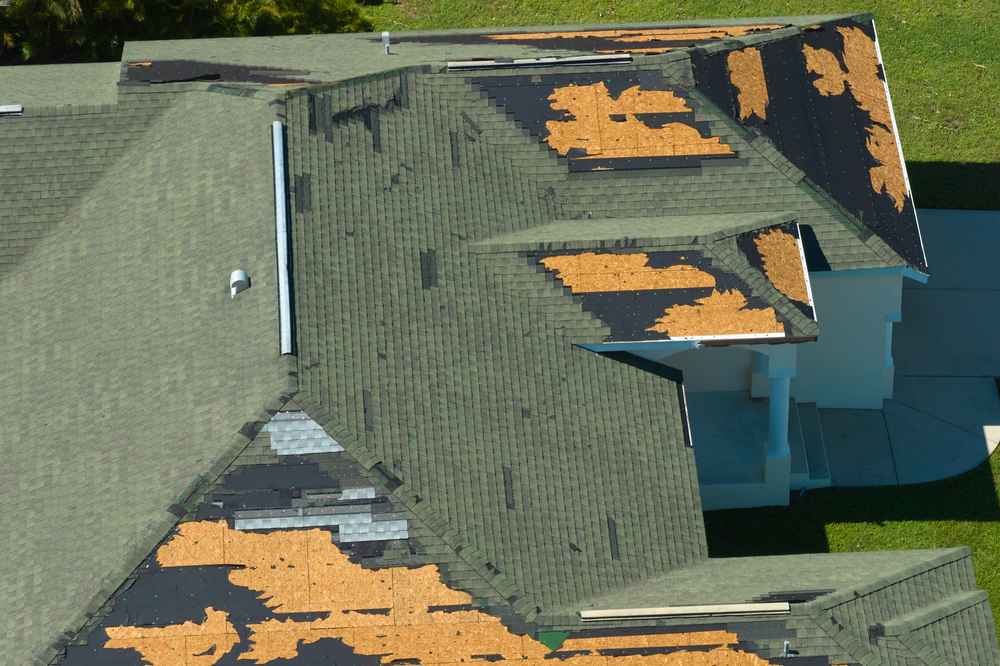
- Wind and Tornado Patterns (Directional): Wind damage is highly directional and selective. It follows the path of the storm’s flow. It systematically targets aerodynamic weak points—specifically the eaves, rakes, ridges, and corners of your home. You will often see clean, uniform rows of missing or folded shingles on the windward-facing slopes, while the leeward slopes remain completely untouched.
- Hail Patterns (Random): Hail damage is scattered, random, and non-directional. Hail strikes the entire roof surface, though wind-driven hail may hit one slope with slightly more force. The resulting damage presents as scattered, circular bruises, random divots, and crater-like pockmarks across the entire expanse of the roofing material.
Structural Vulnerabilities: The Role of Decking, Fasteners, and Connections
When a tornado or severe straight-line wind event sweeps through Central Arkansas communities like Maumelle or Bryant, the structural integrity of your entire home is put to the test. Hail only threatens the surface of your roof, but wind threatens to tear the roof away from the walls.
Roof-to-Wall Connections and the Continuous Load Path
To survive extreme winds, a building must have a continuous load path. This is a chain of structural connections that transfers the wind’s uplift forces from the roof shingles, through the decking, down into the rafters, down the wall framing, and ultimately into the foundation.
The most common structural failure point during a tornado is the roof-to-wall connection. If your rafters are only secured to the wall top plates with standard framing nails, the wind uplift can easily pull the entire roof structure off the home. Installing metal hurricane clips or straps reinforces this connection, increasing uplift resistance by up to 200% and keeping the roof securely anchored.
Decking and Fasteners
The roof deck (the plywood or OSB sheathing beneath your shingles) acts as the foundation for your roofing material. In high winds, the deck sheathing itself is subjected to immense pulling forces.
If the decking was installed using smooth-shank nails or staples, or if the fasteners are spaced too far apart, the sheathing can easily pull free from the trusses. Upgrading to ring-shank nails or structural screws and tightening the fastener spacing (for example, moving from a standard 6-inch spacing to a tighter 4-inch spacing along the panel edges) can increase the roof deck’s uplift resistance by up to 50%.
The FORTIFIED Roof Standard
A highly effective way to protect your home from these structural wind failures is to build or upgrade to the FORTIFIED Roof standard. Developed by the Insurance Institute for Business & Home Safety (IBHS), a FORTIFIED-certified roof has a proven track record of reducing wind storm damage by more than 50%.
To meet this standard, a roof must include:
- Enhanced Fastening: The roof deck must be secured using ring-shank nails at tight spacing.
- Sealed Roof Deck: A secondary water barrier (such as flashing tape over the deck joints or a full self-adhering underlayment) must be installed so that if the shingles are blown off, water still cannot enter the home.
- High-Wind Rated Shingles: Shingles must be tested and rated to withstand high-wind speeds.
While these structural reinforcements are vital for resisting the explosive uplift of a tornado, they play almost no role in resisting hail. Hail resistance relies entirely on the impact rating of the outer material itself.
Material-Specific Performance Under Wind and Hail Forces
Different roofing materials react in completely different ways when subjected to the tearing forces of high winds versus the crushing impacts of hail.
Understanding How Tornadoes and High Winds Damage Roofs Differently Than Hail on Asphalt Shingles
Asphalt shingles are the most common roofing material throughout Central Arkansas, from Conway down to Benton. They are also the most vulnerable to storm damage.
Wind Damage on Asphalt Shingles
Wind damages shingles primarily by overcoming their adhesive seals. Every modern shingle has a strip of sealant that bonds it to the shingle below. When high winds get under a shingle, they break this seal.
- Creased Shingles: Once the seal is broken, the wind bends the shingle flap upward. Over time, this constant flapping creates a dark, horizontal crease across the top of the shingle where the fiberglass mat has fractured. These creased shingles may settle back down after the storm and look normal from the ground, but their structural integrity is gone, and they will easily blow off in the next minor storm.
- Shingle Stripping: In severe wind events, entire rows of shingles are cleanly stripped away, exposing the underlayment or bare wood decking beneath.
Hail Damage on Asphalt Shingles
Hail does not lift or crease shingles; it bruises them. When a hailstone strikes an asphalt shingle, it compresses the asphalt layer and forces the protective mineral granules to shed.
- Bruising and Mat Fractures: This impact leaves a dark, soft spot (a “bruise”) where the asphalt is exposed. In severe cases, the impact actually fractures the underlying fiberglass mat.
- Functional vs. Cosmetic Damage: It is crucial to understand the difference between cosmetic and functional damage. Granule loss that exposes the underlying black asphalt or fiberglass mat is considered functional damage because it allows UV rays to rapidly degrade the shingle, leading to premature leaks. For a deeper dive into this distinction, read The Complete Guide to Cosmetic vs Functional Hail Damage.
How Tornadoes and High Winds Damage Roofs Differently Than Hail on Metal, Tile, and TPO Systems
For alternative and commercial roofing systems, the damage profiles of wind and hail diverge even further.
Metal Roofing (Standing Seam)
- Wind Performance: Standing seam metal roofing is the gold standard for wind resistance, often rated to withstand winds of 140 to 180 mph. Because the panels are locked together with concealed clips, there are no exposed fasteners for the wind to exploit. However, if the perimeter flashing or coping is improperly secured, wind can get underneath and peel entire metal panels back like a tin can.
- Hail Performance: Metal roofs are highly hail-resistant and rarely leak after a hailstorm. However, hail will leave visible, circular dents in the metal. While usually cosmetic, massive hail can damage the standing seams or puncture lighter-gauge metal panels.
Concrete and Clay Tile
- Wind Performance: Tile roofs are incredibly heavy (weighing 900 to 1,200 pounds per square). This mass gives them excellent natural wind resistance. However, if winds exceed 60 to 80 mph, individual loose tiles can lift. When a tile blows off, it doesn’t just expose the underlayment—it becomes a dangerous, heavy projectile that can smash into neighboring homes.
- Hail Performance: Tiles are brittle. While they easily withstand small hail, larger stones will cause clean, radial cracks or chip off the corners of the tiles. Clay tiles typically begin to fracture under 1.5-inch hail, while sturdier concrete tiles can usually withstand impacts up to 1.75 inches.
TPO Flat Roofing (Commercial)
- Wind Performance: On commercial buildings in areas like Sherwood or Jacksonville, TPO membranes are common. In high winds, mechanically fastened TPO systems can experience “tenting” or billowing as air pressure pulls the membrane upward, putting extreme stress on the plates and fasteners. If the wind is strong enough, the fasteners can pull straight out of the deck. Fully adhered TPO systems perform much better against wind uplift.
- Hail Performance: Hail damages TPO by causing micro-fractures and punctures, especially as the membrane ages and loses its flexibility. These punctures are often tiny and difficult to see, but they allow water to seep directly into the underlying insulation board, leading to widespread hidden damage.
Insurance Claims and Long-Term Repair Considerations
Filing a successful insurance claim after a storm requires a clear understanding of exactly what hit your roof and when.
The Adjuster’s Perspective: Wind vs. Hail
Insurance adjusters evaluate wind and hail claims using completely different criteria:
- For Wind Claims: Adjusters look for physical evidence of wind uplift. This includes missing shingles, lifted shingles with broken sealant strips, creased shingles, or displaced flashing. They will cross-reference your claim with local National Weather Service (NWS) data to verify that wind speeds in your area exceeded damage thresholds on the date of the reported storm.
- For Hail Claims: Adjusters use a standardized “test square” method. They will outline a 10×10-foot square on multiple slopes of your roof and count the number of verified hail impacts inside that square (typically, insurers require at least 8 to 10 hits per square to warrant a full roof replacement). They will also look for collateral damage—such as dented gutters, damaged window screens, and bruised soft metals on roof vents—to validate the hail claim.
The Problem of Latent Damage
One of the biggest risks for homeowners in Central Arkansas is latent damage. This is damage that is physically present after a storm but does not cause an immediate leak.
- Latent Hail Damage: A hailstorm might bruise your shingles in June 2026, but those bruises may not wear through to cause a leak until the winter of 2027. If you wait until the leak appears to file a claim, your insurer may deny it because most policies require storm-related claims to be filed within 12 months of the storm event.
- Latent Wind Damage: Wind can break the adhesive seals of your shingles without blowing them off. These unsealed shingles will flap silently in moderate breezes, slowly wearing out their fasteners until a minor 30 mph gust suddenly strips them away months later.
Avoid the “Storm Chaser” Trap
After a major severe weather outbreak in areas like Hot Springs or Cabot, out-of-state roofing companies (often called “storm chasers”) will flood the neighborhoods knocking on doors. They often promise “free roofs” and pressure homeowners into signing contracts immediately.
Always work with a licensed, insured, local contractor who has deep roots in the community. Local contractors understand Arkansas building codes, use high-quality materials, and will actually be around to honor their workmanship warranties years down the road.
Post-Storm Action Plan: Documenting and Mitigating Damage
If a severe storm or tornado has recently impacted your area, taking immediate, organized action can save you thousands of dollars in secondary water damage and ensure your insurance claim is approved.
- Safety First: Never walk on your roof after a severe storm. The structure may be compromised, and wet shingles are incredibly slick. Perform your initial inspection safely from the ground.
- Conduct a Ground-Level Inspection: Walk the perimeter of your home. Use a pair of binoculars to scan the roof slopes, ridges, and eaves. Look for missing shingles, exposed underlayment, crooked flashing, or dented metal vents.
- Look for Collateral Evidence: Check your yard and deck for fallen shingle pieces, large hailstones (take a photo of them next to a coin for scale), dented gutters, damaged siding, or split wooden fences.
- Perform a Granule Test: Check your gutters and downspout exits. A sudden, heavy accumulation of loose asphalt granules in your gutters is a clear indicator of severe hail impact.
- Inspect Your Attic and Ceilings: Go inside your home with a flashlight. Check your attic rafters, insulation, and ceilings for active drips, water stains, or damp spots.
- Document Everything: Take clear, high-resolution, geotagged photos and videos of all damage you find from the ground. Note the exact date and time of the storm.
- Mitigate Further Damage: If your roof has open holes or exposed decking, it must be tarped immediately to prevent water intrusion. Most insurance policies require homeowners to take reasonable steps to prevent secondary damage (like mold and wood rot) after a loss.
- Schedule a Professional Assessment: Contact a reputable, local roofing contractor to perform a comprehensive, hands-on roof inspection. They can document hidden damage—like fractured shingle mats and broken seals—that cannot be seen from the ground.
Frequently Asked Questions about Wind and Hail Roof Damage
Can a storm cause both wind and hail damage simultaneously?
Yes, this is incredibly common in Central Arkansas. Severe convective storms and supercells often feature a core of heavy hail surrounded by intense straight-line winds or tornadic activity. When this happens, your roof can suffer from both kinetic hail impacts and wind uplift during the same storm event. A professional inspector can document both types of damage to build a stronger, comprehensive insurance claim.
How do adjusters distinguish between wind and hail damage?
Adjusters look at the shape, direction, and physical characteristics of the damage. Wind damage is highly directional, concentrating on edges and ridges, and presents as lifted, creased, or missing shingles. Hail damage is random and circular, presenting as soft, dark bruises with lost granules or fractured mats. Adjusters also inspect collateral indicators, such as dented metal valley flashing, damaged soft metal vents, and split wood fences, to verify the presence of hail.
What is a FORTIFIED roof and how does it protect against wind?
A FORTIFIED roof is a building standard developed by the IBHS designed to strengthen residential roofs against high winds and severe weather. It requires a sealed roof deck (to prevent water leaks if shingles are lost), enhanced ring-shank nailing patterns to resist uplift, and wind-resistant starter shingles along the edges. Upgrading to a FORTIFIED roof can reduce wind damage by more than 50% and often qualifies homeowners for significant insurance premium discounts.
Conclusion
Understanding how tornadoes and high winds damage roofs differently than hail is the first step in protecting your home from the unpredictable weather we experience here in Central Arkansas. Whether you are dealing with the lifting, tearing forces of high winds in Conway or the bruising, crushing impacts of hail in Benton, storm damage must be addressed quickly to prevent costly structural rot and mold.
At Patriot Roofing & Restoration, we bring a quality-first approach to every storm restoration project. As an Atlas-certified contractor based in Little Rock, we protect your home using top-tier materials backed by industry-leading warranties and our own Patriot Shield Leak-Free Guarantee. We proudly serve homeowners across the entire region, including Alexander, Austin, Bryant, Cabot, Hot Springs, Hot Springs Village, Jacksonville, Maumelle, Mayflower, North Little Rock, Scott, Sherwood, and West Little Rock.
Don’t wait for a small storm leak to turn into a major structural headache. Schedule your storm damage repair in Little Rock with our team of trusted, local experts today.