
How Long Do Asphalt Shingles Last in Central Arkansas?
The average roof lifespan for asphalt shingles in Central Arkansas is shorter than most manufacturers suggest — and knowing the real numbers can save you from a costly surprise.
Here’s a quick breakdown by shingle type:
| Shingle Type | Central Arkansas Lifespan | National Average |
|---|---|---|
| 3-Tab | 15-20 years | 20-25 years |
| Architectural | 24-32 years | 25-30 years |
| Impact-Resistant (Class 4) | 30-40 years | 30+ years |
Little Rock’s mixed-humid climate — with hot summers, heavy rainfall, and frequent hailstorms — puts more stress on asphalt shingles than many other parts of the country. Standard shingles in this region often last 15 to 22 years, noticeably below the 25-year national average most homeowners expect.
That gap matters. If you’re planning around a 25- or 30-year roof and it fails at 18, you’re looking at an unplanned replacement — and potentially serious water damage in between.
The good news: the right shingle type, proper installation, and routine maintenance can push your roof toward the upper end of that range. This guide covers everything you need to know to make that happen.
Average Roof Lifespan for Asphalt Shingles in Central Arkansas
When choosing an Asphalt Shingle system for your home, managing expectations is key. While product packaging might boast a “30-year or lifetime warranty,” the reality on the ground in Little Rock, Sherwood, and Maumelle is quite different.
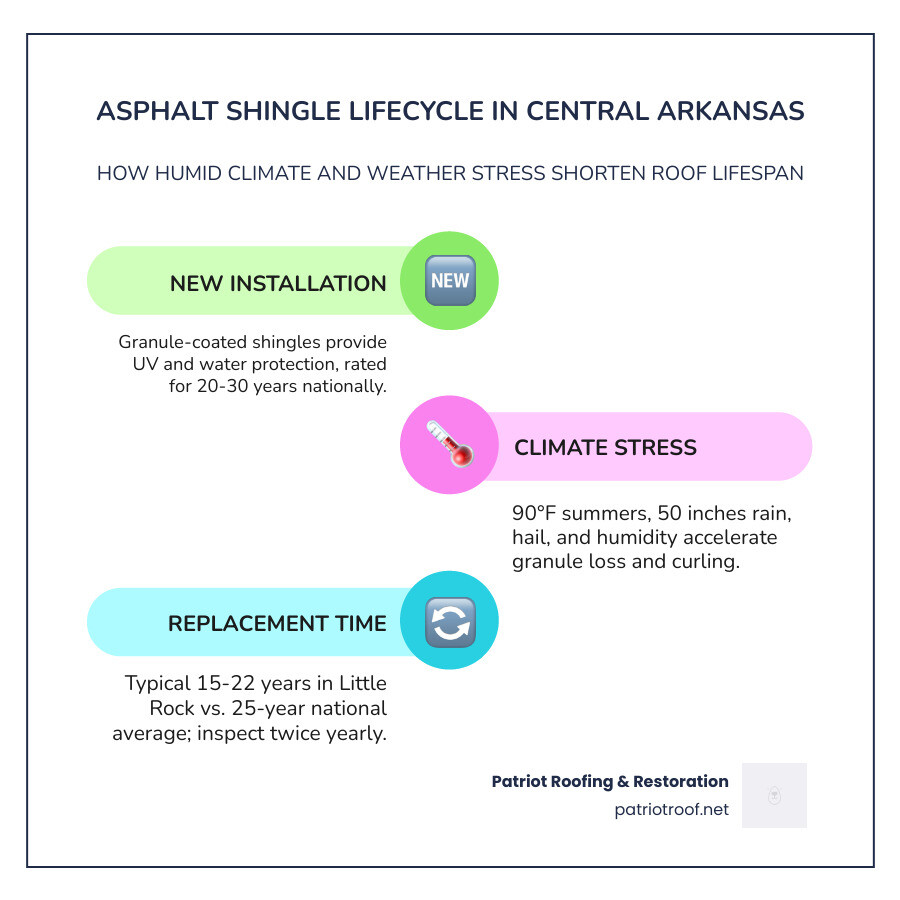
In our region, the actual average roof lifespan for asphalt shingles in Central Arkansas ranges from 15 to 22 years.
This is slightly below the national average of 20 to 30 years. Why? Because a roof in a mild, dry climate has a much easier job than a roof facing the heavy moisture, blistering summer sun, and wild seasonal swings of the Natural State. Over time, these environmental stressors degrade the asphalt, wear away protective granules, and weaken the adhesive bonds holding your roof together.
Why the Average Roof Lifespan for Asphalt Shingles in Central Arkansas Differs from National Averages
The discrepancy between local performance and national marketing claims comes down to our unique weather patterns. Central Arkansas experiences a mixed-humid climate characterized by:
- Extreme heat and UV radiation: High summer temperatures bake the asphalt core of the shingles, making them dry and brittle.
- High relative humidity: Constant moisture in the air slows down drying times, allowing mold, mildew, and blue-green algae to thrive on the roof surface.
- Rapid temperature swings: A hot afternoon followed by a sudden cool thunderstorm causes the roof structure to expand and contract rapidly. This thermal shock weakens the shingles and can pull fasteners loose.
Because of these demanding regional factors, homeowners in Conway, Benton, and Bryant need to monitor their roofs closely. Understanding When to Replace a Roof is essential to preventing minor wear from turning into a major, multi-room ceiling leak.
Shingle Types and Their Lifespans in Arkansas
Not all shingles are created equal. When you prepare to Choose Your Shingles, you will find three primary categories of asphalt products on the market. Each offers a different level of wind resistance, aesthetic appeal, and overall longevity in our local climate.
| Performance Metric | 3-Tab Shingles | Architectural Shingles | Impact-Resistant (Class 4) |
|---|---|---|---|
| Average Lifespan (AR) | 15–20 Years | 24–32 Years | 30–40 Years |
| Wind Resistance | Up to 60 mph (Class D) | 110–130 mph (Class F) | 110–130 mph (Class F) |
| Impact Rating | None / Class 1 | Class 1 to 3 | Class 4 (UL 2218) |
| Relative Weight | Light (~230 lbs/square) | Medium (~240–340 lbs/square) | Heavy (Polymer-Modified) |
| Algae Resistance | Limited | Often includes copper granules | Premium copper granule blends |
3-Tab Shingles
Traditionally, 3-tab shingles were the standard for residential roofing. They consist of a single, flat layer of asphalt-coated fiberglass cut into three uniform tabs.
- Lifespan: 15 to 20 years in Central Arkansas.
- Wind Rating: Class D (up to 60 mph).
- Best Use: Budget-friendly projects, rental properties, or quick fixes.
Because they are thin and lightweight, 3-tab shingles are highly susceptible to wind uplift. A strong spring storm rolling through Jacksonville or Cabot can easily catch the edges of these flat shingles, creasing or tearing them away entirely.
Architectural Shingles
Also known as dimensional or laminate shingles, architectural shingles are constructed with two or more layers of asphalt fused together. This design creates a multi-dimensional, textured look that mimics natural wood shakes or slate.
- Lifespan: 24 to 32 years when installed correctly.
- Wind Rating: Class F (110 to 130 mph).
- Best Use: Standard residential homes looking for long-term durability and curb appeal.
Choosing premium Asphalt Shingle Roofing is highly recommended for homeowners in Hot Springs and West Little Rock. The added thickness of architectural shingles provides superior protection against wind, rain, and minor hail, making them the most popular choice across our service areas.
Impact-Resistant (Class 4) Shingles
Class 4 impact-resistant shingles are engineered using polymer-modified asphalt (often rubberized SBS). This allows the shingle to absorb the energy of a hailstone impact without cracking or losing its protective granule coating.
- Lifespan: 30 to 40 years.
- Impact Rating: UL 2218 Class 4 (tested to withstand a 2-inch steel ball dropped from 20 feet).
- Best Use: Homes in high-frequency hail zones, or homeowners looking for maximum roof longevity.
As an added benefit, many insurance companies in Central Arkansas offer substantial premium discounts (often ranging from 10% to 28%) for homes protected by verified Class 4 shingles.
Climate Factors Affecting Asphalt Shingle Durability
To understand why a roof ages, we have to look at the daily environmental forces acting upon it. Your roof is your home’s first line of defense, and in Central Arkansas, that defense is constantly tested.
How Climate Impacts the Average Roof Lifespan for Asphalt Shingles in Central Arkansas
Let’s break down the primary weather threats that dictate the lifespan of your shingles:
Blistering UV Exposure & Thermal Cycling
Central Arkansas summers routinely bring daily highs hovering around 90°F to 95°F, with roof surface temperatures climbing well past 130°F. The intense ultraviolet (UV) rays degrade the asphalt’s chemical structure, causing it to lose its flexibility.
When a late-afternoon summer storm dumps cold rain onto a baking-hot roof, the shingles undergo rapid thermal contraction. Over time, this constant expanding and contracting leads to micro-cracking and premature granule loss.
High Humidity & Heavy Rainfall
With an average annual rainfall of around 50 inches across Little Rock, North Little Rock, and Sherwood, our roofs handle a massive volume of water. High humidity levels create a perfect breeding ground for Gloeocapsa magma, a type of blue-green algae that leaves unsightly black streaks on roofs.
While algae itself doesn’t cause immediate structural leaks, it darkens the roof’s surface, causing it to absorb even more solar heat and accelerating the aging process. To combat this, modern premium shingles are manufactured with copper-containing granules that naturally prevent algae growth for a decade or more.
Severe Storms & Hail
Central Arkansas sits in a region prone to severe spring and fall weather, averaging several notable hail events per year. When hail strikes a standard shingle, it creates a “bruise” by fracturing the fiberglass mat underneath and knocking away the protective granules. Once these granules are gone, the underlying asphalt is exposed directly to the sun, leading to rapid deterioration and leaks. These weather-related impacts are among the most common Roof Replacement Reasons we see in communities like Alexander and Austin.
Installation Quality and Attic Ventilation
Even the most expensive, high-end shingles will fail prematurely if they are installed over a poorly prepared deck or paired with an inadequate ventilation system.
The Role of Proper Attic Ventilation
Your attic ventilation system is the lungs of your home. It relies on a continuous balance of intake air (usually through soffit vents) and exhaust air (through ridge vents or box vents).
According to building codes (specifically IRC R806), residential roofs must maintain a minimum ventilation ratio of 1:150 net free area (one square foot of ventilation for every 150 square feet of attic floor space).
Without proper ventilation:
- Heat Buildup: Summer heat gets trapped in your attic, baking your shingles from the underside. Attic temperatures can easily exceed 150°F, causing shingle adhesive to fail and shingles to curl, blister, or warp.
- Moisture Retention: In winter, warm, humid air from inside your home rises into the attic. If it cannot escape, it condenses on the underside of the roof deck, leading to wood rot, mold growth, and rust on your roofing fasteners.
When we design a Residential Roofing system, we always perform a comprehensive ventilation audit to ensure your attic can breathe, protecting your investment for decades.
Installation Best Practices
Maximizing your roof’s lifespan requires strict adherence to professional installation standards:
- Sturdy Roof Decking: Shingles must be nailed into a solid, code-compliant deck (minimum 7/16-inch OSB or 15/32-inch plywood). Any rotting or sagging boards must be replaced.
- High-Quality Underlayment: Synthetic underlayment provides a secondary water-resistant barrier that far outperforms traditional felt paper.
- Ice-and-Water Shield: While Central Arkansas doesn’t experience heavy northern blizzards, freeze-thaw cycles in areas like Conway and Hot Springs Village make it wise to install self-adhering ice-and-water barriers in valleys, around chimneys, and along eaves.
- Correct Fastener Patterns: Standard installation requires a minimum of 4 nails per shingle, but high-wind areas or steep slopes require 6 nails driven precisely through the manufacturer’s designated nail line.
- Proper Starter Strips: Installing dedicated starter shingles along the eaves and rakes ensures the first course of roofing has a strong adhesive seal to resist wind uplift.
Cutting corners on these steps during a Roof Replacement is the fastest way to cut your roof’s lifespan in half.
Asphalt Shingles vs. Metal Roofing in Central Arkansas
When it’s time for a new roof, many homeowners in Central Arkansas debate between traditional asphalt shingles and modern metal roofing. Both materials have unique advantages depending on your budget, aesthetic preferences, and how long you plan to stay in your home.
Lifespan and Durability Comparison
- Asphalt Shingles: Typically last 15 to 30 years depending on the shingle class. They are highly reliable but require more frequent inspections and minor repairs over their lifetime.
- Metal Roofing: Often lasts 40 to 70 years. Systems like standing seam metal are incredibly resilient against wind gusts up to 140 mph, heavy rain, and hail.
However, metal roofs are not entirely maintenance-free. They experience significant thermal stress due to the extreme heat swings in Central Arkansas, which can loosen exposed fasteners on screw-down metal panels over time. You can read more about these material comparisons on our Blog.
Cost and Energy Efficiency
- Upfront Investment: Asphalt shingles are the most cost-effective roofing option to install upfront. Metal roofing is a premium option, often costing double or triple the price of standard asphalt shingles.
- Energy Efficiency: Metal roofs reflect solar heat highly efficiently, which can reduce summer cooling costs by up to 25%. However, you can achieve similar energy-saving benefits with ENERGY STAR-certified, highly reflective “cool-roof” asphalt shingles without the steep upfront cost of metal.
- Lifetime Value: If you plan to live in your home for 30+ years, a metal roof can be a smart, “one-and-done” investment. If you plan to move within 10 to 15 years, high-quality architectural shingles offer a fantastic return on investment (recovering about 70% of their cost in added home value) without the heavy initial expenditure.
Frequently Asked Questions about Arkansas Roof Lifespans
What are the signs that my Central Arkansas roof needs replacement?
Keep an eye out for these clear warning signs that your roof is reaching the end of its functional life:
- Curling or Cupping Shingle Edges: This indicates that the asphalt is drying out and losing its structural integrity, often due to poor attic ventilation.
- Excessive Granule Loss: Finding pile-ups of coarse, sand-like granules in your gutters or at the base of your downspouts means your shingles have lost their protective UV coating.
- Water Stains on Ceilings or Walls: Active leaks, water spots in the attic, or damp insulation are immediate signs of roof system failure.
- A Sagging Roofline: This points to structural decking damage beneath the shingles, often caused by long-term, undetected moisture intrusion.
How often should I inspect my asphalt shingle roof in Arkansas?
We recommend having your roof inspected twice yearly — once in the spring (after severe winter weather) and once in the fall (before the winter cold sets in). Additionally, you should always conduct a visual ground-level check or schedule a professional inspection after major windstorms or hail events in your local area.
Can proper maintenance extend my roof’s lifespan?
Absolutely. Regular maintenance can easily add 3 to 5 years to your roof’s lifespan. Simple tasks include:
- Clearing leaves, pine needles, and branches off the roof surface.
- Keeping gutters clean to ensure water drains away rapidly without backing up under the shingles.
- Trimming overhanging tree limbs to prevent them from rubbing against the shingles during high winds.
- Promptly repairing damaged flashing, pipe boots, or missing shingles before water can reach the wood decking.
Conclusion
Your roof is the ultimate shield protecting your family and your home from the elements. While the average roof lifespan for asphalt shingles in Central Arkansas is shaped by our demanding climate, you have the power to maximize that lifespan by choosing high-quality materials and partnering with a trusted local contractor.
At Patriot Roofing & Restoration, we serve homeowners across the greater Little Rock metro area, including Alexander, Austin, Benton, Bryant, Cabot, Conway, Hot Springs, Hot Springs Village, Jacksonville, Maumelle, Mayflower, North Little Rock, Scott, Sherwood, and West Little Rock.
We bring a quality-first approach to every project, backed by:
- Atlas Certification: Allowing us to offer premium, algae-resistant shingles with industry-leading wind warranties.
- The Patriot Shield Leak-Free Guarantee: Giving you ultimate peace of mind that your home is safe.
- Comprehensive Inspections: We evaluate your decking, shingles, flashing, and attic ventilation to ensure your roof is built to last.
Don’t wait for the next major storm to find out how your roof is holding up. Learn more about how long roofs last and schedule your free, no-obligation roof inspection with our expert team today!